


A persistent and diverse airway microbiota present during chronic obstructive pulmonary disease exacerbations
- PMID: 20141328
- PMCID: PMC3116451
- DOI: 10.1089/omi.2009.0100
A persistent and diverse airway microbiota present during chronic obstructive pulmonary disease exacerbations
Abstract
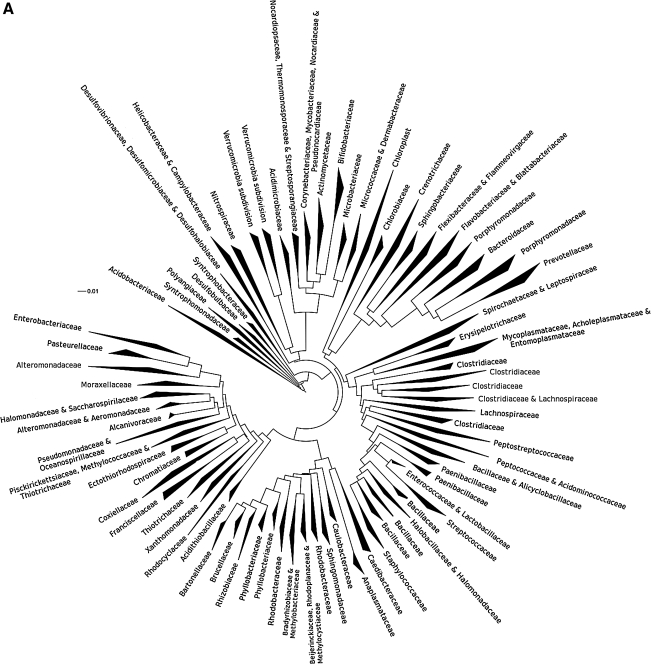
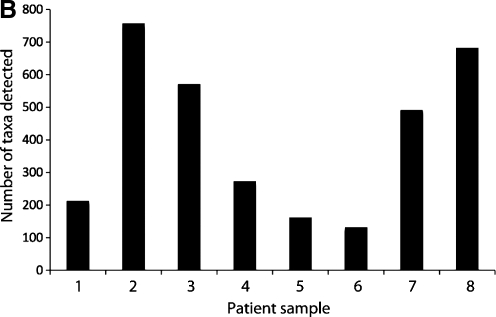
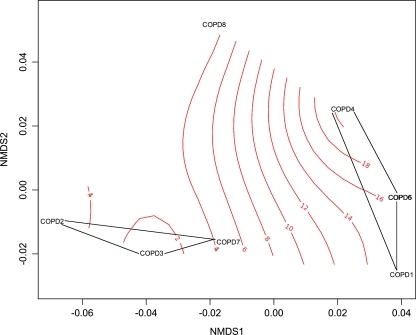
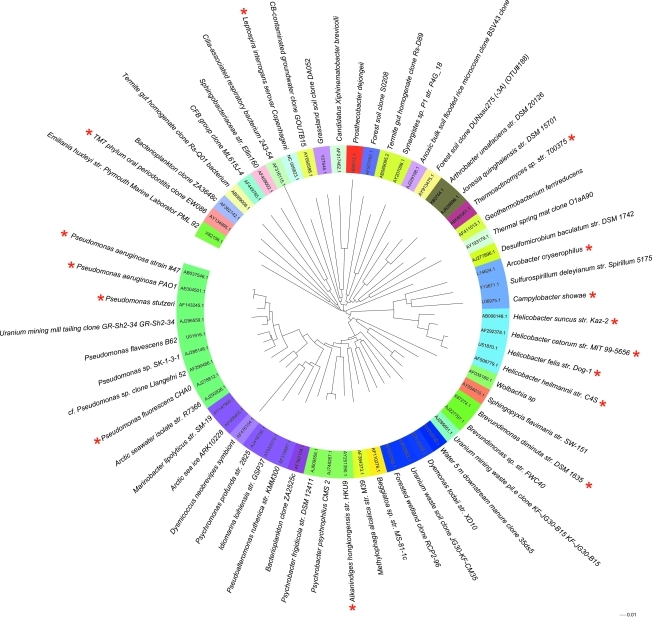
Acute exacerbations of chronic obstructive pulmonary disease (COPD) are a major source of morbidity and contribute significantly to healthcare costs. Although bacterial infections are implicated in nearly 50% of exacerbations, only a handful of pathogens have been consistently identified in COPD airways, primarily by culture-based methods, and the bacterial microbiota in acute exacerbations remains largely uncharacterized. The aim of this study was to comprehensively profile airway bacterial communities using a culture-independent microarray, the 16S rRNA PhyloChip, of a cohort of COPD patients requiring ventilatory support and antibiotic therapy for exacerbation-related respiratory failure. PhyloChip analysis revealed the presence of over 1,200 bacterial taxa representing 140 distinct families, many previously undetected in airway diseases; bacterial community composition was strongly influenced by the duration of intubation. A core community of 75 taxa was detected in all patients, many of which are known pathogens. Bacterial community diversity in COPD airways is substantially greater than previously recognized and includes a number of potential pathogens detected in the setting of antibiotic exposure. Comprehensive assessment of the COPD airway microbiota using high-throughput, culture-independent methods may prove key to understanding the relationships between airway bacterial colonization, acute exacerbation, and clinical outcomes in this and other chronic inflammatory airway diseases.
Figures
References
-
- Anderson M.J. A new method for non-parametric multivariate analysis of variance. Austr Ecol. 2001;26:32–46.
-
- Connors A.F., Jr. Dawson N.V. Thomas C. Harrell F.E., JR. Desbiens N. Fulkerson W.J., et al. Outcomes following acute exacerbation of severe chronic obstructive lung disease. The SUPPORT investigators (Study to Understand Prognoses and Preferences for Outcomes and Risks of Treatments) Am J Respir Crit Care Med. 1996;154:959–967. - PubMed
-
- Costerton J.W. Stewart P.S. Greenberg E.P. Bacterial biofilms: a common cause of persistent infections. Science. 1999;284:1318–1322. - PubMed
Publication types
MeSH terms
Substances
Grants and funding
LinkOut - more resources
Full Text Sources
Other Literature Sources
Medical
Molecular Biology Databases
