


Erythropoietin: a multimodal neuroprotective agent
- PMID: 20142991
- PMCID: PMC2816866
- DOI: 10.1186/2040-7378-1-4
Erythropoietin: a multimodal neuroprotective agent
Abstract
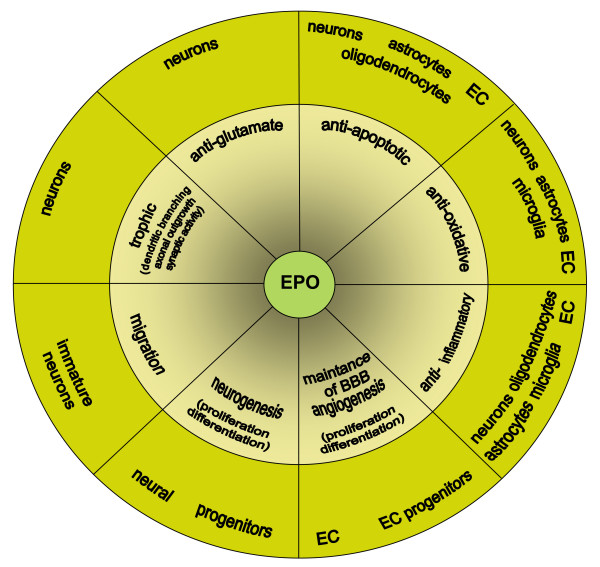
The tissue protective functions of the hematopoietic growth factor erythropoietin (EPO) are independent of its action on erythropoiesis. EPO and its receptors (EPOR) are expressed in multiple brain cells during brain development and upregulated in the adult brain after injury. Peripherally administered EPO crosses the blood-brain barrier and activates in the brain anti-apoptotic, anti-oxidant and anti-inflammatory signaling in neurons, glial and cerebrovascular endothelial cells and stimulates angiogenesis and neurogenesis. These mechanisms underlie its potent tissue protective effects in experimental models of stroke, cerebral hemorrhage, traumatic brain injury, neuroinflammatory and neurodegenerative disease. The preclinical data in support of the use of EPO in brain disease have already been translated to first clinical pilot studies with encouraging results with the use of EPO as a neuroprotective agent.
Figures
References
-
- Wu H, Lee SH, Gao J, Liu X, Iruela-Arispe ML. Inactivation of erythropoietin leads to defects in cardiac morphogenesis. Development. 1999;126:3597–3605. - PubMed
-
- Youssoufian H, Longmore G, Neumann D, Yoshimura A, Lodish HF. Structure, function, and activation of the erythropoietin receptor. Blood. 1993;81:2223–2236. - PubMed
LinkOut - more resources
Full Text Sources
Medical
Research Materials
