


Phase 1/2 study of preoperative docetaxel and mitoxantrone for high-risk prostate cancer
- PMID: 20143429
- PMCID: PMC2846994
- DOI: 10.1002/cncr.24960
Phase 1/2 study of preoperative docetaxel and mitoxantrone for high-risk prostate cancer
Abstract
Background: : A study was conducted to determine the 5-year recurrence-free survival in patients with high-risk prostate cancer after neoadjuvant combination chemotherapy followed by surgery. Secondary endpoints included safety, pathologic effects of chemotherapy, and predictors of disease recurrence.
Methods: : Fifty-seven patients were enrolled in a phase 1/2 study of weekly docetaxel 35 mg/m(2) and escalating mitoxantrone to 4 mg/m(2) before prostatectomy. Patients were treated with 16 weeks of chemotherapy administered weekly on a 3 of every 4 week schedule. A tissue microarray, constructed from the prostatectomy specimens, served to facilitate the exploratory evaluation of biomarkers. The primary endpoint was recurrence-free survival. Disease recurrence was defined as a confirmed serum prostate-specific antigen (PSA) >0.4 ng/mL.
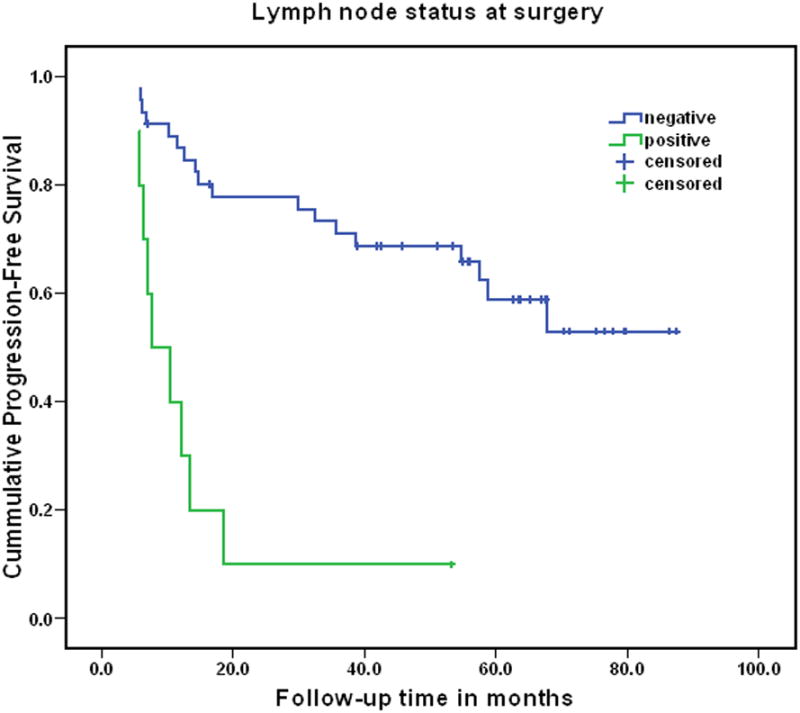
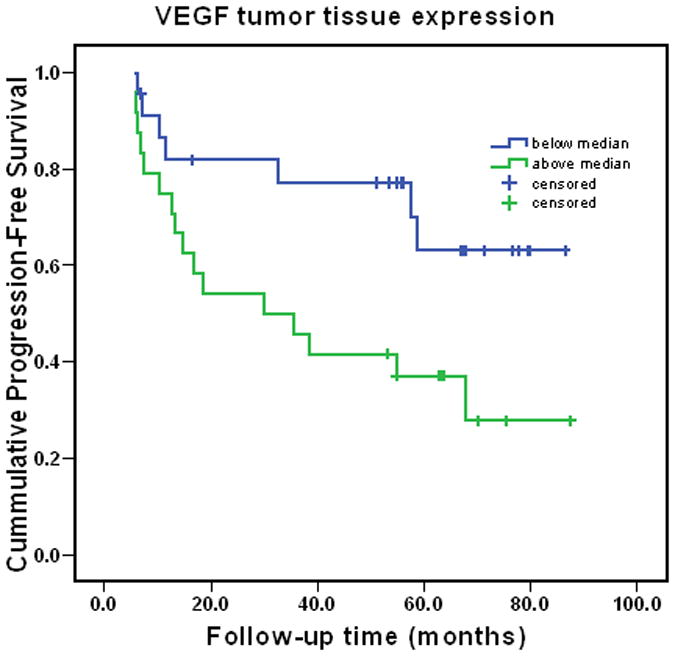
Results: : Of the 57 patients, 54 received 4 cycles of docetaxel and mitoxantrone before radical prostatectomy. Grade 4 toxicities were limited to leukopenia, neutropenia, and hyperglycemia. Serum testosterone levels remained stable after chemotherapy. Negative surgical margins were attained in 67% of cases. Lymph node involvement was detected in 18.5% of cases. With a median follow-up of 63 months, 27 of 57 (47.4%) patients recurred. The Kaplan-Meier recurrence-free survival at 2 years was 65.5% (95% confidence interval [CI], 53.0%-78.0%) and was 49.8% at 5 years (95% CI, 35.5%-64.1%). Pretreatment serum PSA, lymph node involvement, and postchemotherapy tissue vascular endothelial growth factor expression were independent predictors of early recurrence.
Conclusions: : Preoperative chemotherapy with docetaxel and mitoxantrone is feasible. Approximately half of the high-risk patients remain free of disease recurrence at 5 years, and clinical and molecular predictors of early recurrence were identified. Cancer 2010. (c) 2010 American Cancer Society.
Conflict of interest statement
Dr. Beer has received speaker's honoraria from Aventis, a company that may have a commercial interest in the results of this research. This potential conflict of interest has been reviewed and managed by the VA Conflict of Interest in Research Committee.
Figures
References
-
- Han M, Partin AW, Pound CR, Epstein JI, Walsh PC. Long-term biochemical disease-free and cancer-specific survival following anatomic radical retropubic prostatectomy. The 15-year Johns Hopkins experience. Urol Clin North Am. 2001;28:555–565. - PubMed
-
- Kuban DA, Thames HD, Levy LB, et al. Long-term multi-institutional analysis of stage T1-T2 prostate cancer treated with radiotherapy in the PSA era. Int J Radiat Oncol Biol Phys. 2003;57:915–928. - PubMed
-
- D’Amico AV, Whittington R, Malkowicz SB, et al. Pretreatment nomogram for prostate-specific antigen recurrence after radical prostatectomy or external-beam radiation therapy for clinically localized prostate cancer. J Clin Oncol. 1999;17:168–172. - PubMed
-
- Kattan MW, Eastham JA, Stapleton AM, Wheeler TM, Scardino PT. A preoperative nomogram for disease recurrence following radical prostatectomy for prostate cancer. J Natl Cancer Inst. 1998;90:766–771. - PubMed
-
- Han M, Pound CR, Potter SR, Partin AW, Epstein JI, Walsh PC. Isolated local recurrence is rare after radical prostatectomy in men with Gleason 7 prostate cancer and positive surgical margins: therapeutic implications. J Urol. 2001;165:864–866. - PubMed
Publication types
MeSH terms
Substances
Grants and funding
LinkOut - more resources
Full Text Sources
Medical
Research Materials
Miscellaneous
