


A review of the challenge in measuring hemoglobin A1c
- PMID: 20144280
- PMCID: PMC2769874
- DOI: 10.1177/193229680900300306
A review of the challenge in measuring hemoglobin A1c
Abstract
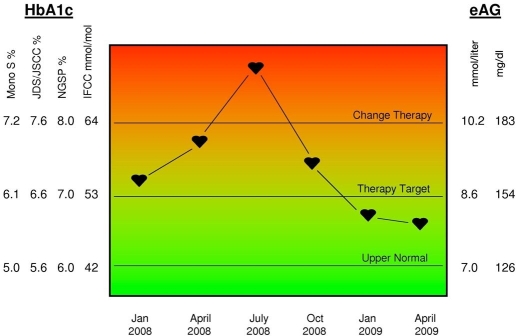
The attraction of the simple biochemical concept combined with a clinical requirement for a long-term marker of glycolic control in diabetes has made hemoglobin A1c (HbA1c) one of the most important assays undertaken in the medical laboratory. The diversity in the biochemistry of glycation, clinical requirements, and management demands has resulted in a broad range of methods being developed since HbA1c was described in the late 1960s. A range of analytic principles are used for the measurement of HbA1c. The charge difference between hemoglobin A0 and HbA1c has been widely utilized to separate these two fractions, most notably found these days in ion-exchange high-performance liquid chromatography systems; the difference in molecular structure (affinity chromatography and immunochemical methods) are becoming widely available. Different results found in different laboratories using a variety of HbA1c analyses resulted in the need for standardization, most notably in the United States, Japan, and Sweden. Designated comparison methods are now located in these three countries, but as they are arbitrarily chosen and have differences in specificity, results of these methods and the reference values and action limits of the methods differ and only harmonized HbA1c in specific geographic areas. A reference measurement system within the concept of metrological traceability is now globally accepted as the only valid analytic anchor. However, there is still discussion over the units to be reported. The consensus statement of the International Federation of Clinical Chemistry (IFCC), the American Diabetes Association, the International Diabetes Federation, and the European Association for the Study of Diabetes suggests reporting HbA1c in IFCC units (mmol/mol), National Glycohemoglobin Standardization Program units (%), and estimated average glucose (either in mg/dl or mmol/liter). The implementation of this consensus statement raised new questions, to be answered in a concerted action of clinicians, biochemists, external quality assessment organizers, patient groups, and manufacturers.
2009 Diabetes Technology Society.
Figures
References
-
- Pauling L, Itano HA, Singer SJ, Wells IC. Sickle cell anemia: a molecular disease. Science. 1949;110(2865):543–548. - PubMed
-
- Kunkel HG, Wallenius G. New hemoglobins in normal adult blood. Science. 1955;122(3163):288. - PubMed
-
- Allen DW, Schroeder WA, Balog J. Observations on the chromatographic heterogeneity of normal adult and fetal hemogloba study of the effects of crystallization and chromatography in the heterogeneity and isoleucine content. J Am Chem Soc. 1958;80(7):1628–1634.
-
- Rahbar S, Blumenfeld O, Ranney HM. Studies of an unusual hemoglobin in patients with diabetes mellitus. Biochem Biophys Res Commun. 1969;36(5):838–843. - PubMed
-
- Trivelli LA, Ranney HM, Lai HT. Hemoglobin components in patients with diabetes mellitus. N Eng J Med. 1971;284(7):353–357. - PubMed
Publication types
MeSH terms
Substances
LinkOut - more resources
Full Text Sources
Other Literature Sources
Medical
