


Diabetes connected health: a pilot study of a patient- and provider-shared glucose monitoring web application
- PMID: 20144366
- PMCID: PMC2771507
- DOI: 10.1177/193229680900300216
Diabetes connected health: a pilot study of a patient- and provider-shared glucose monitoring web application
Abstract
Background: Real-time sharing of blood glucose results with providers could improve communication and lead to more timely medication titration. New technology platforms are available to support the delivery of innovative models of care delivery.
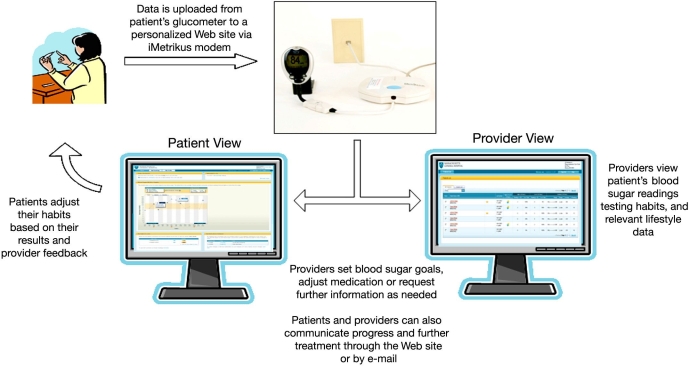
Methods: In the Diabetes Connected Health (DCH) pilot study, patients with diabetes received access to an online application that stored and graphed glucose readings uploaded from a standard glucometer. Both patients and providers had access to this Web site, where data could be viewed, analyzed, and discussed. To examine the impact of the DCH program, we assessed adoption of the program, patient and provider satisfaction, frequency of use, and changes in glucose levels over a period of 3 months.
Results: The mean age of the 7 pilot participants was 51 (range 35-65). Participants sent in an average of 50 readings in Month 1 and 38 readings in Month 3 and made, on average, 6 comments in Months 1 and 12 comments in Month 3. The mean blood glucose range decreased in Month 3 versus Month 1 (141.1 and 146.5, respectively). Self-reported HbA1c fell from 6.8% at the start of the study to 5.8% at the end. Five/seven participants described the site as excellent or good. Qualitative data analysis highlighted key benefits of the program as well as areas for improvement.
Conclusions: This pilot study of a shared glucose monitoring Web application was well received by patients. Programs like this may lead to improvements in the quality of clinical care delivered to people with type 2 diabetes.
(c) 2009 Diabetes Technology Society.
Figures



References
-
- Beckles GL, Engelgau MM, Narayan KM, Herman WH, Aubert RE, Williamson DF. Population-based assessment of the level of care among adults with diabetes in the U.S. Diabetes Care. 1998;21(9):1432–1438. - PubMed
-
- Saaddine JB, Cadwell B, Gregg EW, Engelgau MM, Vinicor F, Imperatore G, Narayan KM. Improvements in diabetes processes of care and intermediate outcomes: United states, 1988–2002. Ann Intern Med. 2006;144(7):465–474. - PubMed
-
- Chase HP, Pearson JA, Wightman C, Roberts MD, Oderberg AD, Garg SK. Modem transmission of glucose values reduces the costs and need for clinic visits. Diabetes Care. 2003;26(5):1475–1479. - PubMed
-
- Cytryn KN, Patel VL. Reasoning about diabetes and its relationship to the use of telecommunication technology by patients and physicians. Int J Med Inform. 1998;51(2-3):137–151. - PubMed
Publication types
MeSH terms
Substances
Grants and funding
LinkOut - more resources
Full Text Sources
Medical
