


Health technologies for monitoring and managing diabetes: a systematic review
- PMID: 20144402
- PMCID: PMC2787048
- DOI: 10.1177/193229680900300628
Health technologies for monitoring and managing diabetes: a systematic review
Abstract
Background: The primary objective of this review was to determine the strength of evidence for the effectiveness of self-monitoring devices and technologies for individuals with type 1 diabetes mellitus (T1DM) or type 2 diabetes mellitus (T2DM) based on specific health-related outcome measures. Self-monitoring devices included those that assist patients with managing diabetes and preventing cardiovascular complications (CVCs). A secondary objective was to explore issues of feasibility, usability, and compliance among patients and providers.
Methods: Study criteria included individuals >or=14 years and youth (7-14 years) with T1DM or T2DM, intervention with a self-monitoring device, assessment of clinical outcomes with the device, literature in English, and >or=10 participants. Relevant published literature was searched from 1985 to 2008. Randomized controlled trials and observational studies were included. Data were extracted for clinical outcomes, feasibility and compliance methods, and results. Selected studies were independently evaluated with a validated instrument for assessing methodological quality.
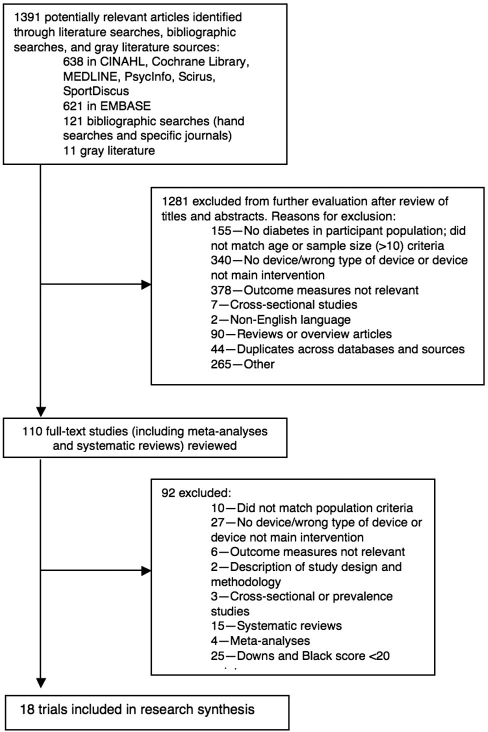
Results: Eighteen trials were selected. Predominant types of device interventions included self-monitoring of blood glucose, pedometers, and cell phone or wireless technologies. Feasibility and compliance were measured in the majority of studies.
Conclusions: Self-monitoring of blood glucose continues to be an effective tool for the management of diabetes. Wireless technologies can improve diabetes self-care, and pedometers are effective lifestyle modification tools. The results of this review indicate a need for additional controlled trial research on existing and novel technologies for diabetes self-monitoring, on health outcomes associated with diabetes and CVCs, and device feasibility and compliance.
References
-
- Wild S, Roglic G, Green A, Sicree R, King H. Global prevalence of diabetes: estimates for the year 2000 and projections for 2030. Diabetes Care. 2004;27(5):1047–1053. - PubMed
-
- Bethesda MD National Institute of Diabetes and Digestive and Kidney Diseases. National Diabetes Statistics, 2007 fact sheet. U.S. Department of Health and Human Services, National Institutes of Health. 2008. See: http://diabetes.niddk.nih.gov/DM/PUBS/statistics/. Accessed October 28, 2009.
-
- Ohinmaa A, Jacobs P, Simpson S, Johnson JA. The projection of prevalence and cost of diabetes in Canada: 2000 to 2016. Can J Diabetes. 2004;28(2):1–5.
-
- Canadian Diabetes Association Clinical Practice Guidelines Expert Committee. Canadian Diabetes Association 2008 clinical practice guidelines for the prevention and management of diabetes in Canada. Can J Diabetes. 2008;32(suppl 1):S1–S201. - PubMed
-
- American Diabetes Association. Standards of medical care for patients with diabetes mellitus. Diabetes Care. 2003;26(Suppl 1):S33–S50. - PubMed
Publication types
MeSH terms
Substances
Grants and funding
LinkOut - more resources
Full Text Sources
Medical
