


Familial resemblance for loneliness
- PMID: 20145989
- PMCID: PMC2886905
- DOI: 10.1007/s10519-010-9341-5
Familial resemblance for loneliness
Abstract
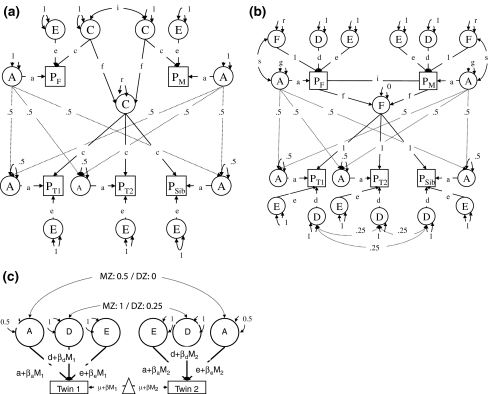
Social isolation and loneliness in humans have been associated with physical and psychological morbidity, as well as mortality. This study aimed to assess the etiology of individual differences in feelings of loneliness. The genetic architecture of loneliness was explored in an extended twin-family design including 8,683 twins, siblings and parents from 3,911 families. In addition, 917 spouses of twins participated. The presence of assortative mating, genetic non-additivity, vertical cultural transmission, genotype-environment (GE) correlation and interaction was modeled. GE interaction was considered for several demographic characteristics. Results showed non-random mating for loneliness. We confirmed that loneliness is moderately heritable, with a significant contribution of non-additive genetic variation. There were no effects of vertical cultural transmission. With respect to demographic characteristics, results indicated that marriage, having offspring, more years of education, and a higher number of siblings are associated with lower levels of loneliness. Interestingly, these effects tended to be stronger for men than women. There was little evidence of changes in genetic architecture as a function of these characteristics. We conclude that the genetic architecture of loneliness points to non-additive genetic influences, suggesting it may be a trait that was not neutral to selection in our evolutionary past. Sociodemographic factors that influence the prevalence of loneliness do not affect its genetic architecture.
Figures
References
-
- Akaike H. Factor-analysis and AIC. Psychometrika. 1987;52:317–332. doi: 10.1007/BF02294359. - DOI
-
- Anderson CM, Martin MM. The effects of communication motives, interaction involvement, and loneliness on satisfaction. Small Group Res. 1995;26:118–137. doi: 10.1177/1046496495261007. - DOI
-
- Bell B. Emotional loneliness and the perceived similarities of one’s ideas and interests. J Soc Behav Pers. 1993;8:273–280.
-
- Berscheid E. Interpersonal attraction. In: Lindzey G, Aronson E, editors. The handbook of social psychology. 3. New York: Random House; 1985. pp. 413–484.
Publication types
MeSH terms
Grants and funding
LinkOut - more resources
Full Text Sources
Miscellaneous
