


Inferolateral ST elevation as a first sign of left anterior descending artery occlusion
- PMID: 20146788
- PMCID: PMC6931950
- DOI: 10.1111/j.1542-474X.2009.00344.x
Inferolateral ST elevation as a first sign of left anterior descending artery occlusion
Abstract
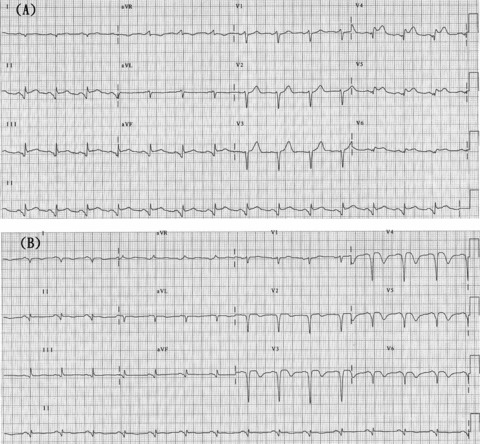
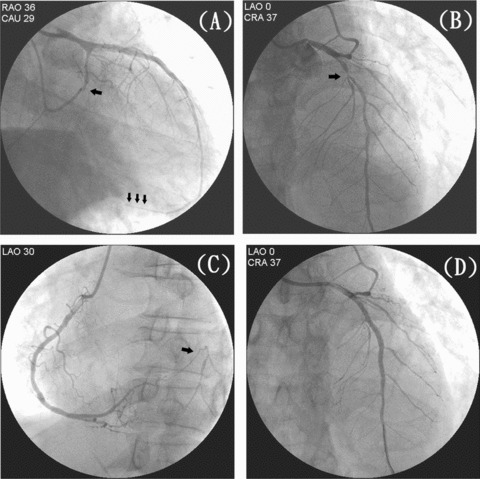
Combined anterior and inferior ST elevation due to occlusion of wrapped left anterior descending artery (LAD) is well reported in the literature. However, there is rare literature mentioned about inferolateral ST elevation in this patient group. Herein, we report a case of acute proximal wrapped LAD occlusion with initial electrocardiographic sign of inferolateral ST elevation. The most likely mechanism of this electrocardiographic finding might be related to old anteroseptal myocardial infarction, combination with other coronary abnormality, such as chronic total occlusion of left circumflex artery that caused larger injury current in inferolateral than anteroseptal myocardium, and made anteroseptal leads reveal isoelectric pattern.
Figures
References
-
- Sadanandan S, Hochman JS, Kolodziej A, et al Clinical and angiographic characteristics of patients with combined anterior and inferior ST‐segment elevation on the initial electrocardiogram during acute myocardial infarction. Am Heart J 2003;146:653–661. - PubMed
-
- Sapin PM, Musselman DR, Dehmer GJ, et al Implications of inferior ST‐segment elevation accompanying anterior wall acute myocardial infarction for the angiographic morphology of the left anterior descending coronary artery morphology and site of occlusion. Am J Cardiol 1992;69:860–865. - PubMed
-
- Sasaki K, Yotsukura M, Sakata K, et al Relation of ST‐segment changes in inferior leads during anterior wall acute myocardial infarction to length and occlusion site of the left anterior descending coronary artery. Am J Cardiol 2001;87:1340–1345. - PubMed
-
- Duzenli MA, Aygul N, Aydin MU, et al An unusual electrocardiographic presentation of acute obstruction of the left anterior descending coronary artery. J Electrocardiol 2008;41:107–109. - PubMed
Publication types
MeSH terms
LinkOut - more resources
Full Text Sources
Medical
