


The tuberculosis challenge in a rural South African HIV programme
- PMID: 20146818
- PMCID: PMC2835706
- DOI: 10.1186/1471-2334-10-23
The tuberculosis challenge in a rural South African HIV programme
Abstract
Background: South Africa remains the country with the greatest burden of HIV-infected individuals and the second highest estimated TB incidence per capita worldwide. Within South Africa, KwaZulu-Natal has one of the highest rates of TB incidence and an emerging epidemic of drug-resistant tuberculosis.
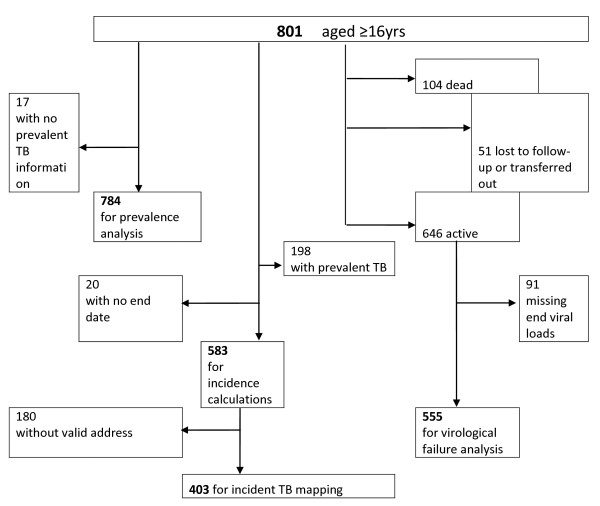
Methods: Review of records of consecutive HIV-infected people initiated onto ART between 1st January 2005 and 31st March 2006. Patients were screened for TB at initiation and incident episodes recorded. CD4 counts, viral loads and follow-up status were recorded; data was censored on 5th August 2008. Geographic cluster analysis was performed using spatial scanning.
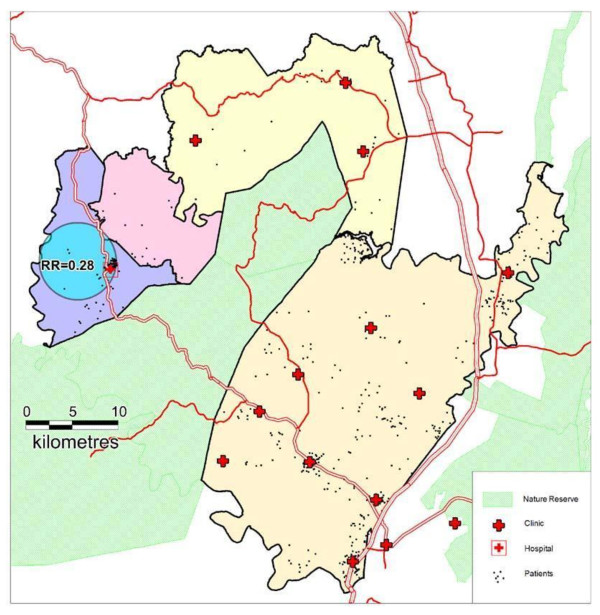
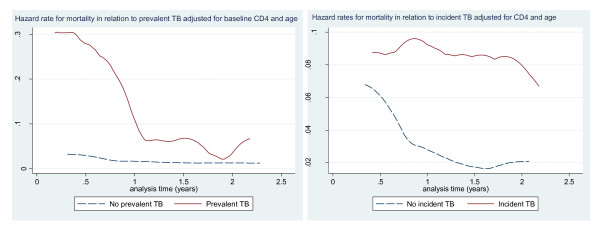
Results: 801 patients were initiated. TB prevalence was 25.3%, associated with lower CD4 (AHR 2.61 p = 0.01 for CD4 <50 cells/microl) and prior TB (AHR 1.58 p = 0.02). Incidence was 6.89 per 100 person-years from 81 cases over 1175 person-years analysis time and was highest in the first 3 months after ART initiation; associated with male sex and higher log HIV RNA. Prevalent and incident TB were significantly associated with mortality (OR 1.81 p = 0.01 and 2.02 p = 0.01 respectively). Incident TB was associated with a non-significant trend towards viral load >25 copies/ml (OR 1.75 p = 0.11). A low-risk cluster for incident TB was identified for patients living near the local hospital in the geospatial analysis.
Conclusion: There is a large burden of TB in this population. Rate of incident TB stabilises at a rate higher than that of the overall population. These data highlight the need for greater research on strategies for active case finding in rural settings and the need to focus on strengthening primary health care.
Figures
References
-
- Report on the global AIDS epidemic. Geneva: UNAIDS; 2008.
-
- WHO. Global Tuberculosis Control Report 2009 surveillance planning financing. 2009.
-
- Department of Health (Directorate: Health Systems Research and Epidemiology). Notification System. Pretoria. Downloaded from Health Systems Trust. http://www.hst.org.za/healthstats/16/data
Publication types
MeSH terms
Grants and funding
LinkOut - more resources
Full Text Sources
Medical
Research Materials
