Early hepatic insulin resistance in mice: a metabolomics analysis
- PMID: 20150186
- PMCID: PMC2840808
- DOI: 10.1210/me.2009-0152
Early hepatic insulin resistance in mice: a metabolomics analysis
Abstract
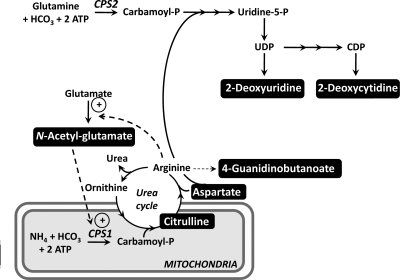
When fed with a high-fat safflower oil diet for 3 wk, wild-type mice develop hepatic insulin resistance, whereas mice lacking glycerol-3-phosphate acyltransferase-1 retain insulin sensitivity. We examined early changes in the development of insulin resistance via liver and plasma metabolome analyses that compared wild-type and glycerol-3-phosphate acyltransferase-deficient mice fed with either a low-fat or the safflower oil diet for 3 wk. We reasoned that diet-induced changes in metabolites that occurred only in the wild-type mice would reflect those metabolites that were specifically related to hepatic insulin resistance. Of the identifiable metabolites (from 322 metabolites) in liver, wild-type mice fed with the high-fat diet had increases in urea cycle intermediates, consistent with increased deamination of amino acids used for gluconeogenesis. Also increased were stearoylglycerol, gluconate, glucarate, 2-deoxyuridine, and pantothenate. Decreases were observed in S-adenosylhomocysteine, lactate, the bile acid taurocholate, and 1,5-anhydroglucitol, a previously identified marker of short-term glycemic control. Of the identifiable metabolites (from 258 metabolites) in plasma, wild-type mice fed with the high-fat diet had increases in plasma stearate and two pyrimidine-related metabolites, whereas decreases were found in plasma bradykinin, alpha-ketoglutarate, taurocholate, and the tryptophan metabolite, kynurenine. This study identified metabolites previously not known to be associated with insulin resistance and points to the utility of metabolomics analysis in identifying unrecognized biochemical pathways that may be important in understanding the pathophysiology of diabetes.
Figures
References
-
- Gregor MF, Hotamisligil GS 2007 Adipocyte stress: the endoplasmic reticulum and metabolic disease. J Lipid Res 48:1905–1914 - PubMed
-
- Arkan MC, Hevener AL, Greten FR, Maeda S, Li ZW, Long JM, Wynshaw-Boris A, Poli G, Olefsky J, Karin M 2005 IKK- links inflammation to obesity-induced insulin resistance. Nat Med 11:191–198 - PubMed
-
- Slawik M, Vidal-Puig AJ 2006 Lipotoxicity, overnutrition and energy metabolism in aging. Ageing Res Rev 5:144–164 - PubMed
-
- Neschen S, Morino K, Hammond LE, Zhang D, Liu ZX, Romanelli AJ, Cline GW, Pongratz RL, Zhang XM, Choi CS, Coleman RA, Shulman GI 2005 Prevention of hepatic steatosis and hepatic insulin resistance in mitochondrial acyl-CoA:glycerol-sn-3-phosphate acyltransferase 1 knock out mice. Cell Metab 2:55–65 - PubMed
Publication types
MeSH terms
Substances
Grants and funding
LinkOut - more resources
Full Text Sources
Molecular Biology Databases