


Experimental models for analysis of oligodendrocyte pathophysiology in stroke
- PMID: 20150984
- PMCID: PMC2820444
- DOI: 10.1186/2040-7378-1-6
Experimental models for analysis of oligodendrocyte pathophysiology in stroke
Abstract
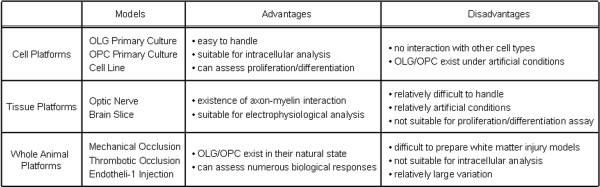
White matter damage is a clinically important part of stroke. However, compared to the mechanisms of neuronal injury in gray matter, white matter pathophysiology remains relatively understudied and poorly understood. This mini-review aims at summarizing current knowledge on experimental systems for analyzing the role of white matter injury relevant to stroke. In vitro platforms comprise primary cultures of both mature oligodendrocytes (OLGs) as well as oligodendrocyte precursor cells (OPCs). Tissue platforms involve preparations of optic nerve systems. Whole-animal platforms comprise in vivo models of cerebral ischemia that attempt to target white matter brain areas. While there is no single perfect model system, the collection of these experimental approaches have recently allowed a better understanding of the molecular and cellular pathways underlying OLG/OPC damage and demyelination. A systematic utilization of these cell, tissue and whole-animal platforms may eventually lead us to discover new targets for treating white matter injury in stroke and other CNS disorders.
Figures

References
-
- Kennedy TP, Vinten-Johansen J. A review of the clinical use of anti-inflammatory therapies for reperfusion injury in myocardial infarction and stroke: where do we go from here? Curr Opin Investig Drugs. 2006;7:229–242. - PubMed
LinkOut - more resources
Full Text Sources
Other Literature Sources
