


Pituitary senescence: the evolving role of Pttg
- PMID: 20153804
- PMCID: PMC2906651
- DOI: 10.1016/j.mce.2010.02.012
Pituitary senescence: the evolving role of Pttg
Abstract
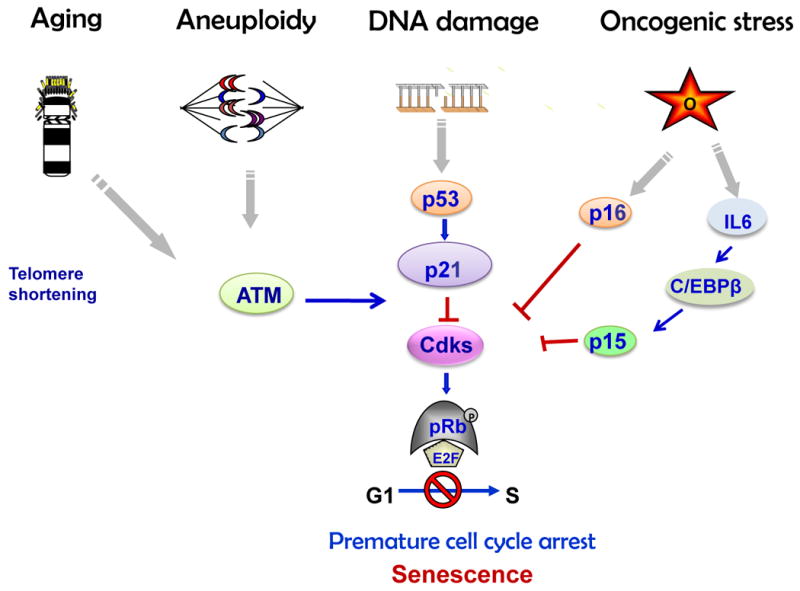
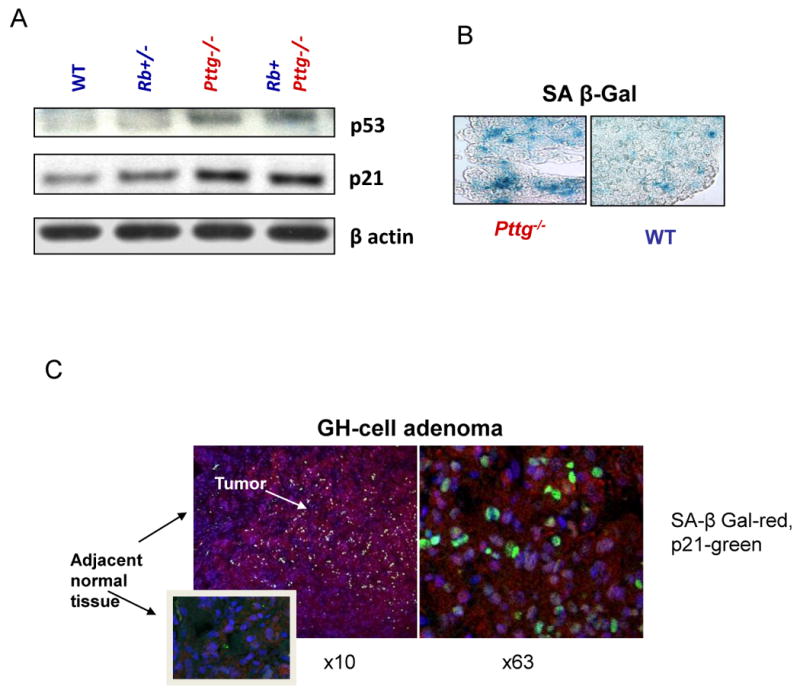
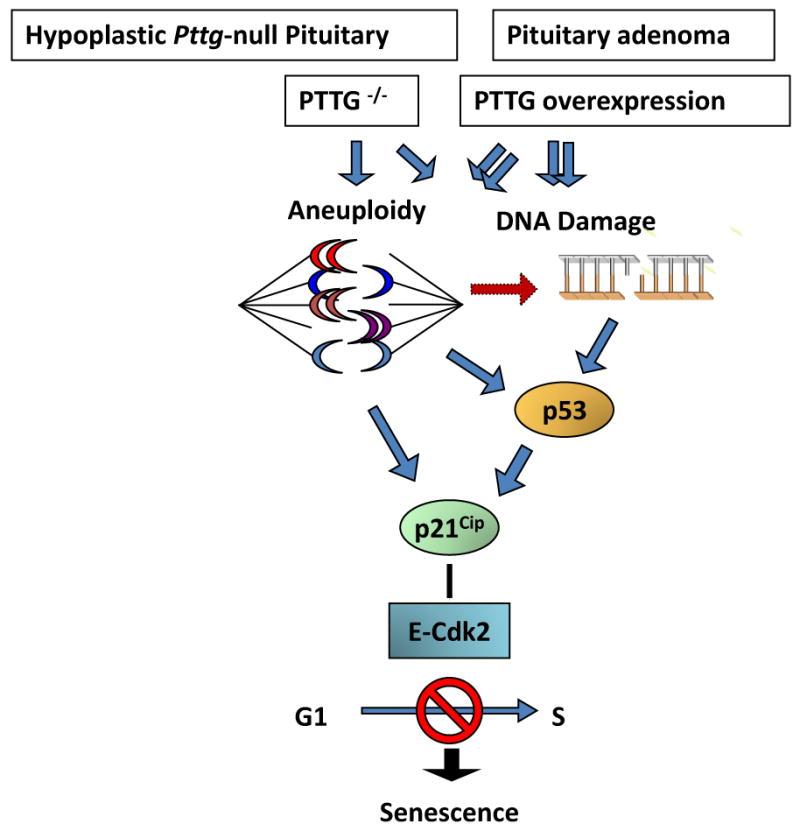
Despite the high prevalence of pituitary adenomas they are invariably benign, indicative of unique intrinsic mechanisms controlling pituitary cell proliferation. Cellular senescence is characterized by a largely irreversible cell cycle arrest and constitutes a strong anti-proliferative response, which can be triggered by DNA damage, chromosomal instability and aneuploidy, loss of tumor suppressive signaling or oncogene activation. In vivo senescence is an important protective mechanism against cancer. Here we discuss prospective mechanisms underlying senescence-associated molecular pathways activated in benign pituitary adenomas. Both deletion and over-expression of pituitary tumor transforming gene (Pttg) promote chromosomal instability and aneuploidy. Pttg deletion abrogates tumor development by activating p53/p21-dependent senescence pathways. Abundant PTTG in GH-secreting pituitary adenomas also triggers p21-dependent senescence. Pituitary p21 may therefore safeguard against further chromosomal instability by constraining pituitary tumor growth. These observations point to senescence as a target for effective therapy for both tumor silencing and growth restraint towards development of pituitary malignancy.
2010 Elsevier Ireland Ltd. All rights reserved.
Figures
References
-
- Abbud RCV, Heney T, Takuni I, Valeria-Castro A, Yu R, Melmed S. Molecular Pathogenesis. Abstracts, 8th International Pituitary Congress; June 22-25,2003; New York. 2003.
-
- Abbud RA, Takumi I, Barker EM, Ren SG, Chen DY, Wawrowsky K, Melmed S. Early multipotential pituitary focal hyperplasia in the alpha-subunit of glycoprotein hormone-driven pituitary tumor-transforming gene transgenic mice. Mol Endocrinol. 2005;19:1383–91. - PubMed
Publication types
MeSH terms
Substances
Grants and funding
LinkOut - more resources
Full Text Sources
Medical
Molecular Biology Databases
Research Materials
Miscellaneous
