Review
. 2010 Jun 10;321(2):103-11.
doi: 10.1016/j.mce.2010.02.013. Epub 2010 Feb 13.

Vitamin D and the intracrinology of innate immunity

Affiliations
Review

Vitamin D and the intracrinology of innate immunity

Martin Hewison. Mol Cell Endocrinol. .

Abstract

An immunomodulatory role for vitamin D was first proposed more than 25 years ago, based on two salient observations. Firstly it was shown that monocytes/macrophages from patients with the granulomatous disease sarcoidosis constitutively synthesize the active form of vitamin D, 1,25-dihydroxyvitamin D (1,25(OH)(2)D) from precursor 25-hydroxyvitamin D (25OHD). Secondly, the receptor for 1,25(OH)(2)D (vitamin D receptor, VDR) is detectable in activated, proliferating lymphocytes. These observations suggested a mechanism whereby 1,25(OH)(2)D produced by monocytes could act upon adjacent T-cells or B-cells, but the impact of such a system on normal immune regulation was uncertain. Indeed, it is only in recent years that a much clearer picture of the role of vitamin D as a determinant of immune responsiveness has emerged. Two new concepts have prompted this change. Firstly studies of innate immunity have shown that intracrine induction of antimicrobial activity by vitamin D is a pivotal component of monocyte/macrophage response to infection. Secondly, it is now clear that sub-optimal vitamin D status is a common feature of many populations throughout the world, with the potential to compromise monocyte/macrophage metabolism of 25OHD and subsequent actions of 1,25(OH)(2)D. The current review details these new developments with specific reference to the metabolic and signaling mechanisms associated with innate immune regulation by vitamin D and implications for human disease.


Figures

Figure 1
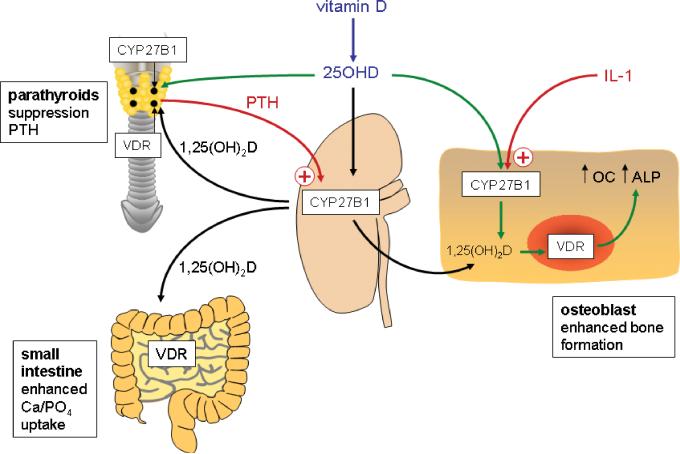
Figure 1. Endocrine and intracrine mechanisms for vitamin D action
In vitamin D endocrinology 25-hydroxyvitamin D (25OHD) generated from parental vitamin D can be activated to 1,25-dihydroxyvitamin D (1,25(OH)2D) in the kidneys catalyzed by the enzyme 1α-hydroxylase (CYP27B1). Expression of CYP27B1 is enhanced by parathyroid hormone (PTH) synthesized by the parathyroid glands under conditions of low extracellular calcium. Synthesis of 1,25(OH)2D under these conditions promotes intestinal uptake of calcium and phosphate and feedback-regulates PTH secretion in cells expressing the vitamin D receptor (VDR). Non-endocrine actions of vitamin D in tissues such as bone also involve the generation of 25OHD from parental vitamin D. However, in this case, the actions of kidney-derived 1,25(OH)2D are complemented by intracrine synthesis of this metabolite via localized expression of CYP27B1 and the VDR. Exogenous and/or endogenous 1,25(OH)2D act to promote the function of cells such as bone-forming osteoblasts (increased alkaline phosphatase (ALP) and osteocalcin (OC)). In contrast to the endocrine synthesis of 1,25(OH)2D in the kidneys, extra-renal expression of CYP27B1 is not regulated by PTH but is instead influenced by tissue-specific factors such as the cytokine interleukin-1 (IL-1).
Figure 2
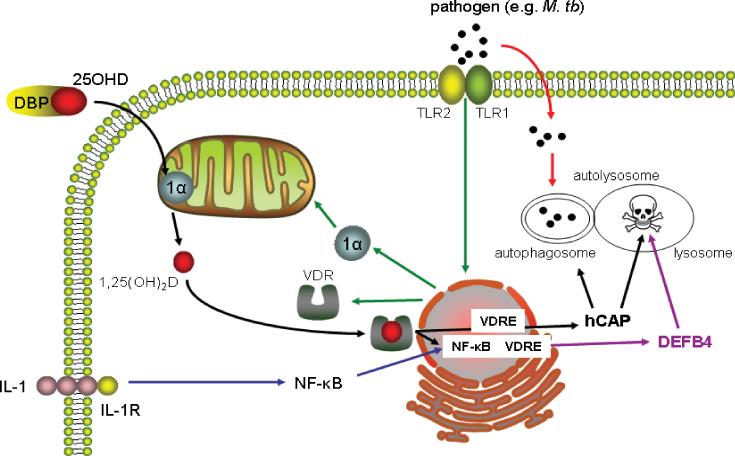
Figure 2. Monocyte/macrophage pathogen-sensing stimulates interaction between vitamin D and the innate immune system
Pathogens such as Mycobaterium tuberculosis (M. tb) are phagocytosed by monocytes/macrophages but also trigger pathogen-sensing via toll-like receptors (TLR) (in the case of M. tb, the TLR2/1 complex). Activation of monocyte/macrophage TLR2/1 stimulates expression of the vitamin D receptor (VDR) and 1α-hydroxylase (1α). In this way, 25-hydroxyvitamin D (25OHD) in circulation bound to vitamin D-binding protein (DBP) is released to the monocyte/macrophage and converted to 1,25-dihydroxyvitamin D (1,25(OH)2D) in the mitochondria. The 1,25(OH)2D is then able to bind to the VDR and transcriptionally induce target genes such as antimicrobial protein cathelicidin (hCAP) via a vitamin D response element (VDRE) in the hCAP gene promoter. The antimicrobial protein β-defensin 4 (DEFB4) also exhibits a gene promoter VDRE but requires co-stimulation by activators of nuclear factor-κB (NF-κB), such as interleukin-1 (IL-1) signaling via the IL-1 receptor (IL-1R), to promote transcriptional upregulation of DEFB4. Induction of hCAP facilitates autophagosome generation and hCAP and DEFB promote bacterial killing in the resulting autolysosome.
Figure 3
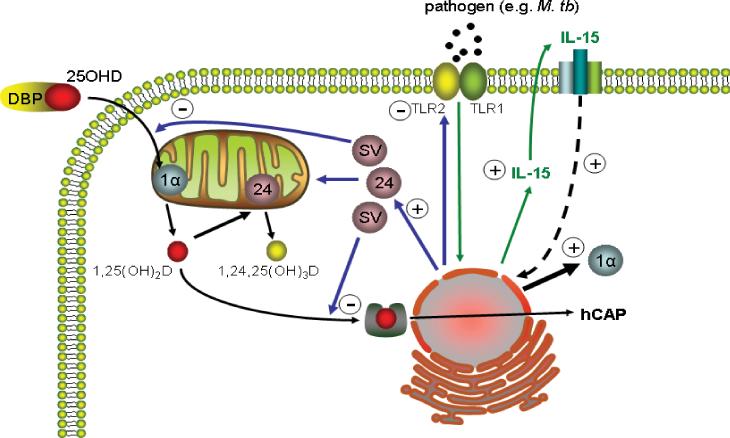
Figure 3. Vitamin D and the feedback regulation of monocyte/macrophage production of hCAP
Intracrine induction of monocyte/macrophage hCAP production by vitamin D is promoted following TLR2/1 pathogen-sensing. This mechanism involves TLR2/1 induction of interleukin-15 (IL-15), a potent stimulator of 1α-hydroxylase (1α) expression and activity. As a counterpoint, intracrine generated 1,25(OH)2D acts to suppress TLR2 expression thereby desensitizing monocytes/macrophages to further TLR2/1 activation. Locally generated 1,25(OH)2D also stimulates expression of the enzyme 24-hydroxylase (24) which catalyzes the conversion of 25OHD and/or 1,25(OH)2D to less active metabolites such as 1,24,25-trihydroxyvitamin D (1,24,25(OH)3D). Monocytes/macrophages also express a truncated splice variant (SV) form of the 24-hydroxylase protein which lacks the required mitochondrial-targeting sequence and is therefore functionally inactive and located in the cytosol. Despite this the SV protein retains its steroid-binding pocket and can thus act as a decoy for 25OHD or 1,25(OH)2D.
Figure 4
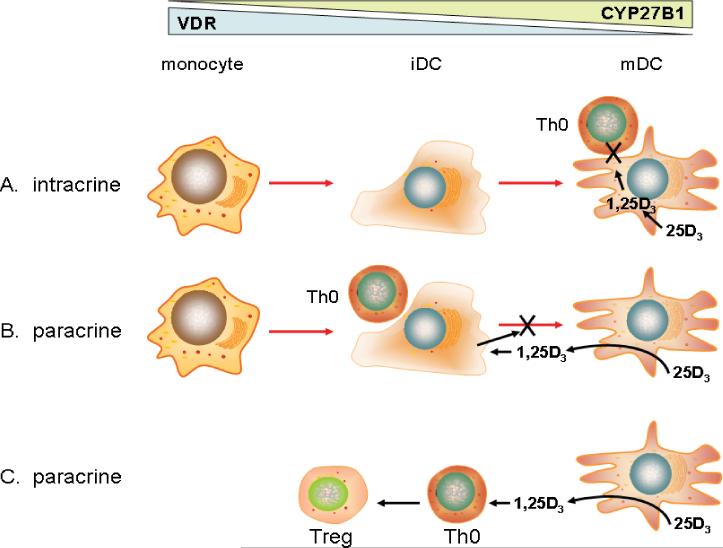
Figure 4. Intracrine and paracrine mechanisms involved in mediating the effects of vitamin D on antigen presentation by dendritic cells
Differentiation of monocytes to immature (iDCs) and mature dendritic cells (mDCs) is associated with the induction of 1α-hydroxylase (CYP27B1) and suppression of vitamin D receptor (VDR) expression. In this way, local conversion of 25-hydroxyvitamin D (25OHD) to 1,25-dihydroxyvitamin D (1,25(OH)2D) can impact on DC function in several ways. A. synthesis of 1,25(OH)2D by mDCs activates VDR signaling in an intracrine fashion despite low numbers of VDR, suppressing DC function and antigen presentation to adjacent niave T-cells (Th0). B. synthesis of 1,25(OH)2D by mDCs activates VDR signaling in an paracrine fashion, suppressing the maturation of adjacent iDCs and thereby promoting tolerogenic T-cell responses. C. synthesis of 1,25(OH)2D by mDCs acts in a paracrine fashion on VDR-expressing T-cells, promoting the generation of immunosuppressive regulatory T-cells (Treg) from Th0 cells.

References

    1. Holick MF. Vitamin D deficiency. N Engl J Med. 2007;357:266–81. - PubMed
    1. Holick MF. Vitamin D status: measurement, interpretation, and clinical application. Ann Epidemiol. 2009;19:73–8. - PMC - PubMed
    1. Chapuy MC, Preziosi P, Maamer M, Arnaud S, Galan P, Hercberg S, Meunier PJ. Prevalence of vitamin D insufficiency in an adult normal population. Osteoporos Int. 1997;7:439–43. - PubMed
    1. Jurutka PW, Bartik L, Whitfield GK, Mathern DR, Barthel TK, Gurevich M, Hsieh JC, Kaczmarska M, Haussler CA, Haussler MR. Vitamin D receptor: key roles in bone mineral pathophysiology, molecular mechanism of action, and novel nutritional ligands. J Bone Miner Res. 2007;22(Suppl 2):V2–10. - PubMed
    1. Ritter CS, Armbrecht HJ, Slatopolsky E, Brown AJ. 25-Hydroxyvitamin D(3) suppresses PTH synthesis and secretion by bovine parathyroid cells. Kidney Int. 2006;70:654–9. - PubMed

Publication types