Prophylactic antibiotics for burns patients: systematic review and meta-analysis
- PMID: 20156911
- PMCID: PMC2822136
- DOI: 10.1136/bmj.c241
Prophylactic antibiotics for burns patients: systematic review and meta-analysis
Abstract
Objective: To assess the evidence for prophylactic treatment with systemic antibiotics in burns patients.
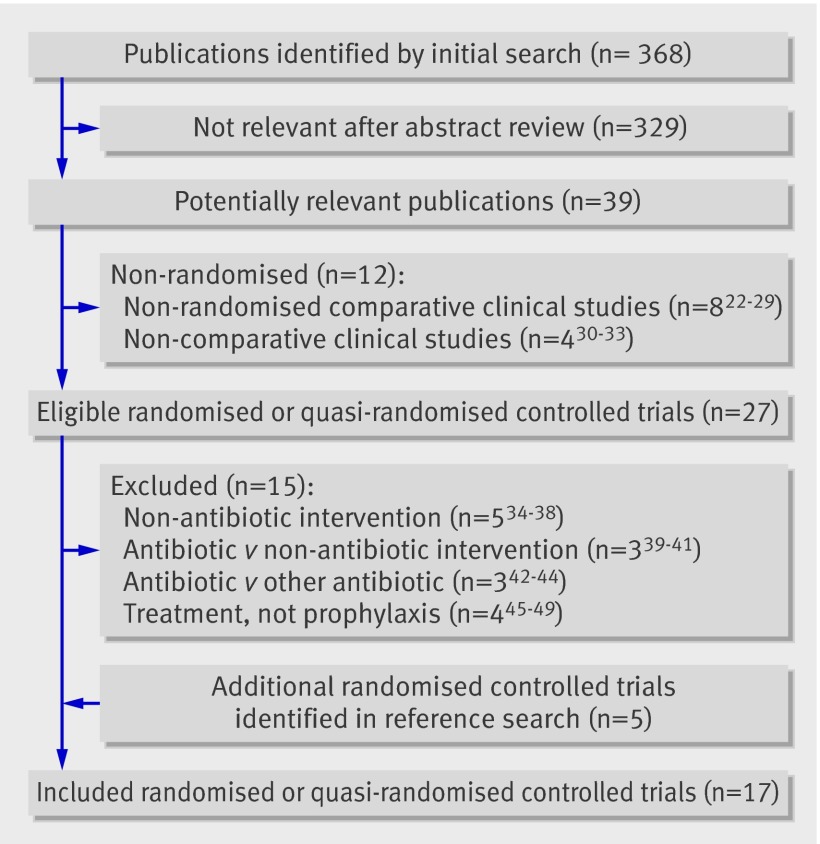
Design: Systematic review and meta-analysis of randomised or quasi-randomised controlled trials recruiting burns inpatients that compared antibiotic prophylaxis (systemic, non-absorbable, or topical) with placebo or no treatment.
Data sources: PubMed, Cochrane Library, LILACS, Embase, conference proceedings, and bibliographies. No language, date, or publication status restrictions were imposed. Review methods Two reviewers independently extracted data. The primary outcome was all cause mortality. Risk or rate ratios with 95% confidence intervals were pooled with a fixed effect model if no heterogeneity was present.
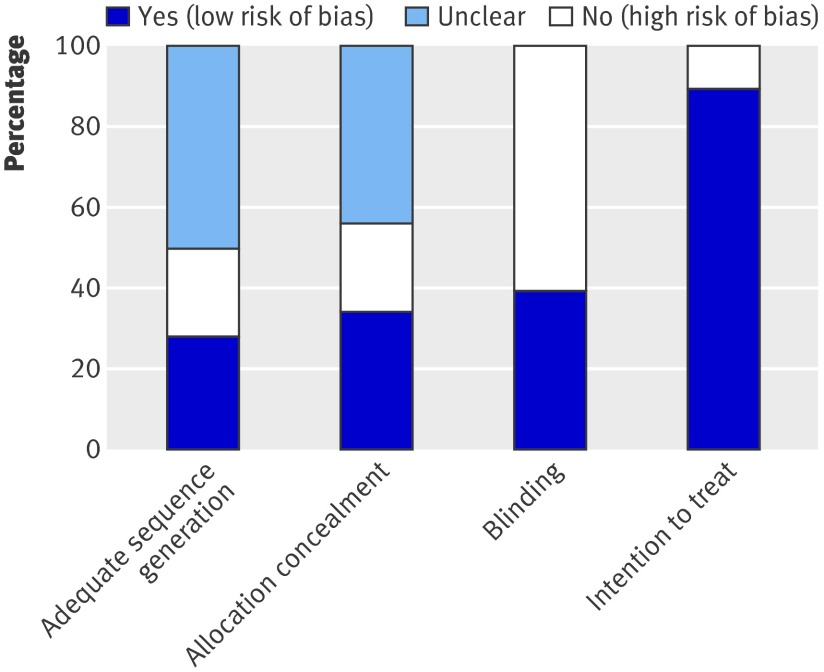
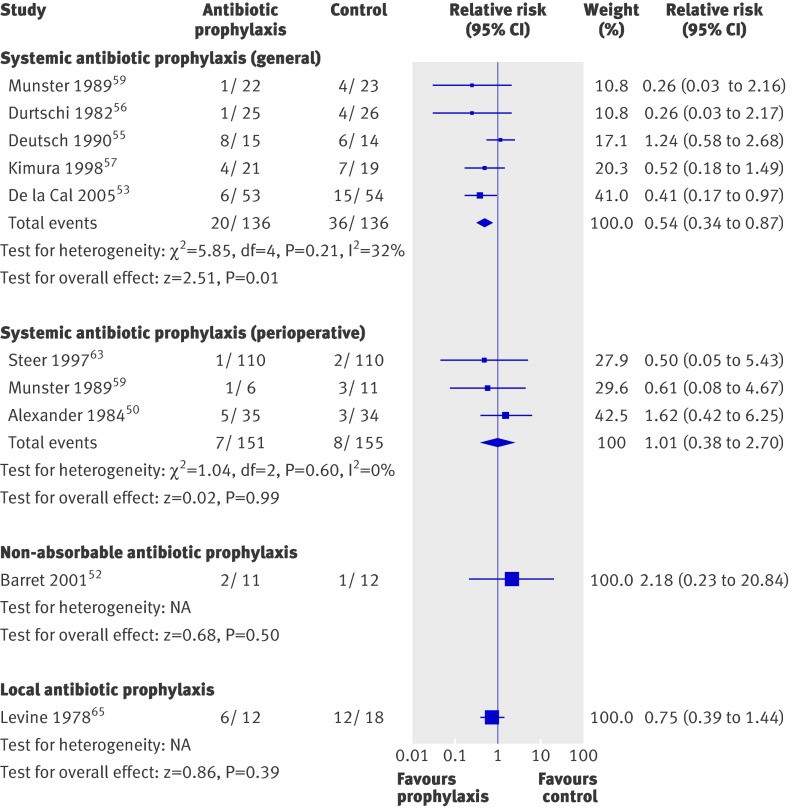
Results: 17 trials were included. Trials that assessed systemic antibiotic prophylaxis given for 4-14 days after admission showed a significant reduction in all cause mortality (risk ratio 0.54, 95% confidence interval 0.34 to 0.87, five trials). The corresponding number needed to treat was 8 (5 to 33), with a control event rate of 26%. Perioperative non-absorbable or topical antibiotics alone did not significantly affect mortality. There was a reduction in pneumonia with systemic prophylaxis and a reduction in wound infections with perioperative prophylaxis. Staphylococcus aureus infection or colonisation was reduced with anti-staphylococcal antibiotics. In three trials, resistance to the antibiotic used for prophylaxis significantly increased (rate ratio 2.84, 1.38 to 5.83). The overall methodological quality of the trials was poor.
Conclusions: Prophylaxis with systemic antibiotics has a beneficial effect in burns patients, but the methodological quality of the data is weak. As such prophylaxis is currently not recommended for patients with severe burns other than perioperatively, there is a need for randomised controlled trials to assess its use.
Conflict of interest statement
Competing interests: None declared.
Figures
Comment in
-
Prophylaxis with systemic antibiotics in patients with severe burns.BMJ. 2010 Feb 15;340:c208. doi: 10.1136/bmj.c208. BMJ. 2010. PMID: 20156910 No abstract available.
References
-
- Enoch S, Roshan A, Shah M. Emergency and early management of burns and scalds. BMJ 2009;338:b1037. - PubMed
-
- Sanghavi P, Bhalla K, Das V. Fire-related deaths in India in 2001: a retrospective analysis of data. Lancet 2009;373:1282-8. - PubMed
-
- Chim H, Tan BH, Song C. Five-year review of infections in a burn intensive care unit: high incidence of Acinetobacter baumannii in a tropical climate. Burns 2007;33:1008-14. - PubMed
-
- Wibbenmeyer L, Danks R, Faucher L, Amelon M, Latenser B, Kealey GP, et al. Prospective analysis of nosocomial infection rates, antibiotic use, and patterns of resistance in a burn population. J Burn Care Res 2006;27:152-60. - PubMed
-
- Fitzwater J, Purdue GF, Hunt JL, O’Keefe GE. The risk factors and time course of sepsis and organ dysfunction after burn trauma. J Trauma 2003;54:959-66. - PubMed
Publication types
MeSH terms
Substances
LinkOut - more resources
Full Text Sources
Other Literature Sources
Medical
Research Materials