


Human insulin/IGF-1 and familial longevity at middle age
- PMID: 20157552
- PMCID: PMC2806046
- DOI: 10.18632/aging.100071
Human insulin/IGF-1 and familial longevity at middle age
Abstract
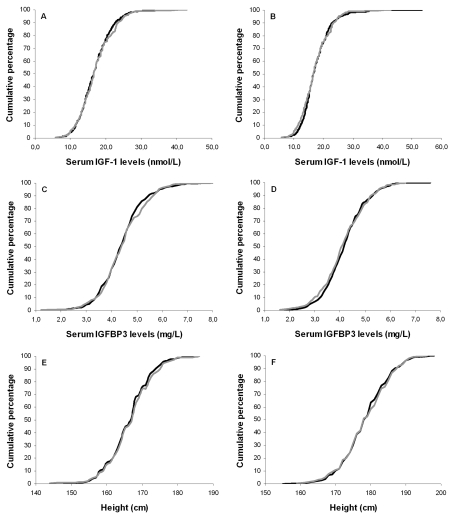
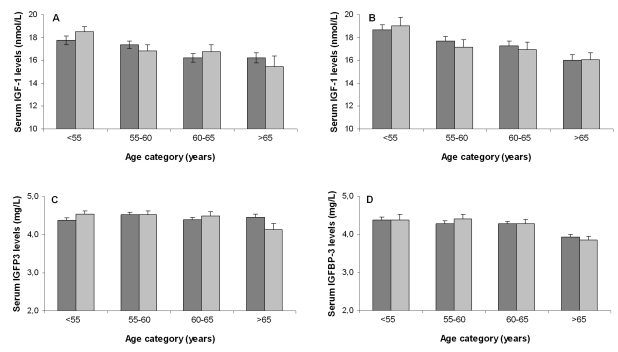
Recently, we have shown that compared to controls, long-lived familial nonagenarians (mean age: 93.4 years) from the Leiden Longevity Study displayed a lower mortality rate, and their middle-aged offspring displayed a lower prevalence of cardio-metabolic diseases, including diabetes mellitus. The evolutionarily conserved insulin/IGF-1 signaling (IIS) pathway has been implicated in longevity in model organisms, but its relevance for human longevity has generated much controversy. Here, we show that compared to their partners, the offspring of familial nonagenarians displayed similar non-fasted serum levels of IGF-1, IGFBP3 and insulin but lower non-fasted serum levels of glucose, indicating that familial longevity is associated with differences in insulin sensitivity.
Keywords: IGF-1; IGFBP3; familial longevity; glucose handling; height.
Conflict of interest statement
The authors of this manuscript have no conflict of interests to declare.
Figures
References
-
- Oeppen J, Vaupel JW. Demography. Broken limits to life expectancy. Science. 2002;296:1029–1031. - PubMed
-
- Schoenmaker M, de Craen AJ, de Meijer PH, Beekman M, Blauw GJ, Slagboom PE, Westendorp RG. Evidence of genetic enrichment for exceptional survival using a family approach: the Leiden Longevity Study. Eur J Hum Genet. 2006;14:79–84. - PubMed
-
- Westendorp RGJ, van Heemst D, Rozing MP, Frohlich M, de Craen AJM, Beekman M, Heijmans BT, Mooijaart SP, Blauw GJ, Slagboom PE. Nonagenarian siblings and their offspring display lower risk of mortality and morbidity than sporadic nonagenarians: The Leiden Longevity Study. J Am Geriatr Soc. 2009 In press . - PubMed
-
- Terry DF, Wilcox M, McCormick MA, Lawler E, Perls TT. Cardiovascular advantages among the offspring of centenarians. J Gerontol A Biol Sci Med Sci. 2003;58:M425–M431. - PubMed
-
- Atzmon G, Schechter C, Greiner W, Davidson D, Rennert G, Barzilai N. Clinical phenotype of families with longevity. J Am Geriatr Soc. 2004;52:274–277. - PubMed
Publication types
MeSH terms
Substances
LinkOut - more resources
Full Text Sources
Medical
Miscellaneous