


Young adult donor bone marrow infusions into female mice postpone age-related reproductive failure and improve offspring survival
- PMID: 20157587
- PMCID: PMC2815764
- DOI: 10.18632/aging.100002
Young adult donor bone marrow infusions into female mice postpone age-related reproductive failure and improve offspring survival
Abstract
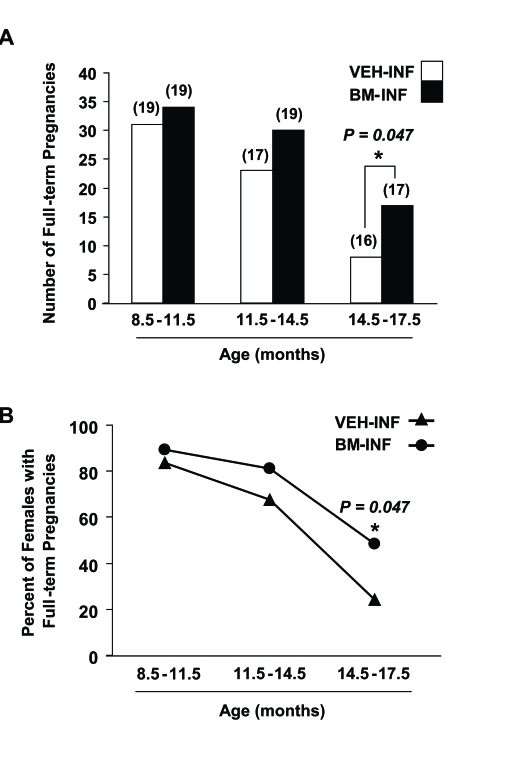
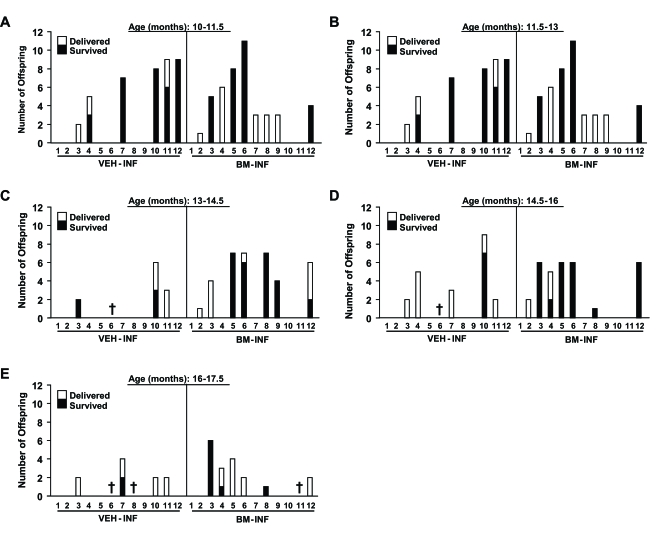
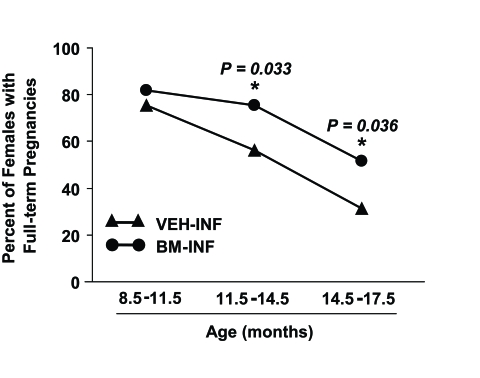
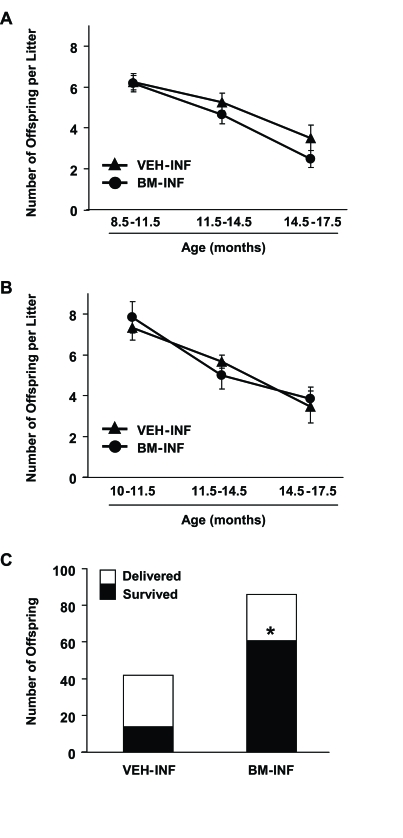
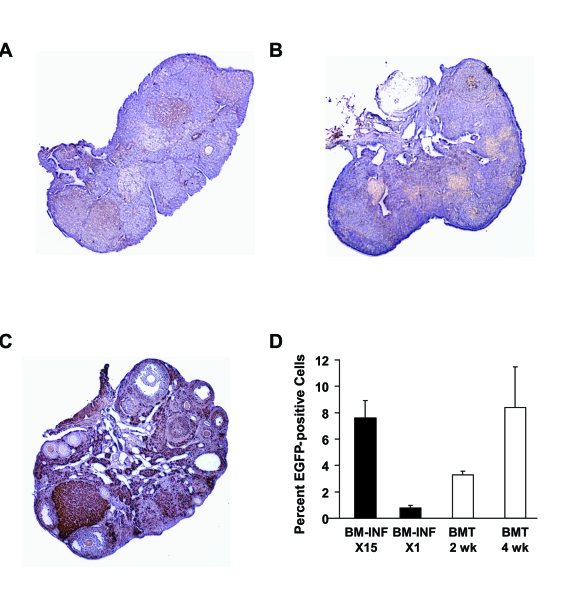
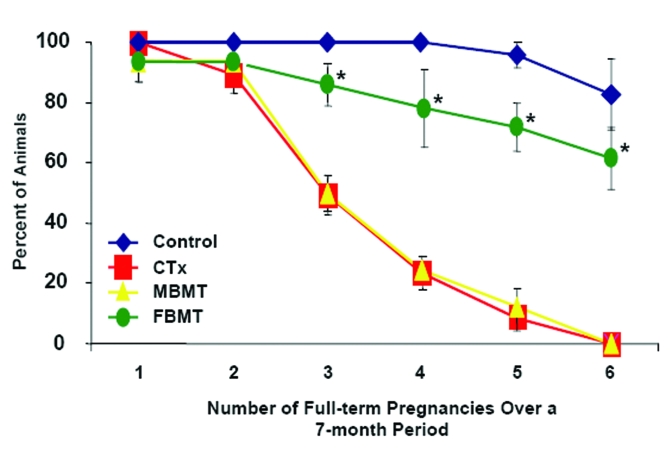
The female reproductive axis is the first major organ system of the body to fail with advancing age. In addition to a permanent cessation of fertile potential, the loss of cyclic ovarian function in humans heralds the onset of menopause, which in turn underlies the emergence of a diverse spectrum of health issues in aging women. Recently, it was reported that bone marrow (BM) transplantation (BMT) into adult female mice conditioned a week earlier with highly cytotoxic drugs rescues ovarian function and fertility. Herein we show in mice receiving no prior conditioning regimen that once-monthly infusions of BM-derived cells retrieved from young adult female donors bearing an enhanced green fluorescent protein (EGFP) transgene sustain the fertile potential of aging wild-type females long past their time of normal reproductive senescence. The fertility-promoting effects of female donor BM are observed regardless whether the infusions are initiated in young adult or middle-aged females. Although the mechanism by which BM infusions benefit the reproductive performance of aging females remains to be elucidated, the absence of EGFP-expressing offspring suggests that it does not depend on development of mature eggs derived from germline-committed cells in the donor marrow. However, donor BM-derived somatic cells accumulate in the recipients, indicating efficient donor cell engraftment without prior conditioning. These findings provide a strong impetus to further explore development of adult stem cell-based technologies to safely extend function of the female reproductive axis into advanced age without the need for toxic pre-conditioning protocols routinely used in other models of stem cell delivery.
Keywords: aging; bone marrow; fertility; menopause; ovary; reproduction; stem cell.
Conflict of interest statement
The authors have no conflict of interests to declare.
Figures
References
-
- Buckler H. The menopause transition: endocrine changes and clinical symptoms. J Br Menopause Soc. 2005;11:61–65. - PubMed
-
- Richardson SJ, Senikas V, Nelson JF. Follicular depletion during the menopausal transition: evidence for accelerated loss and ultimate exhaustion. J Clin Endocrinol Metab. 1987;65:1231–1237. - PubMed
-
- Gosden RG, Laing SC, Felicio LS, Nelson JF, Finch CE. Imminent oocyte exhaustion and reduced follicular recruitment mark the transition to acyclicity in aging C57BL/6J mice. Biol Reprod. 1983;28:255–260. - PubMed
Publication types
MeSH terms
Substances
Grants and funding
LinkOut - more resources
Full Text Sources
Other Literature Sources
Medical
Miscellaneous