


STAT1 and pathogens, not a friendly relationship
- PMID: 20159032
- PMCID: PMC7117016
- DOI: 10.1016/j.biochi.2010.02.009
STAT1 and pathogens, not a friendly relationship
Abstract
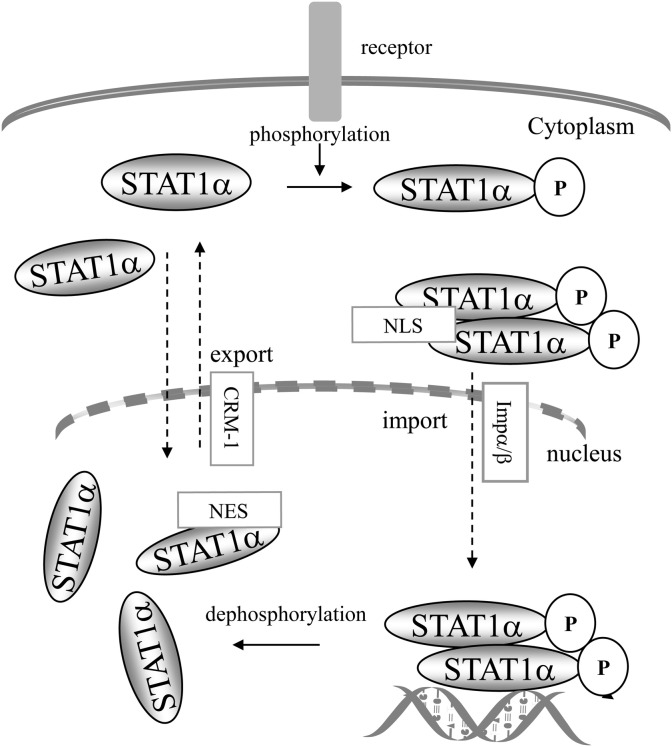
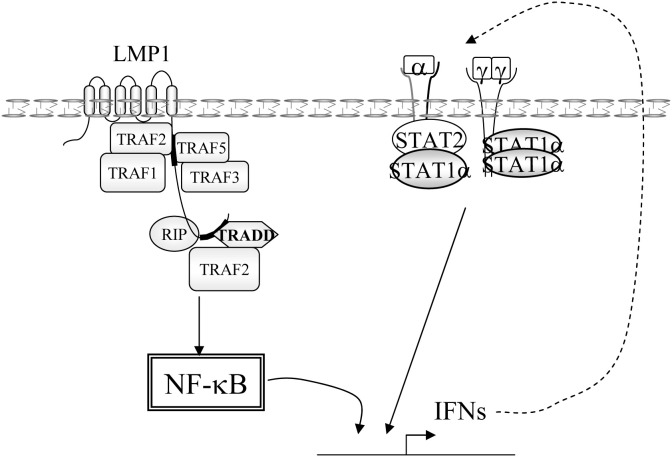
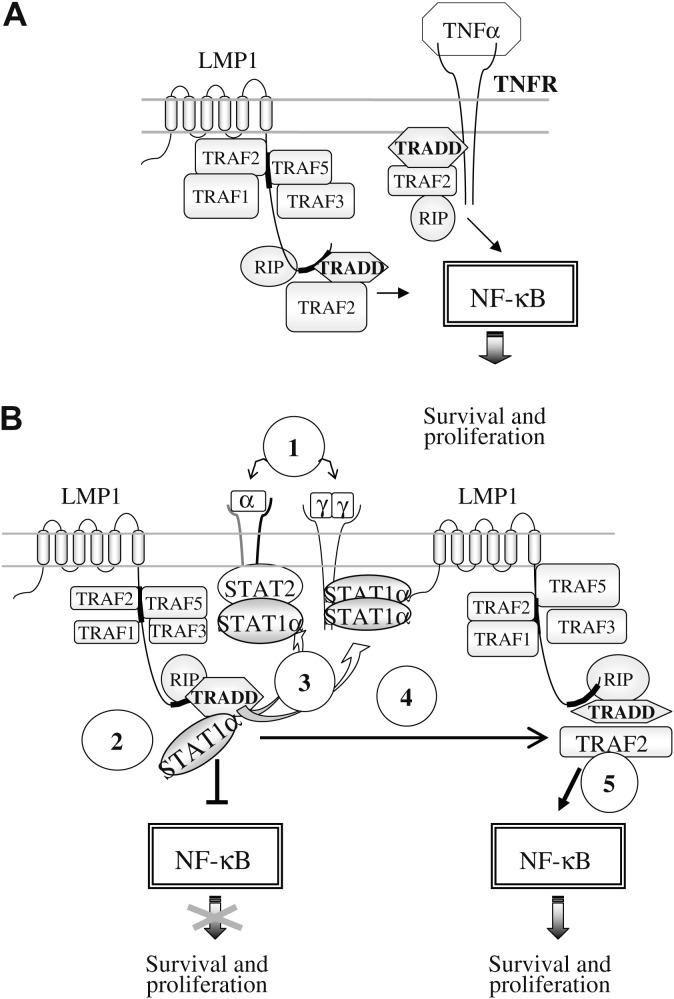
STAT1 belongs to the STAT family of transcription factors, which comprises seven factors: STAT1, STAT2, STAT3, STAT4, STAT5A, STAT5B and STAT6. STAT1 is a 91 kDa protein originally identified as the mediator of the cellular response to interferon (IFN) alpha, and thereafter found to be a major component of the cellular response to IFNgamma. STAT1 is, in fact, involved in the response to several cytokines and to growth factors. It is activated by cytokine receptors via kinases of the JAK family. STAT1 becomes phosphorylated and forms a dimer which enters the nucleus and triggers the transcription of its targets. Although not lethal at birth, selective gene deletion of STAT1 in mice leads to rapid death from severe infections, demonstrating its major role in the response to pathogens. Similarly, in humans who do not express STAT1, there is a lack of resistance to pathogens leading to premature death. This indicates a key, non-redundant function of STAT1 in the defence against pathogens. Thus, to successfully infect organisms, bacterial, viral or parasitic pathogens must overcome the activity of STAT1, and almost all the steps of this pathway can be blocked or inhibited by proteins produced in infected cells. Interestingly, some pathogens, like the oncogenic Epstein-Barr virus, have evolved a strategy which uses STAT1 activation.
Copyright 2010 Elsevier Masson SAS. All rights reserved.
Figures





References
-
- Levy D.E., Kessler D.S., Pine R., Darnell J.E., Jr. Cytoplasmic activation of ISGF3, the positive regulator of interferon-alpha-stimulated transcription, reconstituted in vitro. Genes Dev. 1989;3:1362–1371. - PubMed
-
- Horvath C.M. STAT proteins and transcriptional responses to extracellular signals. Trends Biochem. Sci. 2000;25:496–502. - PubMed
-
- Ihle J.N. The Stat family in cytokine signaling. Curr. Opin. Cell Biol. 2001;13:211–217. - PubMed
Publication types
MeSH terms
Substances
LinkOut - more resources
Full Text Sources
Research Materials
Miscellaneous
