


Increased tolerance to artemisinin in Plasmodium falciparum is mediated by a quiescence mechanism
- PMID: 20160056
- PMCID: PMC2863624
- DOI: 10.1128/AAC.01636-09
Increased tolerance to artemisinin in Plasmodium falciparum is mediated by a quiescence mechanism
Abstract
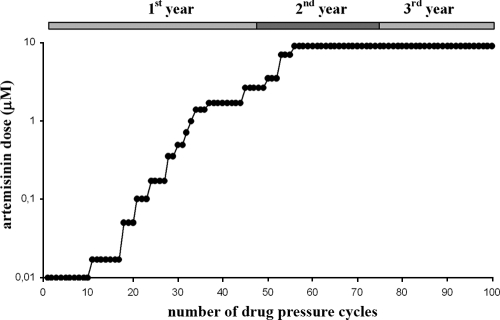
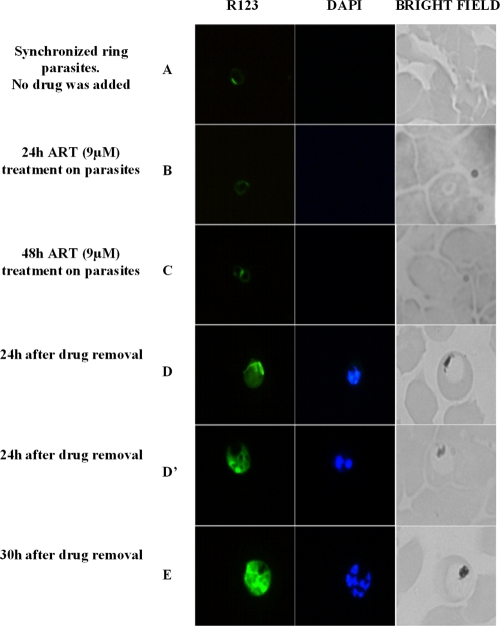
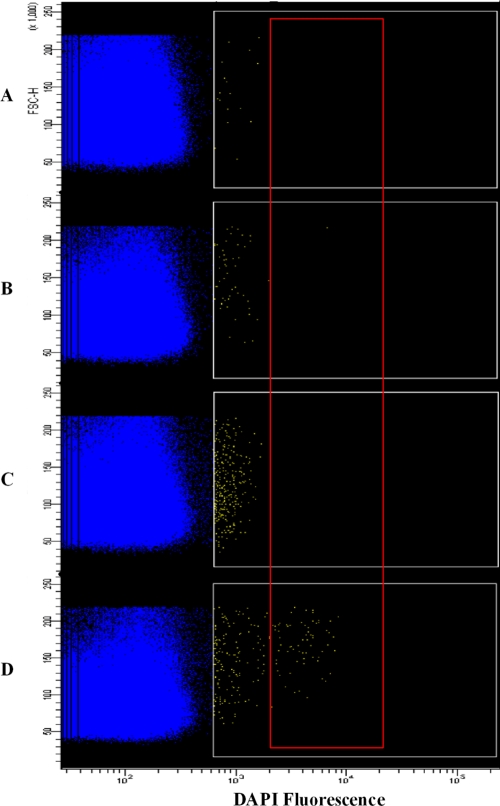
Artemisinin (ART)-based combination therapies (ACTs) are the first-line drugs-and often the last treatments-that can effectively cure Plasmodium falciparum infections. Unfortunately, the decreased clinical efficacy of artesunate, one of the major ART derivatives, was recently reported along the Thailand-Cambodia border. Through long-term artemisinin pressure in vitro, we have obtained an ART-tolerant strain that can survive extremely high doses of ART. We showed that drug pressure could induce a subpopulation of ring stages into developmental arrest, which can explain the ART tolerance in P. falciparum. We also observed interesting transcriptomic modifications possibly associated with the acquisition of ART tolerance. These modifications include the overexpression of heat shock and erythrocyte surface proteins and the downexpression of a cell cycle regulator and a DNA biosynthesis protein. This study highlights a new phenomenon in the Plasmodium response to ART that may explain the delayed clearance of parasites after artesunate treatment observed on the Thailand-Cambodia border and that provides important information for achieving a better understanding of the mechanisms of antimalarial resistance.
Figures
References
-
- Annan, Z., P. Durand, F. J. Ayala, C. Arnathau, P. Awono-Ambene, F. Simard, F. G. Razakandrainibe, J. C. Koella, D. Fontenille, and F. Renaud. 2007. Population genetic structure of Plasmodium falciparum in the two main African vectors, Anopheles gambiae and Anopheles funestus. Proc. Natl. Acad. Sci. U. S. A. 104:7987-7992. - PMC - PubMed
Publication types
MeSH terms
Substances
Grants and funding
LinkOut - more resources
Full Text Sources
Other Literature Sources
Medical
