


Toward a physical basis of attention and self regulation
- PMID: 20161073
- PMCID: PMC2748943
- DOI: 10.1016/j.plrev.2009.02.001
Toward a physical basis of attention and self regulation
Abstract
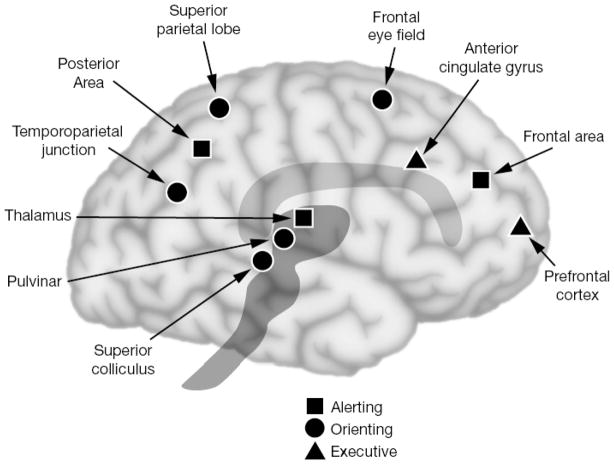
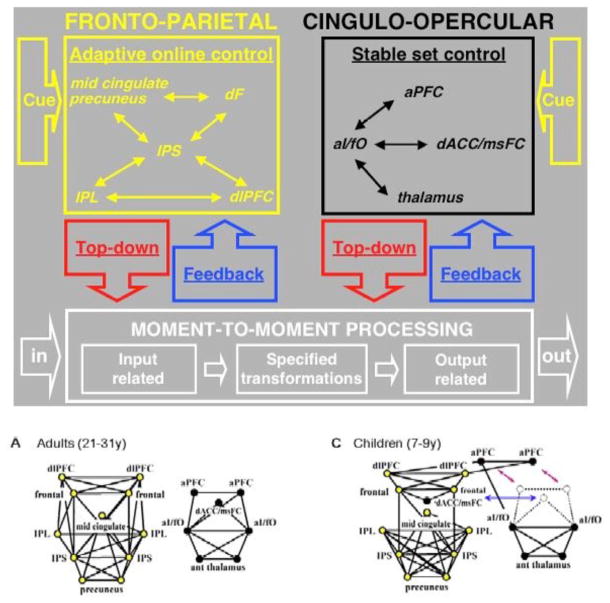
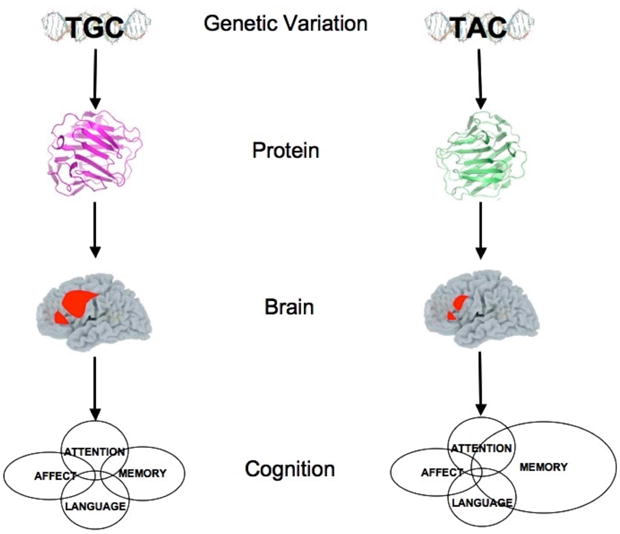
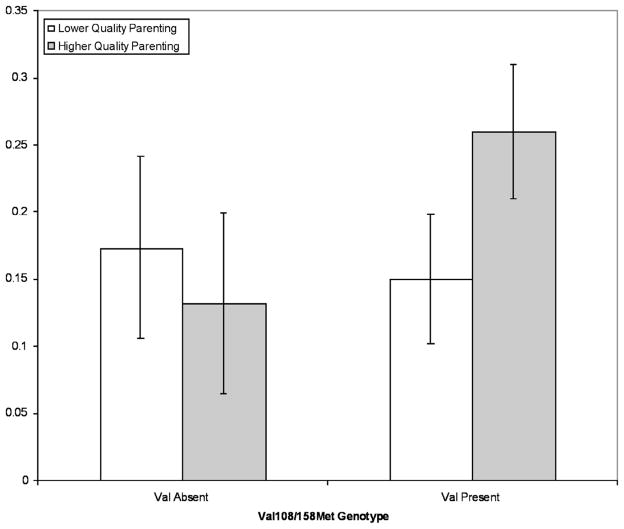
The concept of self-regulation is central to the understanding of human development. Self-regulation allows effective socialization and predicts both psychological pathologies and levels of achievement in schools. What has been missing are neural mechanisms to provide understanding of the cellular and molecular basis for self-regulation. We show that self-regulation can be measured during childhood by parental reports and by self-reports of adolescents and adults. These reports are summarized by a higher order factor called effortful control, which reflects perceptions about the ability of a given person to regulate their behavior in accord with cultural norms. Throughout childhood effortful control is related to children's performance in computerized conflict related tasks. Conflict tasks have been shown in neuroimaging studies to activate specific brain networks of executive attention. Several brain areas work together at rest and during cognitive tasks to regulate competing brain activity and thus control resulting behavior. The cellular structure of the anterior cingulate and insula contain cells, unique to humans and higher primates that provide strong links to remote brain areas. During conflict tasks, anterior cingulate activity is correlated with activity in remote sensory and emotional systems, depending upon the information selected for the task. During adolescence the structure and activity of the anterior cingulate has been found to be correlated with self-reports of effortful control.Studies have provided a perspective on how genes and environment act to shape the executive attention network, providing a physical basis for self-regulation. The anterior cingulate is regulated by dopamine. Genes that influence dopamine levels in the CNS have been shown to influence the efficiency of self-regulation. For example, alleles of the COMT gene that influence the efficiency of dopamine transmission are related to the ability to resolve conflict. Humans with disorders involving deletion of this gene exhibit large deficits in self-regulation. Alleles of other genes influencing dopamine and serotonin transmission have also been found to influence ability to resolve conflict in cognitive tasks. However, as is the case for many genes, the effectiveness of COMT alleles in shaping self-regulation depends upon cultural influences such as parenting. Studies find that aspects of parenting quality and parent training can influence child behavior and the efficiency of self-regulation.During development, the network that relates to self-regulation undergoes important changes in connectivity. Infants can use parts of the self-regulatory network to detect errors in sensory information, but the network does not yet have sufficient connectivity to organize brain activity in a coherent way. During middle childhood, along with increased projection cells involved in remote connections of dorsal anterior cingulate and prefrontal and parietal cortex, executive network connectivity increases and shifts from predominantly short to longer range connections. During this period specific exercises can influence network development and improve self-regulation. Understanding the physical basis of self-regulation has already cast light on individual differences in normal and pathological states and gives promise of allowing the design of methods to improve aspects of human development.
Keywords: Attention; genetic alleles; neural networks; self-regulation.
Figures
References
-
- Ahadi SA, Rothbart MK, Ye R. Children’s Temperament in the U.S. and China: Similarities and differences. European Journal of Personality. 1993;7:359–378.
-
- Allman JJ, Watson KK, Tetreault NA, Hakeem AY. Intuition and autism: A possible role for Von Economo neurons. Trends in Cognitive Science. 2005;9:367–373. - PubMed
-
- Auerbach J, Geller V, Letzer S, Shinwell E, Levine J, Belmaker RH, Ebstein RP. Dopamine D4 receptor (D4DR) and serotonin transporter promoter (5-HTTLPR) polymorphisms in the determination of temperament in two month old infants. Molecular Psychiatry. 1999;4:369–374. - PubMed
-
- Bakermans-Kranenburg MJ, van IJzendoorn MH. Gene-environment interaction of the dopamine D4 receptor (DRD4) and observed maternal insensitivity predicting externalizing behavior in preschoolers. Developmental Psychobiology. 2006;48:406–409. - PubMed
-
- Bakermans-Kranenburg MJ, van IJzendoorn MH, Pijlman FTA, Mesman J, Juffer F. Experimental evidenc for differential susceptibility: dopamine D4 Receptor Polymorphism (DRD4 VNTR) moderates intervention effects on toddlers externalizing behavior in a randomized controlled trial. Developmental Psychology. 2008;44:293–300. - PubMed
Grants and funding
LinkOut - more resources
Full Text Sources
Miscellaneous
