Meta-Analysis
. 2010 Feb 9;5(2):e9119.
doi: 10.1371/journal.pone.0009119.

Intravaginal practices, vaginal infections and HIV acquisition: systematic review and meta-analysis

Affiliations
Meta-Analysis

Intravaginal practices, vaginal infections and HIV acquisition: systematic review and meta-analysis

Adriane Martin Hilber et al. PLoS One. .

Abstract

Background: Intravaginal practices are commonly used by women to manage their vaginal health and sexual life. These practices could, however, affect intravaginal mucosal integrity. The objectives of this study were to examine evidence for associations between: intravaginal practices and acquisition of HIV infection; intravaginal practices and vaginal infections; and vaginal infections and HIV acquisition.

Methodology/principal findings: We conducted a systematic review of prospective longitudinal studies, searching 15 electronic databases of journals and abstracts from two international conferences to 31(st) January 2008. Relevant articles were selected and data extracted in duplicate. Results were examined visually in forest plots and combined using random effects meta-analysis where appropriate. Of 2120 unique references we included 22 publications from 15 different studies in sub-Saharan Africa and the USA. Seven publications from five studies examined a range of intravaginal practices and HIV infection. No specific vaginal practices showed a protective effect against HIV or vaginal infections. Insertion of products for sex was associated with HIV in unadjusted analyses; only one study gave an adjusted estimate, which showed no association (hazard ratio 1.09, 95% confidence interval, CI 0.71, 1.67). HIV incidence was higher in women reporting intravaginal cleansing but confidence intervals were wide and heterogeneity high (adjusted hazard ratio 1.88, 95%CI 0.53, 6.69, I(2) 83.2%). HIV incidence was higher in women with bacterial vaginosis (adjusted effect 1.57, 95%CI 1.26, 1.94, I(2) 19.0%) and Trichomonas vaginalis (adjusted effect 1.64, 95%CI 1.28, 2.09, I(2) 0.0%).

Conclusions/significance: A pathway linking intravaginal cleaning practices with vaginal infections that increase susceptibility to HIV infection is plausible but conclusive evidence is lacking. Intravaginal practices do not appear to protect women from vaginal infections or HIV and some might be harmful.


Conflict of interest statement

Competing Interests: Paolo Miotti is an employee of the United States National Institutes of Health.

Figures

Figure 1
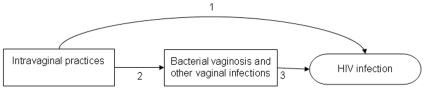
Figure 1. Simplified hypothesized pathways linking intravaginal practices and HIV.
Intravaginal practices are hypothesized to cause physical or chemical damage to vaginal epithelium. In response, changes in vaginal flora associated with bacterial vaginosis occur, or colonization by other vaginal pathogens occurs. These conditions facilitate HIV transmission. Intravaginal practices might also increase the transmission of HIV through a direct effect or other pathways. Numbers refer to the objectives of the review. Objective 1 includes the estimation of the association between intravaginal practices and HIV infection. Objective 2 estimates the association between intravaginal practices and vaginal infections. Objective 3 estimates the association between disrupted vaginal flora, bacterial vaginosis or other vaginal infections and HIV-1 acquisition.
Figure 2
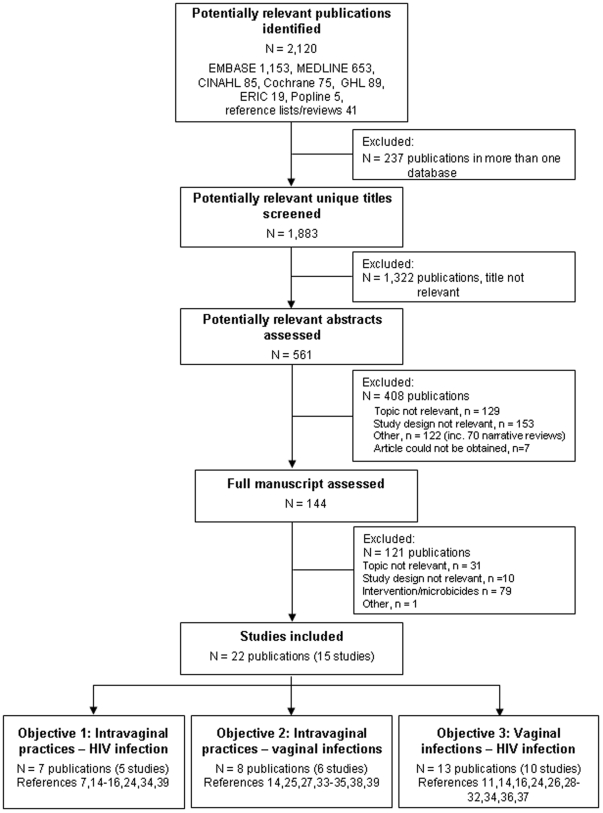
Figure 2. Flow chart of identification and selection of studies for inclusion.
Steps followed to identify relevant studies and select those eligible for inclusion in the review. Publications and studies in the box ‘Studies included’ could address multiple objectives and are included in each relevant ‘Objective’ below. EMBASE, Excerpta Medica Database; MEDLINE (Ovid), Medical Literature Analysis and Retrieval System Online; CINAHL, Cumulative Index to Nursing and Allied Health Literature; Cochrane, Cochrane Library (John Wiley); ERIC, Educational Resources Information Centre; GHL, Global Health Library; Popline, Population Information Online.
Figure 3
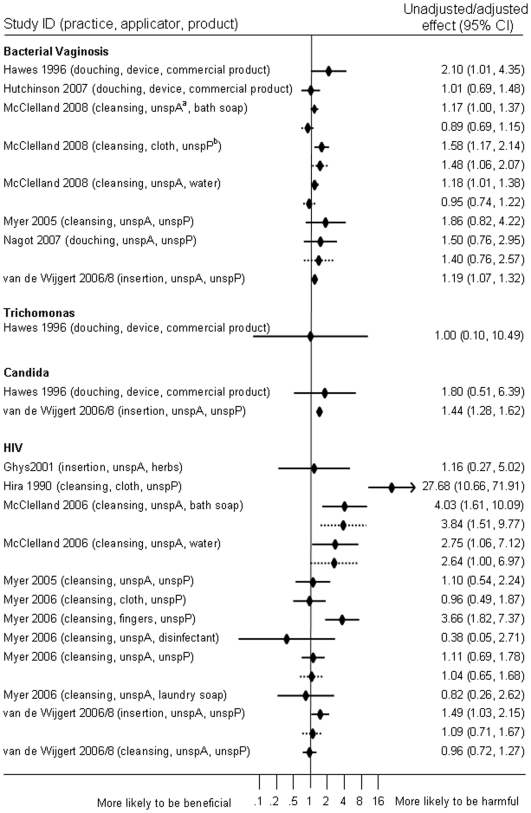
Figure 3. Forest plot of all reported and quantified associations between intravaginal practices and any infection.
Forest plot showing unadjusted and/or adjusted effect estimates reported in included studies, according to the infection studied as the outcome. Individual studies can be included more than once if multiple outcomes are reported. If both unadjusted and adjusted effects were reported for the same combination of practice, product and applicator, these are presented with the unadjusted effect estimate above the adjusted effect estimate. No pooled estimates are shown in this plot. Minor differences between effect estimates in the table and those in published papers are possible.
Figure 4
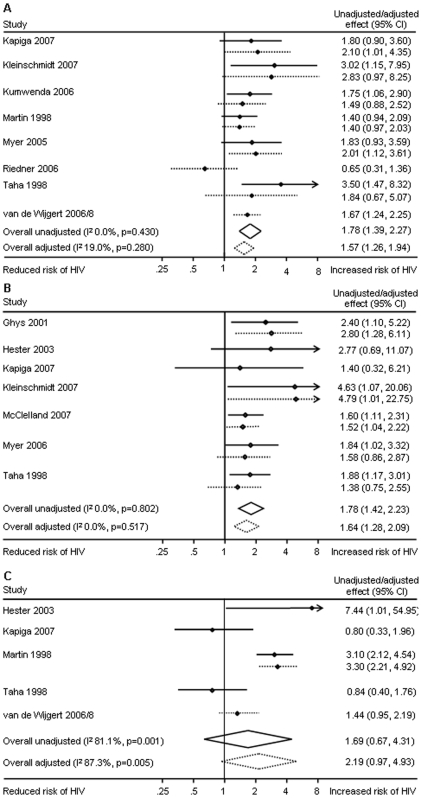
Figure 4. Meta-analyses of studies reporting associations between vaginal infections and HIV, unadjusted and adjusted effect estimates.
Panel A: Bacterial vaginosis is associated with incident HIV infection. Eight studies contribute to the pooled adjusted effect estimate with little between study heterogeneity. Panel B: Trichomonas vaginalis infection is associated with incident HIV infection. Five studies contribute to the pooled adjusted effect estimate with no between study heterogeneity. Panel C: Candida or other yeast infections are not consistently associated with incident HIV infection. Two studies, with differing results contribute to the pooled adjusted effect estimate. Minor differences between effect estimates in the table and those in published papers are possible.

References

    1. Hilber AM, Chersich MF, van de Wijgert JH, Rees H, Temmerman M. Vaginal practices, microbicides and HIV: what do we need to know? Sex Transm Infect. 2007;83:505–508. - PMC - PubMed
    1. Martin Hilber A, Hull TH, Preston-Whyte E, Bagnol B, Wacharasin C, et al. A Cross Cultural Study of Vaginal Practices and Sexuality: Implications for Sexual Health. Soc Sci Med. 2010;70:392–400. - PubMed
    1. Shattock RJ, Moore JP. Inhibiting sexual transmission of HIV-1 infection. Nature Reviews Microbiology. 2003;1:25–34. - PubMed
    1. Kilmarx PH, Limpakarnjanarat K, Supawitkul S, Korattana S, Young NL, et al. Mucosal disruption due to use of a widely-distributed commercial vaginal product: potential to facilitate HIV transmission. AIDS. 1998;12:767–773. - PubMed
    1. Mbikusita-Lewanika M, Stephen H, Thomas J. The prevalence of the use of ‘dry sex’ traditional medicines, among Zambian women, and the profile of the users. Psychol Health Med. 2009;14:227–238. - PubMed

Publication types