


Culture independent molecular analysis of bacterial communities in the mangrove sediment of Sundarban, India
- PMID: 20163727
- PMCID: PMC2837041
- DOI: 10.1186/1746-1448-6-1
Culture independent molecular analysis of bacterial communities in the mangrove sediment of Sundarban, India
Abstract
Background: Sundarban is the world's largest coastal sediment comprising of mangrove forest which covers about one million hectares in the south-eastern parts of India and southern parts of Bangladesh. The microbial diversity in this sediment is largely unknown till date. In the present study an attempt has been made to understand the microbial diversity in this sediment using a cultivation-independent molecular approach.
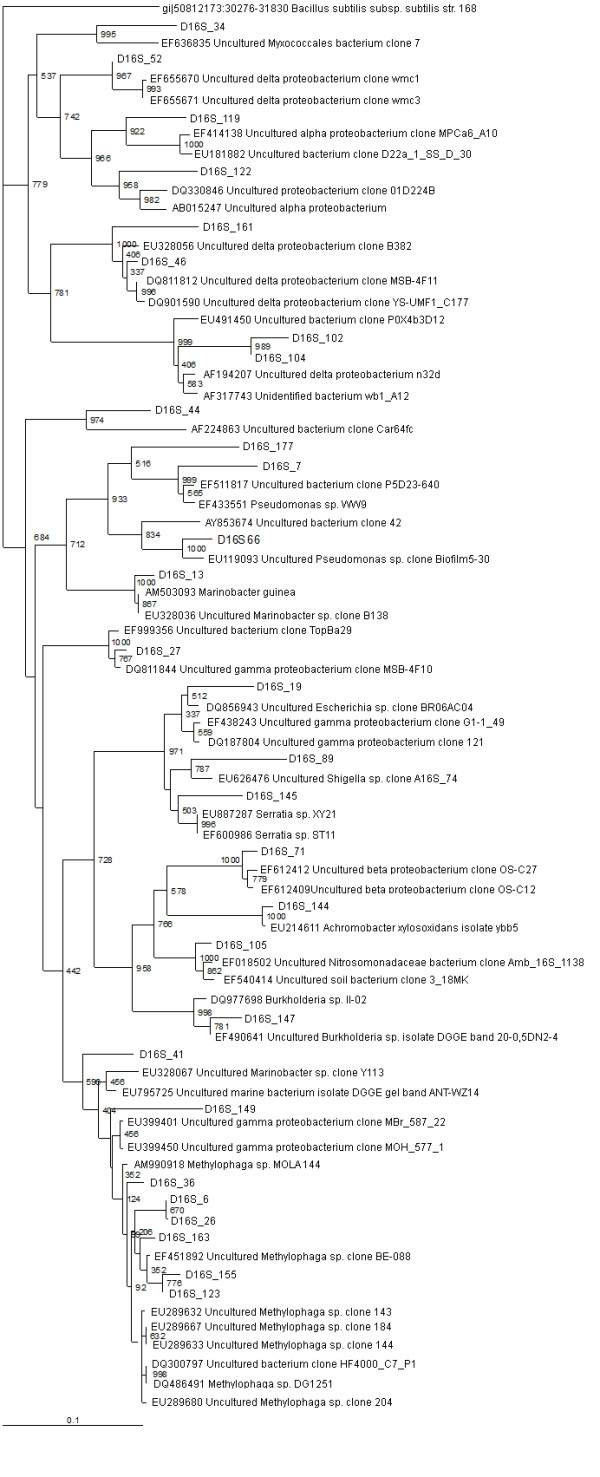
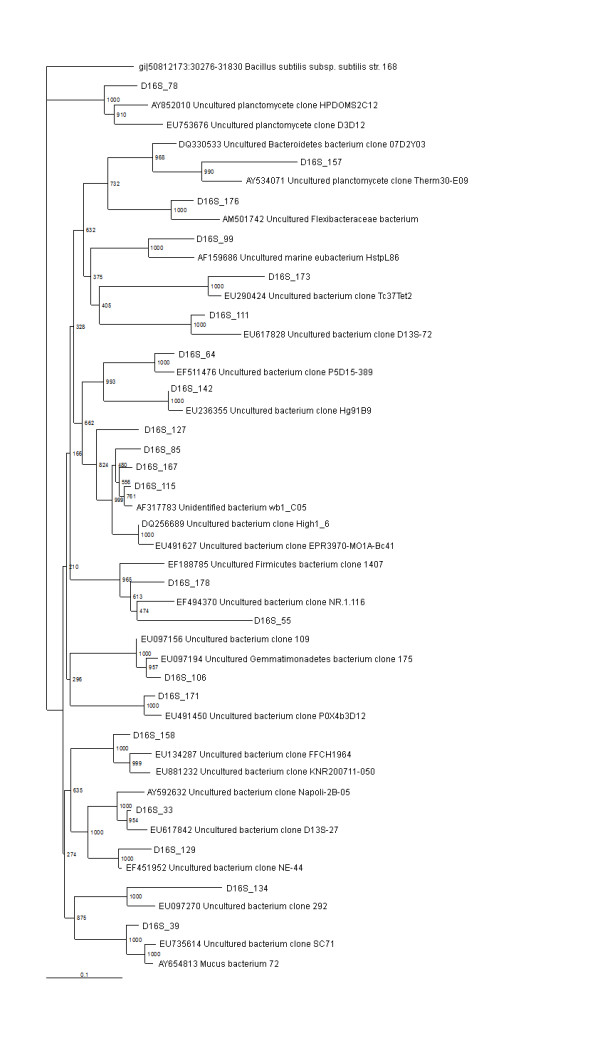
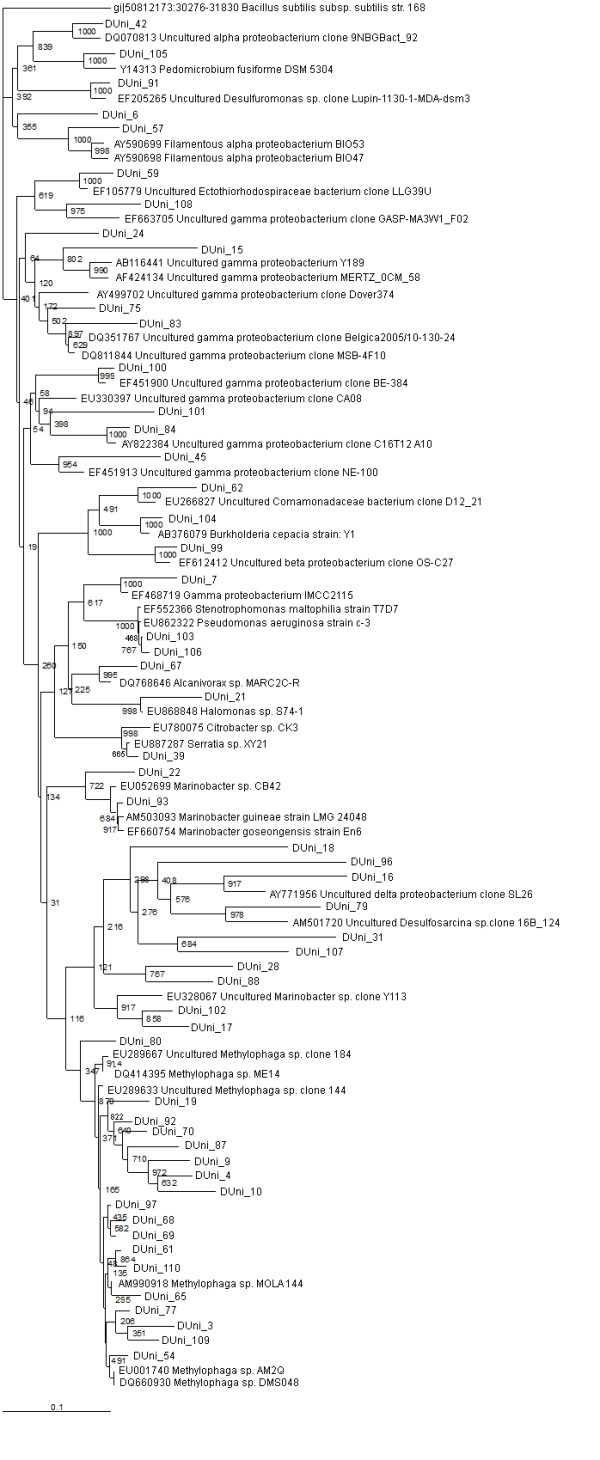
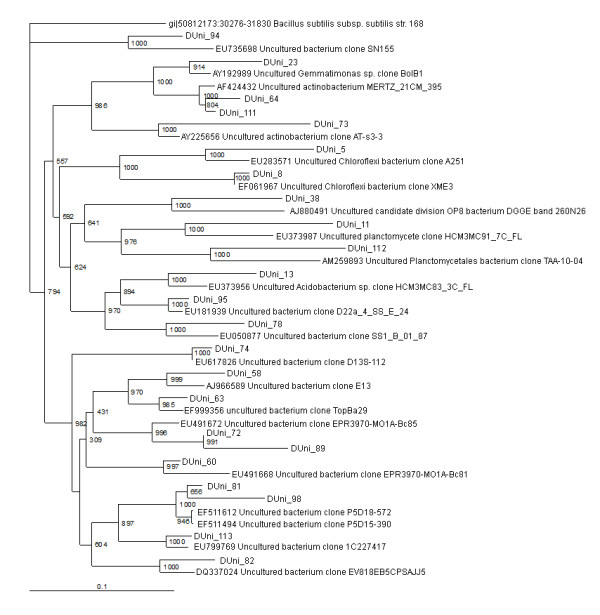
Results: Two 16 S rRNA gene libraries were constructed and partial sequencing of the selected clones was carried out to identify bacterial strains present in the sediment. Phylogenetic analysis of partially sequenced 16 S rRNA gene sequences revealed the diversity of bacterial strains in the Sundarban sediment. At least 8 different bacterial phyla were detected. The major divisions of detected bacterial phyla were Proteobacteria (alpha, beta, gamma, and delta), Flexibacteria (CFB group), Actinobacteria, Acidobacteria, Chloroflexi, Firmicutes, Planctomycetes and Gammatimonadates.
Conclusion: The gammaproteobacteria were found to be the most abundant bacterial group in Sundarban sediment. Many clones showed similarity with previously reported bacterial lineages recovered from various marine sediments. The present study indicates a probable hydrocarbon and oil contamination in this sediment. In the present study, a number of clones were identified that have shown similarity with bacterial clones or isolates responsible for the maintenance of the S-cycle in the saline environment.
Figures
References
-
- Alongi DM, Christoffersen P, Tirendi F. The influence of forest type on microbial-nutrient relationships in tropical mangrove sediments. J Exp Mar Biol Ecol. 1993;171:201–223. doi: 10.1016/0022-0981(93)90004-8. - DOI
-
- Holguin G, Guzman MA, Bashan Y. Two new nitrogen-fixing bacteria from the rhizosphere of mangrove trees: their isolation, identification and in vitro interaction with rhizosphere Staphylococcus sp. FEMS Microbiol Ecol. 1992;101:207–216. doi: 10.1111/j.1574-6968.1992.tb05777.x. - DOI
LinkOut - more resources
Full Text Sources
Miscellaneous
