


Antifungal therapy in infants and children with proven, probable or suspected invasive fungal infections
- PMID: 20166083
- PMCID: PMC10576261
- DOI: 10.1002/14651858.CD006343.pub2
Antifungal therapy in infants and children with proven, probable or suspected invasive fungal infections
Abstract
Background: Invasive fungal infections are associated with significant morbidity and mortality in children. Optimal treatment strategies are yet to be defined.
Objectives: This review aims to systematically identify and summarise the effects of different antifungal therapies in children with proven, probable or suspected invasive fungal infections.
Search strategy: We searched the Cochrane Central Register of Controlled Trials (CENTRAL) (The Cochrane Library 2008, Issue 3), MEDLINE (1966 to September 2008), EMBASE (1980 to September 2008) and CINAHL (1988 to September 2008) without language restrictions. We also handsearched reference lists and abstracts of conference proceedings and scientific meetings, and contacted authors of included studies and pharmaceutical manufacturers.
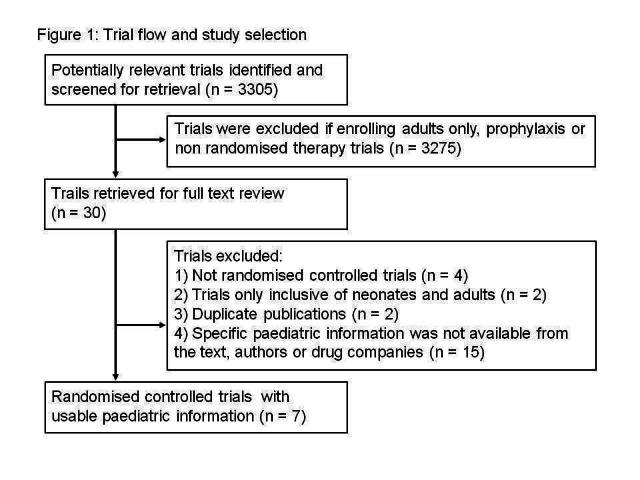
Selection criteria: We included randomised clinical trials (RCTs) comparing a systemic antifungal agent with a comparator (including placebo) in children (one month to 16 years) with proven, probable or suspected invasive fungal infection.
Data collection and analysis: Two review authors independently applied selection criteria, performed quality assessment, and extracted data using an intention-to-treat approach. We synthesised data using the random-effects model and expressed results as relative risks (RR) with 95% confidence intervals (CIs).
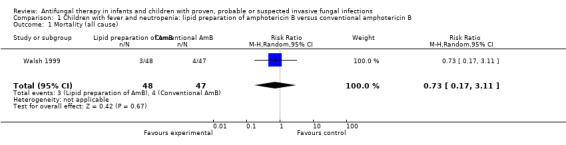
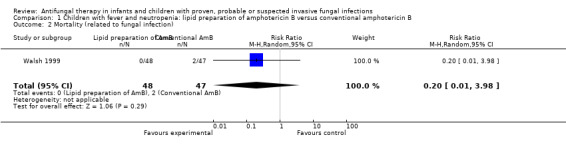
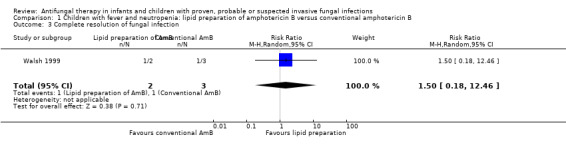
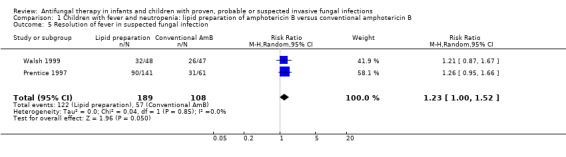
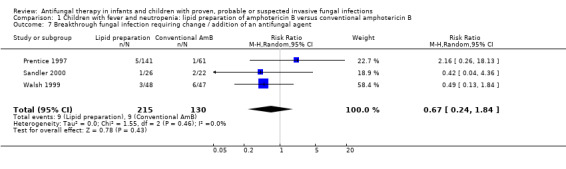
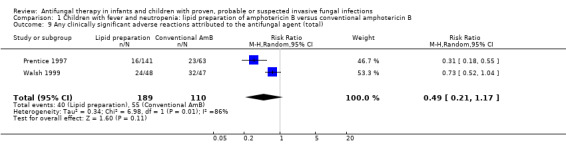
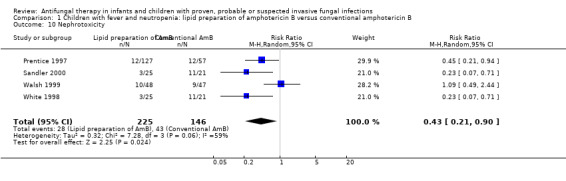
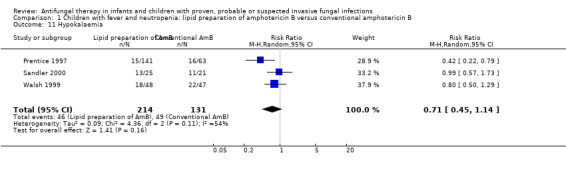
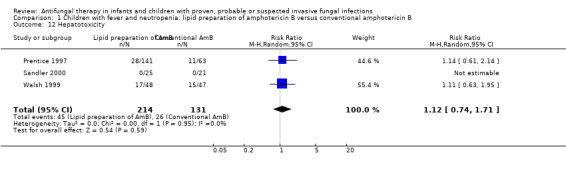
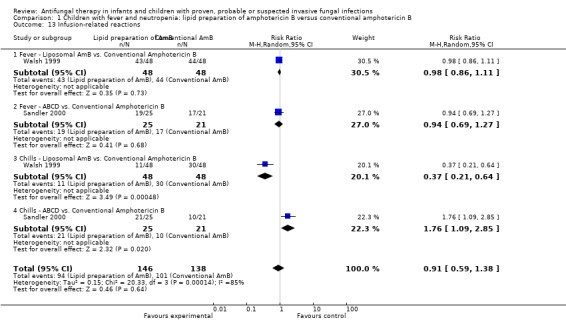
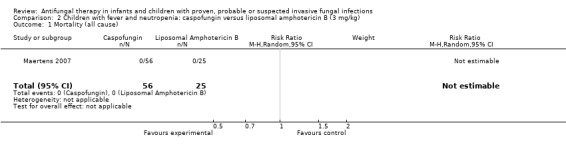
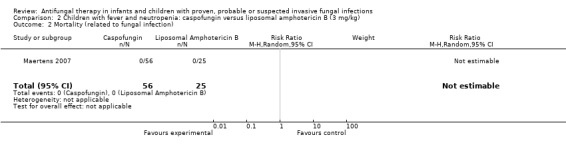
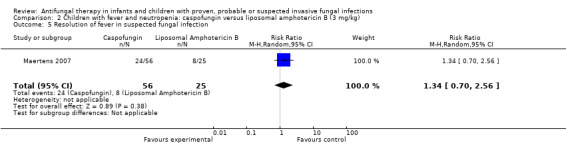
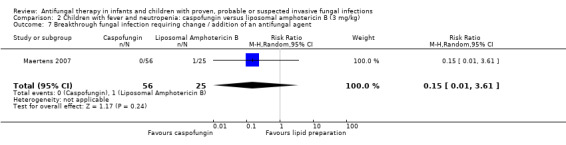
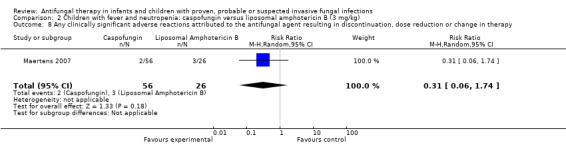
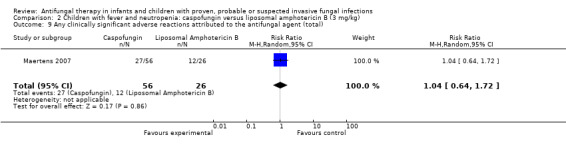
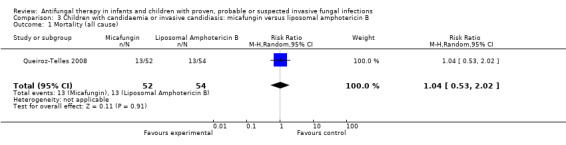
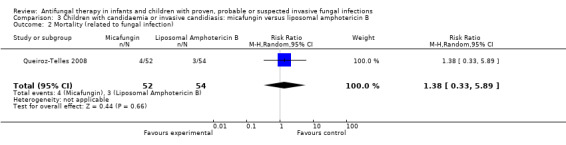
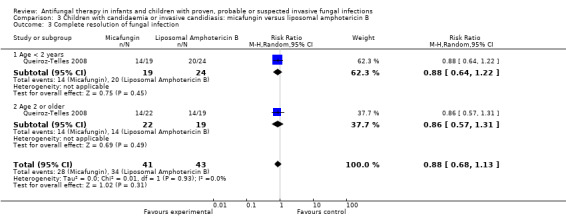
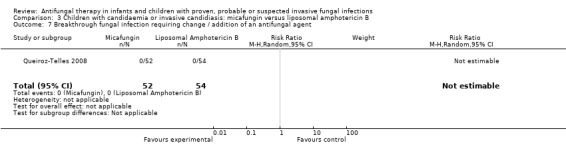
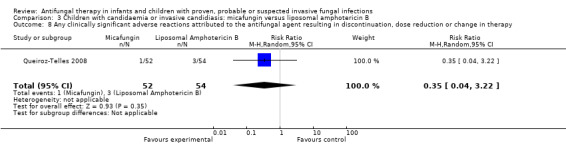
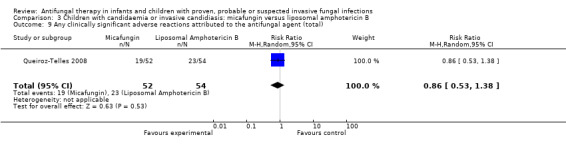
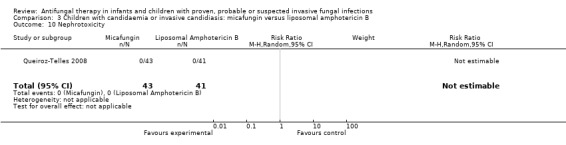
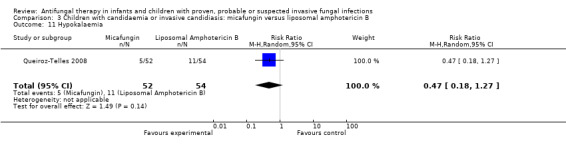
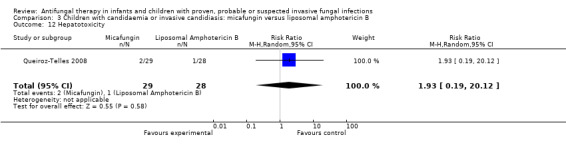
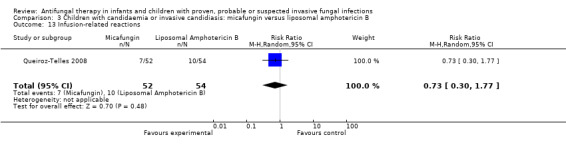
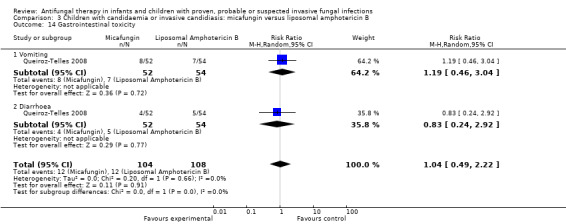
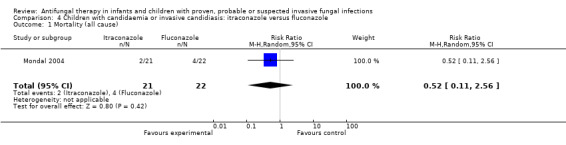
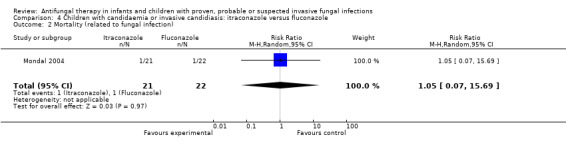
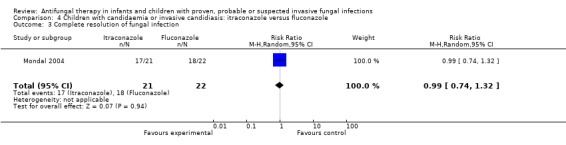
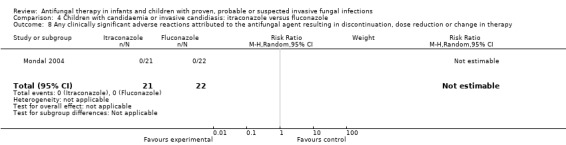
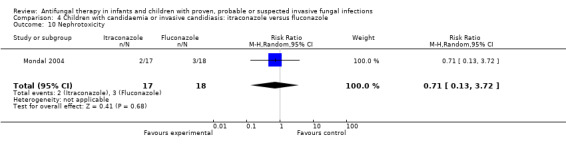
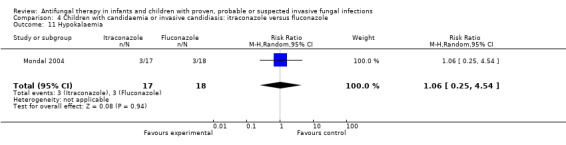
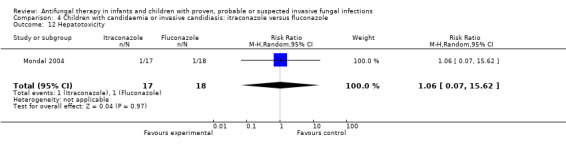
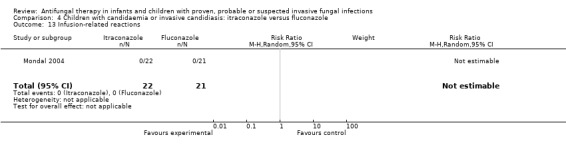
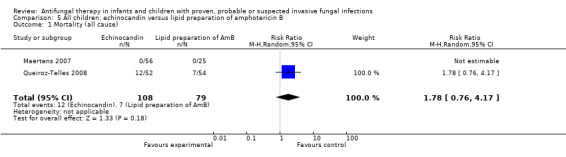
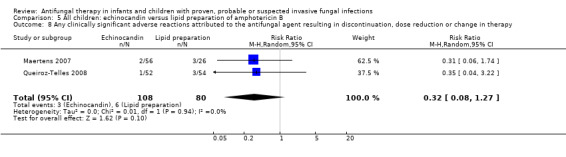
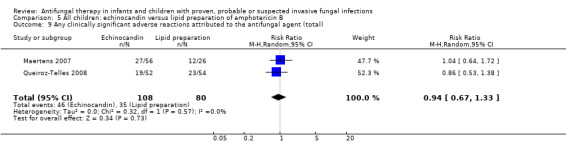
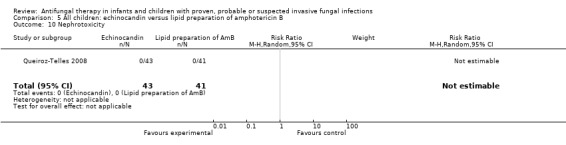
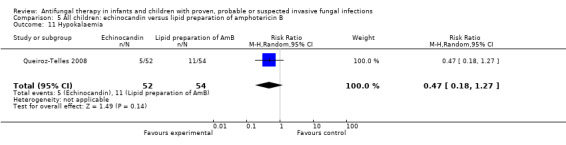
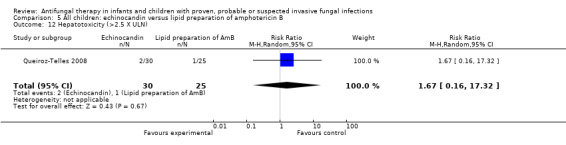
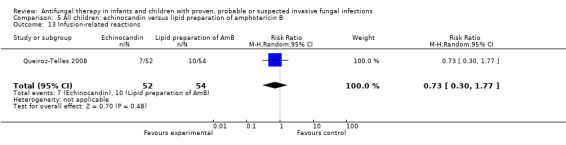
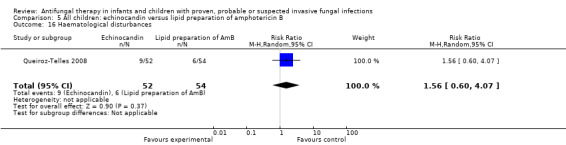
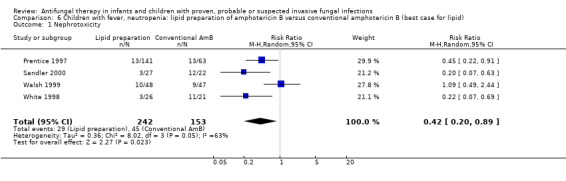
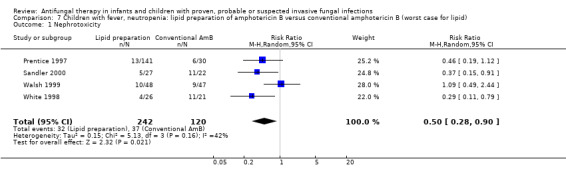
Main results: We included seven trials of antifungal agents in children with prolonged fever and neutropenia (suspected fungal infection) and candidaemia or invasive candidiasis (proven fungal infection). Four trials compared a lipid preparation of amphotericin B with conventional amphotericin B (395 participants), one trial compared an echinocandin with a lipid preparation of amphotericin B (82 participants) in suspected infection; one trial compared an echinocandin with a lipid preparation of amphotericin B in children with candidaemia or invasive candidiasis (109 participants) and one trial compared different azole antifungals in children with candidaemia (43 participants). No difference in all-cause mortality and other primary endpoints (mortality related to fungal infection or complete resolution of fungal infections) were observed. No difference in breakthrough fungal infection was observed in children with prolonged fever and neutropenia.When lipid preparations and conventional amphotericin B were compared in children with prolonged fever and neutropenia, nephrotoxicity was less frequently observed with a lipid preparation (RR 0.43, 95% CI 0.21 to 0.90, P = 0.02) however substantial heterogeneity was observed (I(2) = 59%, P = 0.06). Children receiving liposomal amphotericin B were less likely to develop infusion-related reactions compared with conventional amphotericin B (chills: RR 0.37, 95% CI 0.21 to 0.64, P = 0.0005). Children receiving a colloidal dispersion were more likely to develop such reactions than with liposomal amphotericin B (chills: RR 1.76, 95% CI 1.09 to 2.85, P = 0.02). The rate of other clinically significant adverse reactions attributed to the antifungal agent (total reactions; total reactions leading to treatment discontinuation, dose reduction or change in therapy; hypokalaemia and hepatotoxicity) were not significantly different. When echinocandins and lipid preparations were compared, the rate of clinically significant adverse reactions (total reactions; total reactions leading to treatment discontinuation, dose reduction or change in therapy) were not significantly different.
Authors' conclusions: Limited paediatric data are available comparing antifungal agents in children with proven, probable or suspected invasive fungal infection. No differences in mortality or treatment efficacy were observed when antifungal agents were compared. Children are less likely to develop nephrotoxicity with a lipid preparation of amphotericin B compared with conventional amphotericin B. Further comparative paediatric antifungal drug trials and epidemiological and pharmacological studies are required highlighting the differences between neonates, children and adults with invasive fungal infections.
Conflict of interest statement
Dr Christopher Blyth and Dr Katherine Hale are members of the Australian and New Zealand Mycology Interest Group, which is sponsored by Gilead Science, Pfizer, Merck Sharp & Dohme and Schering‐Plough.
Dr Katherine Hale has received investigator initiated research funding from Gilead Sciences and Pfizer for other research projects.
Figures
Update of
References
References to studies included in this review
Maertens 2007 {published and unpublished data}
-
- Maertens J, Madero L, Reilly A, Lehrnbecher T, Groll A, Jafri H, et al. A randomized, double blind, multicenter trial of caspofungin (CAS) versus (vs) liposomal amphotericin B (LAMB) for empirical antifungal therapy (EAFRx) of pediatric patients (pts) with persistent fever & neutropenia (PFN). Program and abstracts of the 47th Annual Interscience Conference on Antimicrobial Agents and Chemotherapy. Chicago, USA [Abstract M‐621]. 2007 Sept.
Mondal 2004 {published and unpublished data}
-
- Mondal RK, Singhi SC, Chakrabarti A, Jayashree M. Randomized comparison between fluconazole and itraconazole for the treatment of candidemia in a pediatric intensive care unit: a preliminary study. Pediatric Critical Care Medicine 2004;5(6):561‐5. - PubMed
Prentice 1997 {published data only (unpublished sought but not used)}
-
- Prentice HG, Hann IM, Herbrecht R, Aoun M, Kvaloy S, Catovsky D, et al. A randomized comparison of liposomal versus conventional amphotericin B for the treatment of pyrexia of unknown origin in neutropenic patients. British Journal of Haematology 1997;98(3):711‐8. - PubMed
Queiroz‐Telles 2008 {published data only (unpublished sought but not used)}
-
- Queiroz‐Telles F, Berezin E, Leverger G, Freire A, Vyver A, Chotpitayasunondh T et al for the Micafungin Invasive Candidiasis Study Group. Micafungin versus liposomal amphotericin B for pediatric patients with invasive candidiasis: Substudy of a randomized double‐blind trial. Pediatric Infectious Disease Journal 2008;27(9):820–6. - PubMed
Sandler 2000 {published data only (unpublished sought but not used)}
-
- Sandler ES, Mustafa MM, Tkaczewski I, Graham ML, Morrison VA, Green M, et al. Use of amphotericin B colloidal dispersion in children. Journal of Pediatric Hematology/Oncology 2000;22(3):242‐6. - PubMed
Walsh 1999 {published and unpublished data}
-
- Walsh TJ, Finberg RW, Arndt C, Hiemenz J, Schwartz C, Bodensteiner D, et al. Liposomal amphotericin B for empirical therapy in patients with persistent fever and neutropenia. National Institute of Allergy and Infectious Diseases Mycoses Study Group. New England Journal of Medicine 1999;340(10):764‐71. - PubMed
White 1998 {published data only (unpublished sought but not used)}
-
- White MH, Bowden RA, Sandler ES, Graham ML, Noskin GA, Wingard JR, et al. Randomized, double‐blind clinical trial of amphotericin B colloidal dispersion vs. amphotericin B in the empirical treatment of fever and neutropenia. Clinical Infectious Diseases 1998;27(2):296‐302. - PubMed
References to studies excluded from this review
Arrietta 2006 {published data only}
-
- Arrieta AC, Telles Filho F, Berezin E, Freire A, Diekmann‐Berndt H. A randomized, double‐blind trial comparing micafungin (MCFG) and liposomal amphotericin B (L‐AMB) in pediatric patients with invasive candidiasis.. Program and abstracts of the 46th Annual Interscience Conference on Antimicrobial Agents and Chemotherapy. San Francisco USA [Abstract M‐1308b] . 2006 Sept.
Arrietta 2007 {published data only}
-
- Arrieta A, Queiroz‐Telles F, Berezin E, Freire A, Diekmann S, Koblinger S. Micafungin versus liposomal amphotericin B (AmBisome®) in paediatric patients with invasive candidiasis or candidaemia. Program and abstracts of the 17th European Congress of Clinical Microbiology and Infectious Diseases. Munich, Germany [Abstract O141]. 2007 April.
Bodhe 2002 {published data only}
-
- Bodhe PV, Kotwani RN, Kirodian BG, Kshirsagar NA, Pandya SK. Open label, randomised, comparative phase III safety and efficacy study with conventional amphotericin B and liposomal amphotericin B in patients with systemic fungal infection. Journal of the Association of Physicians India 2002;50(5):662‐70. - PubMed
Bowden 2002 {published data only}
-
- Bowden R, Chandrasekar P, White MH, Li X, Pietrelli L, Gurwith M, Burik JA, et al. A double‐blind, randomized, controlled trial of amphotericin B colloidal dispersion versus amphotericin B for treatment of invasive aspergillosis in immunocompromised patients. Clinical Infectious Diseases 2002;35(4):359‐66. - PubMed
Cornely 2007 {published data only}
-
- Cornely OA, Maertens J, Bresnik M, Ebrahimi R, Ullmann AJ, Bouza E, et al. AmBiLoad Trial Study Group. Liposomal amphotericin B as initial therapy for invasive mold infection: a randomized trial comparing a high‐loading dose regimen with standard dosing (AmBiLoad trial). Clinical Infectious Diseases 2007;44(10):1289‐97. - PubMed
Driessen 1996 {published data only}
-
- Driessen M, Ellis JB, Cooper PA, Wainer S, Muwazi F, Hahn D, et al. Fluconazole vs. amphotericin B for the treatment of neonatal fungal septicemia: a prospective randomized trial. Pediatric Infectious Disease Journal 1996;15(12):1107‐12. - PubMed
Ellis 1995 {published data only}
-
- Ellis ME, Halim MA, Spence D, Ernst P, Clink H, Kalin M, et al. Systemic amphotericin B versus fluconazole in the management of antibiotic resistant neutropenic fever‐preliminary observations from a pilot, exploratory study. Journal of Infection 1995;30(2):141‐6. - PubMed
Ellis 1998 {published data only}
-
- Ellis M, Spence D, Pauw B, Meunier F, Marinus A, Collette L, et al. An EORTC international multicenter randomized trial (EORTC number 19923) comparing two dosages of liposomal amphotericin B for treatment of invasive aspergillosis. Clinical Infectious Diseases 1998;27(6):1406‐12. - PubMed
Galgiani 2000 {published data only}
-
- Galgiani JN, Catanzaro A, Cloud GA, Johnson RH, Williams PL, Mirels LF, et al. Comparison of oral fluconazole and itraconazole for progressive, nonmeningeal coccidioidomycosis. A randomized, double‐blind trial. Mycoses Study Group. Annals of Internal Medicine 2000;133(9):676‐86. - PubMed
Herbrecht 2002 {published data only}
-
- Herbrecht R, Denning DW, Patterson TF, Bennett JE, Greene RE, Oestmann JW, et al. Invasive Fungal Infections Group of the European Organisation for Research and Treatment of Cancer and the Global Aspergillus Study Group. Voriconazole versus amphotericin B for primary therapy of invasive aspergillosis. New England Journal of Medicine 2002;347(6):408‐15. - PubMed
Khayat 2005 {published data only}
-
- Khayat N, Amsallem D, Nerich V, Coquet F, Leroy J, Plouvier E, et al. Caspofungin versus liposomal amphotericin B for empirical therapy in children with persistently febrile neutropenia. Program and abstracts of the 45th Annual Interscience Conference on Antimicrobial Agents and Chemotherapy. Washington DC, USA [Abstract G‐939] . 2005 Dec.
Kim 2007 {published data only}
-
- Kim SY, Park JS, Jeong NG, Jeong DC, Cho B, Kim HW. Amphotericin B and itraconazole as empirical antifungal therapy in children with acute leukemia with neutropenic fever. Program and abstracts of the 47th American Society of Hematology Meeting. Atlanta. USA [abstract ‐ not selected for publication]. 2005 Dec.
Kullberg 2005 {published data only}
-
- Kullberg BJ, Sobel JD, Ruhnke M, Pappas PG, Viscoli C, Rex JH, et al. Voriconazole versus a regimen of amphotericin B followed by fluconazole for candidaemia in non‐neutropenic patients: a randomised non‐inferiority trial. Lancet 2005;366(9495):1435‐42. - PubMed
Pizzo 1982 {published data only}
-
- Pizzo PA, Robichaud KJ, Gill FA, Witebsky FG. Empiric antibiotic and antifungal therapy for cancer patients with prolonged fever and granulocytopenia. American Journal of Medicine 1982;72(1):101‐11. - PubMed
Rex 1994 {published and unpublished data}
-
- Rex JH, Bennett JE, Sugar AM, Pappas PG, Horst CM, Edwards JE, et al. A randomized trial comparing fluconazole with amphotericin B for the treatment of candidemia in patients without neutropenia. Candidemia Study Group and the National Institute. New England Journal of Medicine 1994;331(20):1325‐30. - PubMed
Shikanai‐Yasuda 2002 {published data only}
-
- Shikanai‐Yasuda MA, Benard G, Higaki Y, Negro GM, Hoo S, Vaccari EH, et al. Randomized trial with itraconazole, ketoconazole and sulfadiazine in paracoccidioidomycosis. Medical Mycology 2002;40(4):411‐7. - PubMed
Viscoli 1996 {published data only}
-
- Viscoli C, Castagnola E, Lint MT, Moroni C, Garaventa A, Rossi MR, et al. Fluconazole versus amphotericin B as empirical antifungal therapy of unexplained fever in granulocytopenic cancer patients: a pragmatic, multicentre, prospective and randomised clinical trial. European Journal of Cancer 1996;32A(5):814‐20. - PubMed
Walsh 2002 {published data only}
-
- Walsh TJ, Pappas P, Winston DJ, Lazarus HM, Petersen F, Raffalli J, et al. National Institute of Allergy and Infectious Diseases Mycoses Study Group. Voriconazole compared with liposomal amphotericin B for empirical antifungal therapy in patients with neutropenia and persistent fever. New England Journal of Medicine 2002;346(4):225‐34. - PubMed
Wang 2007 {published data only}
-
- Wang J, Sun A‐N, Wu D‐P, Chen S‐N, Qiu H‐Y, Jin Z‐M, et al. Comparison of caspofungin and liposomal amphotericin B for empirical antifungal therapy in patients with hematologic disease. Chinese Journal of Antibiotics 2007;32(5):316‐9.
Wheat 2001 {published data only}
-
- Wheat LJ, Cloud G, Johnson PC, Connolly P, Goldman M, Monte A, et al. AIDS Clinical Trials Group, Mycoses Study Group of NIAID. Clearance of fungal burden during treatment of disseminated histoplasmosis with liposomal amphotericin B versus itraconazole. Antimicrobial Agents and Chemotherapy 2001;45(8):2354‐7. - PMC - PubMed
Wingard 2000 {published data only}
-
- Wingard JR, White MH, Anaissie E, Raffalli J, Goodman J, Arrieta A, L Amph/ABLC Collaborative Study Group. A randomized, double‐blind comparative trial evaluating the safety of liposomal amphotericin B versus amphotericin B lipid complex in the empirical treatment of febrile neutropenia. L Amph/ABLC Collaborative Study Group. Clinical infectious Diseases 2000;31(5):1155‐63. - PubMed
Winston 2000 {published data only}
-
- Winston DJ, Hathorn JW, Schuster MG, Schiller GJ, Territo MC. A multicenter, randomized trial of fluconazole versus amphotericin B for empiric antifungal therapy of febrile neutropenic patients with cancer. American Journal of Medicine 2000;108(4):282‐9. - PubMed
Yao 2000 {published data only}
-
- Yao Z, Liao W, Wen H. Antifungal therapy for treatment of cryptococcal meningitis. Chinese Medical Journal 2000;113(2):178‐80. - PubMed
Additional references
Ascioglu 2002
-
- Ascioglu S, Rex JH, Pauw B, Bennett JE, Bille J, Crokaert F, et al. Defining opportunistic invasive fungal infections in immunocompromised patients with cancer and hematopoietic stem cell transplants: an international consensus. Clinical Infectious Diseases 2002;34(1):7‐14. - PubMed
Barrett 2003
-
- Barrett JP, Vardulaki KA, Conlon C, Cooke J, Daza‐Ramirez P, Evans EG, et al. A systematic review of the antifungal effectiveness and tolerability of amphotericin B formulations. Clinical Therapeutics 2003;25(5):1295‐320. - PubMed
Bennett 2003
-
- Bennett JE, Powers J, Walsh T, Viscoli C, Pauw B, Dismukes W, et al. Forum report: issues in clinical trials of empirical antifungal therapy in treating febrile neutropenic patients. Clinical Infectious Diseases 2003;36 Suppl 3:117‐22. - PubMed
Benson 1989
Blyth 2009
-
- Blyth CC, Chen SC, Slavin MA, Serena C, Nguyen Q, Marriott D, et al. on behalf of members of the Australian Candidemia Study. Not just little adults: candidemia epidemiology, molecular characterization and antifungal susceptibility in neonatal and pediatric patients. Paediatrics 2009;123(5):1360‐8. - PubMed
Brammer 1994
-
- Brammer KW, Coates PE. Pharmacokinetics of fluconazole in pediatric patients. European Journal of Clinical Microbiology & Infectious Diseases 1994;13(4):325‐9. - PubMed
Clerihew 2004
-
- Clerihew L, McGuire W. Systemic antifungal drugs for invasive fungal infection in preterm infants. Cochrane Database of Systematic Reviews 2004, Issue 1. [CD003953.DOI: 10.1002/14651858.CD003953.pub2] - PubMed
Cordonnier 2009
-
- Cordonnier C, Pautas C, Maury S, Vekhoff A, Farhat H, Suarez F, et al. Empirical versus preemptive antifungal therapy for high‐risk, febrile, neutropenic patients: A randomized, controlled trial. Clinical Infectious Diseases 2009;48(8):1042‐51. - PubMed
Cornely 2007
-
- Cornely OA, Maertens J, Bresnik M, Ebrahimi R, Ullmann AJ, Bouza E et al for the AmBiLoad Trial Study Group. Liposomal amphotericin B as initial therapy for invasive mold infection: A randomized trial comparing a high–loading dose regimen with standard dosing (AmBiLoad Trial). Clinical Infectious Diseases 2007;44:1289‐97. - PubMed
de Pauw 2006
-
- Pauw BE, Sable CA, Walsh TJ, Lupinacci RJ, Bourque MR, Wise BA, et al. Impact of alternate definitions of fever resolution on the composite endpoint in clinical trials of empirical antifungal therapy for neutropenic patients with persistent fever: analysis of results from the Caspofungin Empirical Therapy Study. Transplant Infectious Disease 2006; 8 ( 1 ):31‐7. - PubMed
de Pauw 2008
-
- Pauw B, Walsh TJ, Donnelly JP, Stevens DA, Edwards JE, Calandra T, et al. Revised Definitions of Invasive Fungal Disease from the European Organization for Research and Treatment of Cancer/Invasive Fungal Infections Cooperative Group and the National Institute of Allergy and Infectious Diseases Mycoses Study Group (EORTC/MSG) Consensus Group. Clinical Infectious Diseases 2008;46:1813‐21. - PMC - PubMed
Dvorak 2005
-
- Dvorak CC, Steinbach WJ, Brown JM, Agarwal R. Risks and outcomes of invasive fungal infections in pediatric patients undergoing allogeneic hematopoietic cell transplantation. Bone Marrow Transplantation 2005;36(7):621‐9. - PubMed
EORTC 1989
-
- EORTC International Antimicrobial Therapy Cooperative Group. Empiric antifungal therapy in febrile granulocytopenic patients. The American Journal of Medicine 1989;86(6 Pt 1):668‐72. - PubMed
Gallis 1990
-
- Gallis HA, Drew RH, Pickard WW. Amphotericin B: 30 years of clinical experience. Reviews of Infectious Diseases 1990;12(2):308‐29. - PubMed
Girois 2006
-
- Girois SB, Chapuis F, Decullier E, Revol BGP. Adverse effects of antifungal therapies in invasive fungal infections: review and meta‐analysis. European Journal of Clinical Microbiology and Infectious Diseases 2006;25:138‐49. - PubMed
Goldberg 2008
-
- Goldberg E, Gafter‐Gvili A, Robenshtok E, Leibovici L, Paul M. Empirical antifungal therapy for patients with neutropenia and persistent fever: Systematic review and meta‐analysis. European Journal of Cancer 2008;44:2192‐203. - PubMed
Groll 1996
-
- Groll AH, Shah PM, Mentzel C, Schneider M, Just‐Nuebling G, Huebner K. Trends in the postmortem epidemiology of invasive fungal infections at a university hospital. Journal of Infection 1996;33(1):23‐32. - PubMed
Groll 1999
-
- Groll AH, Kurz M, Schneider W, Witt V, Schmidt H, Schneider M, et al. Five‐year‐survey of invasive aspergillosis in a paediatric cancer centre. Epidemiology, management and long‐term survival. Mycoses 1999;42(7‐8):431‐42. - PubMed
Herbrecht 2002
-
- Herbrecht R, Denning DW, Patterson TF, Bennett JE, Greene RE, Oestmann JW, et al. Voriconazole versus amphotericin B for primary therapy of invasive aspergillosis. New England Journal of Medicine 2002;347(6):408‐15. - PubMed
Higgins 2009
-
- Higgins JPT, Green S (editors). Cochrane Handbook for Systematic Reviews of Interventions version 5.0.0 (updated September 2009). Cochrane Collaboration 2009; Vol. Available from www.cochrane‐handbook.org.
Hughes 2002
-
- Hughes WT, Armstrong D, Bodey GP, Bow EJ, Brown AE, Calandra T, et al. 2002 guidelines for the use of antimicrobial agents in neutropenic patients with cancer. Clinical Infectious Diseases 2002;34(6):730‐51. - PubMed
Johansen 2000
-
- Johansen HK, Gotzsche PC. Amphotericin B lipid soluble formulations versus amphotericin B in cancer patients with neutropenia. Cochrane Database of Systematic Reviews 2000, Issue 2. Art No.: CD000969. DOI: 10.1002/14651858.CD000969.
Johansen 2002
-
- Johansen HK, Gotzsche PC. Amphotericin B versus fluconazole for controlling fungal infections in neutropenic cancer patients. Cochrane Database of Systematic Reviews 2002, Issue 2 Art No.: CD000239. DOI: 10.1002/14651858.CD000239. [2 Art No.: CD000239. DOI: 10.1002/14651858.CD000239] - PubMed
Kuse 2007
-
- Kuse ER, Chetchotisakd P, Arns da Cunha C, Ruhnke M, Barrios C, Raghunadharao D et al for the Micafungin Invasive Candidiasis Working Group. Micafungin versus liposomal amphotericin B for candidaemia and invasive candidosis: a phase III randomised double‐blind trial. Lancet 2007;369:1519‐27. - PubMed
Lin 2001
-
- Lin SJ, Schranz J, Teutsch SM. Aspergillosis case‐fatality rate: systematic review of the literature. Clinical Infectious Diseases 2001;32(3):358‐66. - PubMed
Maertens 2005
-
- Maertens J, Theunissen K, Verhoef G, Verschakelen J, Lagrou K, Verbeken E, et al. Galactomannan and computed tomography–based preemptive antifungal therapy in neutropenic patients at high risk for invasive fungal infection: A prospective feasibility study. Clinical Infectious Diseases 2005;41(9):1242‐50. - PubMed
Marr 2002
-
- Marr KA, Carter RA, Crippa F, Wald A, Corey L. Epidemiology and outcome of mould infections in hematopoietic stem cell transplant recipients. Clinical Infectious Diseases 2002;34(7):909‐17. - PubMed
Marr 2004
-
- Marr KA, Boeckh M, Carter RA, Kim HW. Combination antifungal therapy for invasive aspergillosis. Clinical Infectious Diseases 2004;39(6):797‐802. - PubMed
Martin 2003
-
- Martin GS, Mannino DM, Eaton S, Moss M. The epidemiology of sepsis in the United States from 1979 through 2000. New England Journal of Medicine 2003;348(16):1546‐54. - PubMed
Mora‐Duarte 2002
-
- Mora‐Duarte J, Betts R, Rotstein C, Colombo AL, Thompson‐Moya L, Smietana J, et al. Comparison of caspofungin and amphotericin B for invasive candidiasis. New England Journal of Medicine 2002;347(25):2020‐9. - PubMed
Mukherjee 2005
Pachl 2006
-
- Pachl J, Svoboda P, Jacobs F, Vandewoude K, Hoven B, Spronk P, et al. A randomized, blinded, multicenter trial of lipid‐associated amphotericin B alone versus in combination with an antibody‐based inhibitor of heat shock protein 90 in patients with invasive candidiasis. Clinical Infectious Diseases 2006;42(10):1404‐13. - PubMed
Parmar 1998
-
- Parmar MK, Torri V, Stewart L. Extracting summary statistics to perform meta‐analyses of the published literature for survival endpoints. Statistics in Medicine 1998;17(24):2815‐34. - PubMed
Prentice 1997
-
- Prentice HG, Hann IM, Herbrecht R, Aoun M, Kvaloy S, Catovsky D, et al. A randomized comparison of liposomal versus conventional amphotericin B for the treatment of pyrexia of unknown origin in neutropenic patients. British Journal of Haematology 1997;98(3):711‐8. - PubMed
Reboli 2007
-
- Reboli AC, Rotstein C, Pappas PG, Chapman SW, Kett DH, Kumar D et al for the Anidulafungin Study Group. Anidulafungin versus fluconazole for invasive candidiasis. New England Journal of Medicine 2007;356:2472‐82. - PubMed
Rex 1994
-
- Rex JH, Bennett JE, Sugar AM, Pappas PG, Horst CM, Edwards JE, et al. A randomized trial comparing fluconazole with amphotericin B for the treatment of candidemia in patients without neutropenia. New England Journal of Medicine 1994;331(20):1325‐30. - PubMed
Robinson 2002
-
- Robinson KA, Dickersin K. Development of a highly sensitive search strategy for the retrieval of reports of controlled trials using PubMed. International Journal of Epidemiology 2002;31(1):150‐3. - PubMed
Rosen 2005
-
- Rosen GP, Nielsen K, Glenn S, Abelson J, Deville J, Moore TB. Invasive fungal infections in pediatric oncology patients: 11‐year experience at a single institution. Journal of Pediatric Hematology/Oncology 2005;27(3):135‐40. - PubMed
Schulz 1995
-
- Schulz KF, Chalmers I, Hayes RJ, Altman DG. Empirical evidence of bias. Dimensions of methodological quality associated with estimates of treatment effects in controlled trials. JAMA 1995;273(5):408‐12. - PubMed
Steinbach 2005a
-
- Steinbach WJ. Pediatric aspergillosis: disease and treatment differences in children. Pediatric Infectious Disease Journal 2005;24(4):358‐64. - PubMed
Steinbach 2005b
-
- Steinbach WJ, Benjamin DK. New antifungal agents under development in children and neonates. Current Opinion in Infectious Diseases 2005;18(6):484‐9. - PubMed
Walsh 1999
-
- Walsh TJ, Finberg RW, Arndt C, Hiemenz J, Schwartz C, Bodensteiner D, et al. Liposomal amphotericin B for empirical therapy in patients with persistent fever and neutropenia. National Institute of Allergy and Infectious Diseases Mycoses Study Group. New England Journal of Medicine 1999;340(10):764‐71. - PubMed
Walsh 2002
-
- Walsh TJ, Pappas P, Winston DJ, Lazarus HM, Petersen F, Raffalli J, et al. Voriconazole compared with liposomal amphotericin B for empirical antifungal therapy in patients with neutropenia and persistent fever. New England Journal of Medicine 2002;346(4):225‐34. - PubMed
Walsh 2004a
-
- Walsh TJ, Teppler H, Donowitz GR, Maertens JA, Baden LR, Dmoszynska A, et al. Caspofungin versus liposomal amphotericin B for empirical antifungal therapy in patients with persistent fever and neutropenia. New England Journal of Medicine 2004;351(14):1391‐402. - PubMed
Walsh 2004b
Walsh 2005
Winston 2000
-
- Winston DJ, Hathorn JW, Schuster MG, Schiller GJ, Territo MC. A multicenter, randomized trial of fluconazole versus amphotericin B for empiric antifungal therapy of febrile neutropenic patients with cancer. American Journal of Medicine 2000;108(4):282‐9. - PubMed
Publication types
MeSH terms
Substances
LinkOut - more resources
Full Text Sources
Medical
