


Review
doi: 10.1002/wnan.79.
Understanding specific and nonspecific toxicities: a requirement for the development of dendrimer-based pharmaceuticals
Affiliations
- PMID: 20166124
- PMCID: PMC2905802
- DOI: 10.1002/wnan.79
Item in Clipboard
Review
Understanding specific and nonspecific toxicities: a requirement for the development of dendrimer-based pharmaceuticals
Wiley Interdiscip Rev Nanomed Nanobiotechnol.
2010 May-Jun.
Abstract
Dendrimer conjugates for pharmaceutical development are capable of enhancing the local delivery of cytotoxic drugs. The ability to conjugate different targeting ligands to the dendrimer allows for the cytotoxic drug to be focused at the intended target cell while minimizing collateral damage in normal cells. Dendrimers offer several advantages over other polymer conjugates by creating a better defined, more monodisperse therapeutic scaffold. Toxicity from the dendrimer, targeted and nonspecific, is not only dependent upon the number of targeting and therapeutic ligands conjugated, but can be influenced by the repeating building blocks that grow the dendrimer, the dendrimer generation, as well as the surface termination.
Figures
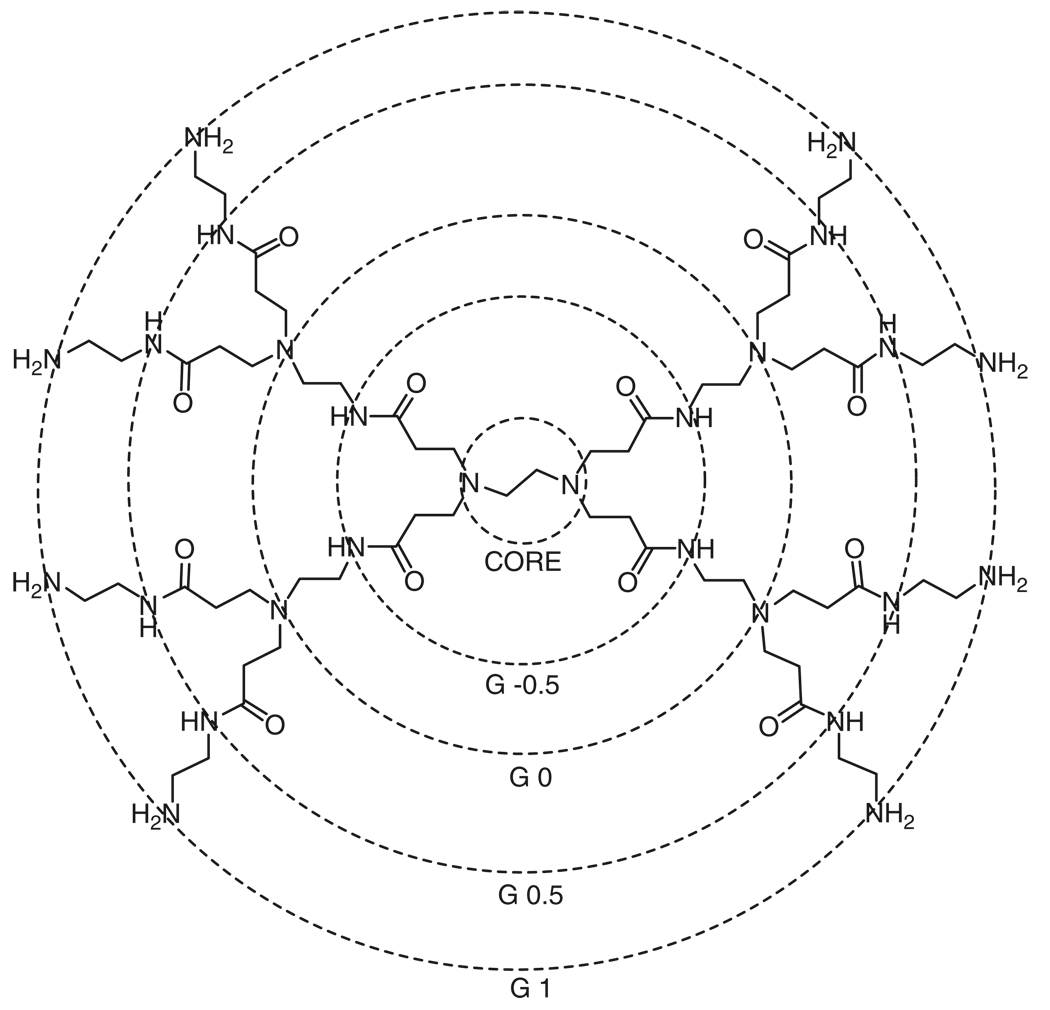
The core-shell architecture of a poly(amidoamine) (PAMAM) dendrimer with an ethylene diamine core with a typical generation numbering scheme. Half-generation PAMAM dendrimers may have carboxyl or methyl ester terminal groups. Unmodified full-generation PAMAM dendrimers have amine surface groups.
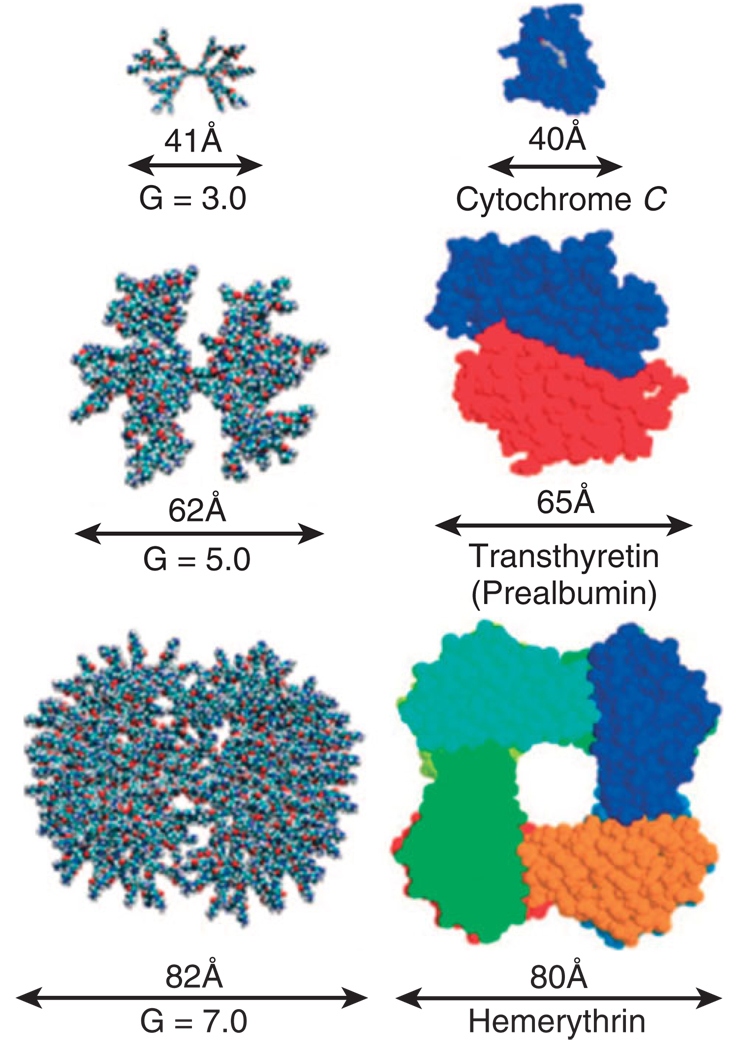
Absolute size comparison of PAMAM dendrimers of varied generation to several key proteins. (Reprinted with permission from Ref . Copyright 2007 American Chemical Society).
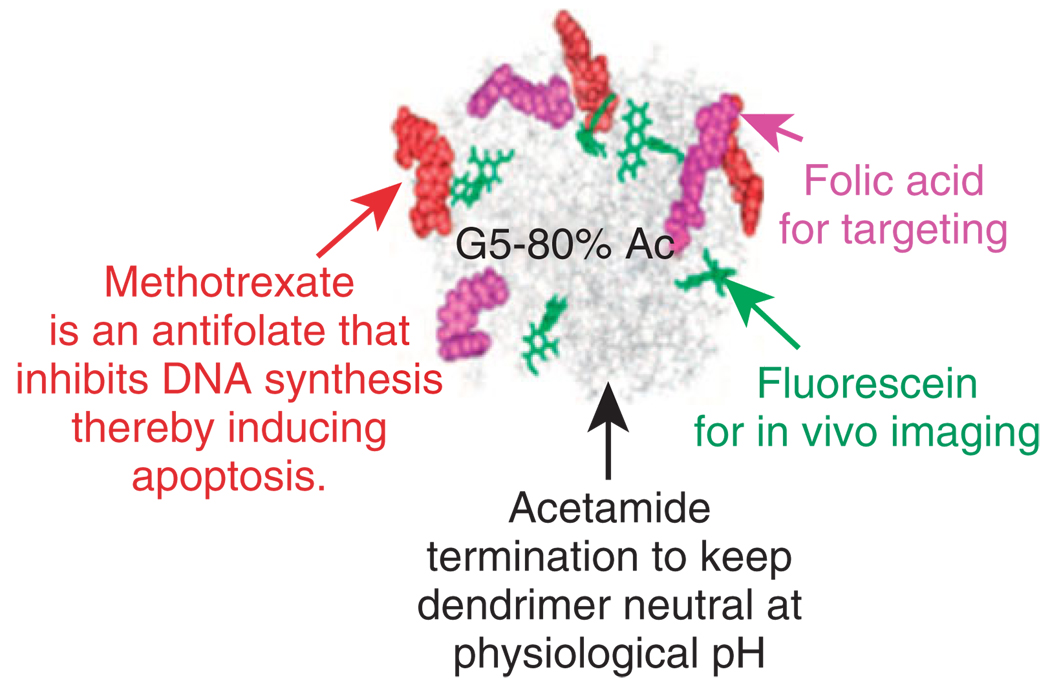
Schematic of a multifunctional targeted nanodevice based on the PAMAM dendrimer scaffold. (Reprinted with permission from Ref . Copyright 2007 American Chemical Society).
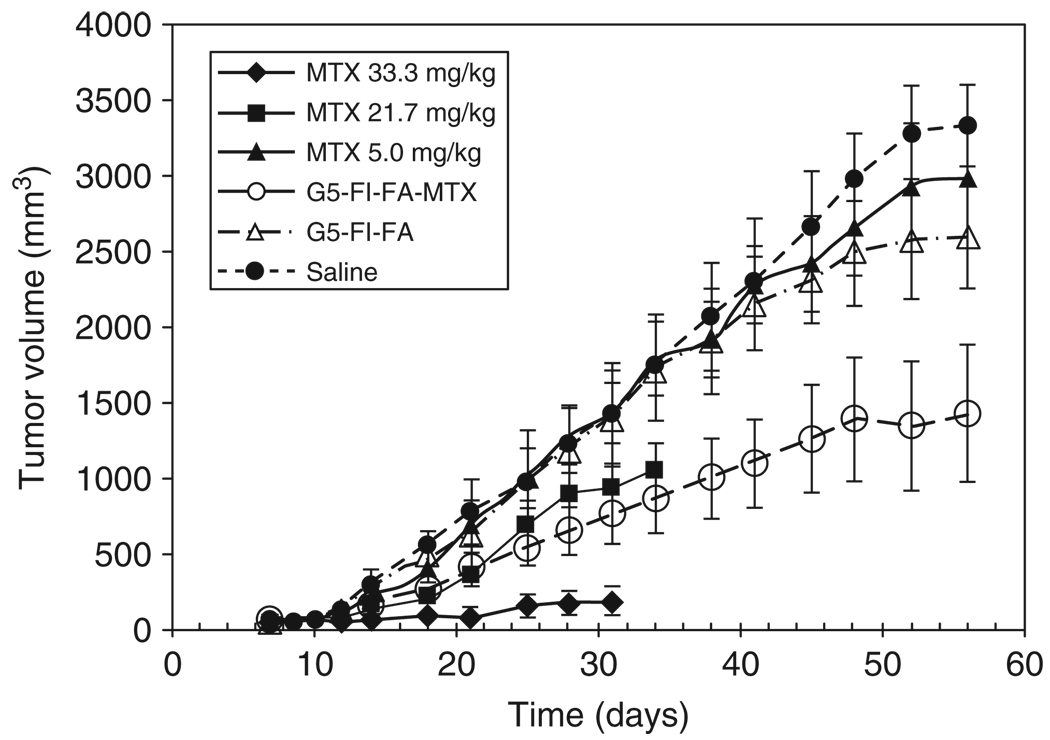
Tumor growth in severely combined immunodeficient (SCID) mice bearing KB xenografts during treatment with tri-functional G5 dendrimer with folic acid (FA), fluorescein (FI), and methotrexate (MTX). The dose of the conjugate (55.0 mg/kg) was equivalent to the lowest dose of free methotrexate (5.0 mg/kg) is as effective in tumor growth delay as the intermediated dose of free methotrexate (21.7 mg/kg).
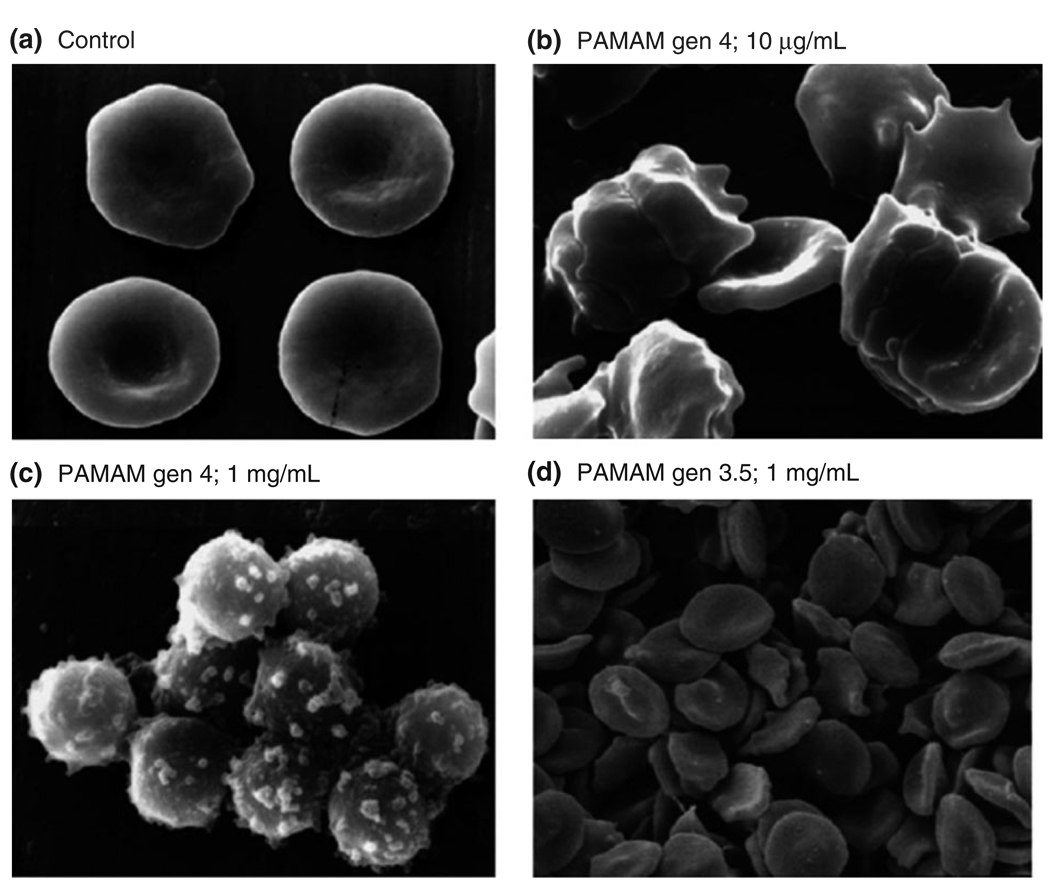
Scanning electron microscopy of red blood cell (RBC) incubated with poly(amidoamine) (PAMAM) dendrimers for 1 h. The cationic dendrimer (generation 4) disrupts the structure the integrity of the cell structure at low concentrations. (Reprinted with permission from Ref . Copyright 2000 Elsevier).
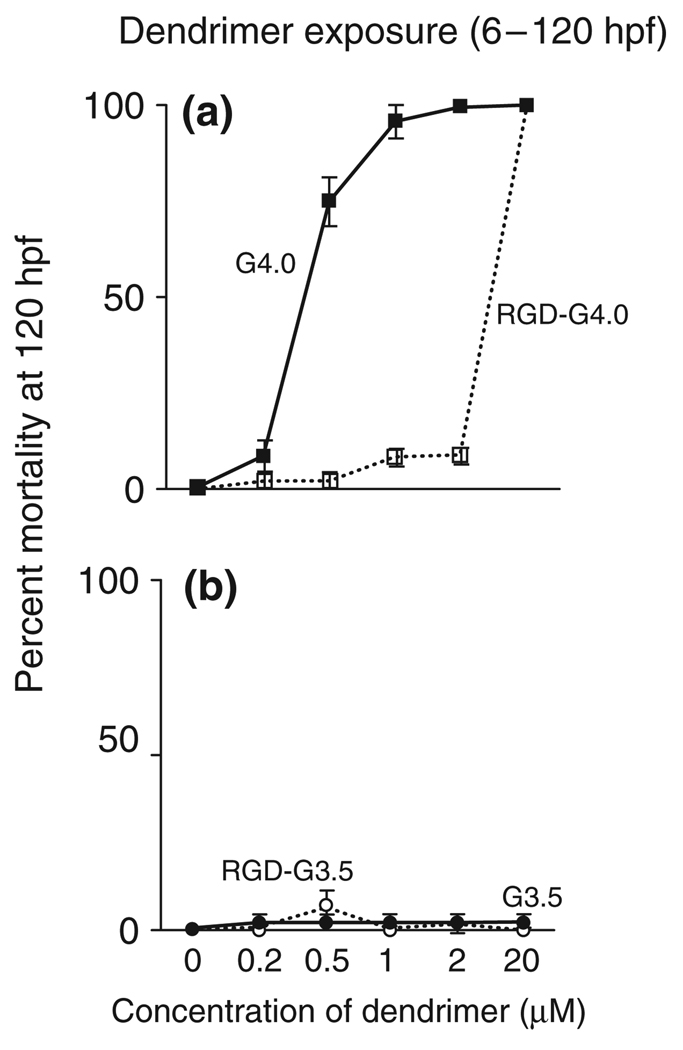
Effect of net charge on amine-terminated G4 and carboxylic acid-terminated G3.5 dendrimer-induced mortality in the zebrafish embryo. (A) Mortality assessed at 120 h post-fertilization for embryos exposed to G4 or RGD-G4 dendrimers from 6 to 120 h post-fertilization. (B) Mortality evaluated at 120 h post-fertilization for embryos exposed to G3.5 or RGD-G3.5 dendrimers from 6 to 120 h post-fertilization. (Reprinted with permission from Ref . Copyright 2007 Elsevier).
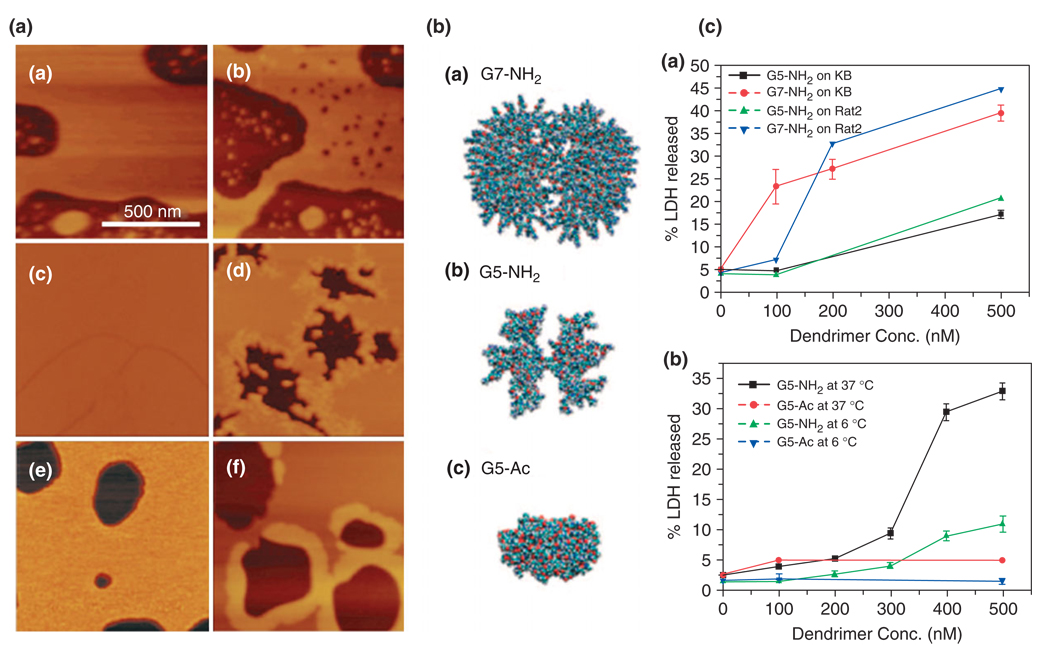
Poly(amidoamine) (PAMAM) dendrimer interactions with biological membranes. (I) Atomic force microscopy (AFM) observation of dimyristoylphosphatidylcholine (DMPC) supported lipid bilayers (a), (c), and (e) before and after incubation with (b) amine-terminated G7 (G7-NH2), (d) amine-terminated G5 (G5-NH2), and (f) acetylated G5 (G5-Ac) PAMAM dendrimers, respectively. (II) Space-filling models of chemical structures of (a) G7-NH2, (b) G5-NH2, and (c) G5-Ac PAMAM dendrimers. (III) Lactate dehydrogenase (LDH) leakage as a result of cell exposure to PAMAM dendrimers. (a) Size effect of G7-NH2 and G5-NH2 on the LDH leakage out of KB and Rat2 cells after incubation at 37°C for 3 h and (b) surface group dependency on the LDH leakage at different temperatures. Note that larger dendrimers (G7-NH2) induce formation of new nanoscale holes in the bilayers as seen in the AFM images and cause more amount of LDH leakage out of live cells than G5-NH2. G5-NH2 dendrimers do not cause new hole formation in the lipid bilayers but instead expand preexisting defects. In contrast, G5-Ac dendrimers do not cause hole formation, expansion of preexisting defects, or LDH leakage out of live cells. (Reprinted with permission from Ref . Copyright 2007 American Chemical Society).
References
-
- Allen TM. Ligand-targeted therapeutics in anticancer therapy. Nat Rev Cancer. 2002;2:750–763. - PubMed
-
- Liu Y, Miyoshi H, Nakamura M. Nanomedicine for drug delivery and imaging: a promising avenue for cancer therapy and diagnosis using targeted functional nanoparticles. Int J Cancer. 2007;120:2527–2537. - PubMed
-
- Boas U, Heegaard PM. Dendrimers in drug research. Chem Soc Rev. 2004;33:43–63. - PubMed
-
- Agarwal A, Saraf S, Asthana A, Gupta U, Gajbhiye V, et al. Ligand based dendritic systems for tumor targeting. Int J Pharm. 2008;350:3–13. - PubMed
-
- Agarwal A, Asthana A, Gupta U, Jain NK. Tumour and dendrimers: a review on drug delivery aspects. J Pharm Pharmacol. 2008;60:671–688. - PubMed
Publication types
MeSH terms
Substances
Grants and funding
LinkOut - more resources
Full Text Sources
Other Literature Sources
