


Clinical evaluation of a noninvasive alarm system for nocturnal hypoglycemia
- PMID: 20167169
- PMCID: PMC2825626
- DOI: 10.1177/193229681000400109
Clinical evaluation of a noninvasive alarm system for nocturnal hypoglycemia
Abstract
Background: The aim of this study was to evaluate the performance of a prototype noninvasive alarm system (HypoMon) for the detection of nocturnal hypoglycemia. A prospective cohort study evaluated an alarm system that included a sensor belt, a radio frequency transmitter for chest belt signals, and a receiver. The receiver incorporated integrated "real-time" algorithms designed to recognize hypoglycemia "signatures" in the physiological parameters monitored by the sensor belt.
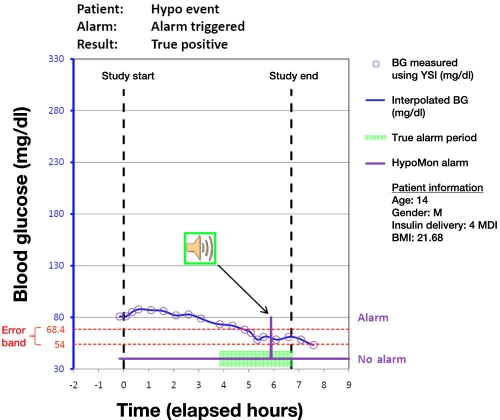
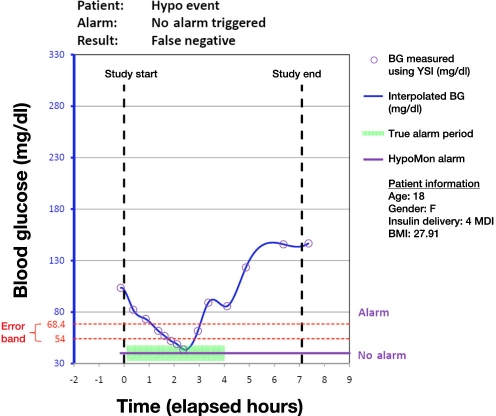
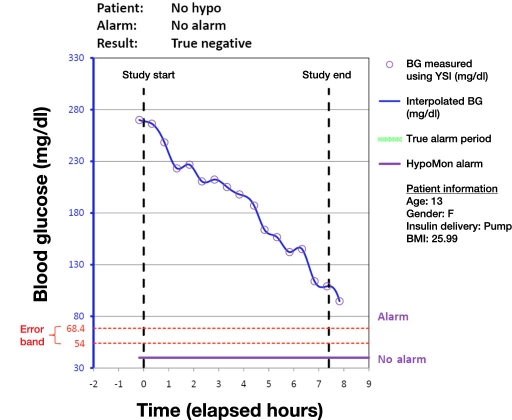
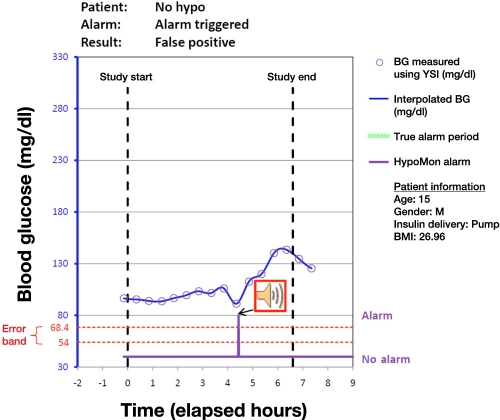
Methods: Fifty-two children and young adults with type 1 diabetes mellitus (T1DM) participated in this blinded, prospective, in-clinic, overnight study. Participants had a mean age of 16 years (standard deviation 2.1, range 12-20 years) and were asked to follow their normal meal and insulin routines for the day of the study. Participants had physiological parameters monitored overnight by a single HypoMon system. Their BG levels were also monitored overnight at regular intervals via an intravenous cannula and read on two independent Yellow Springs Instruments analyzers. Hypoglycemia was not induced by any manipulations of diabetes management, rather the subjects were monitored overnight for "natural" occurrences of hypoglycemia. Performance analyses included comparing HypoMon system alarm times with allowed time windows associated with each hypoglycemic event.
Results: The primary recognition algorithm in the prototype alarm system performed at a level consistent with expectations based on prior user surveys. The HypoMon system correctly recognized 8 out of the 11 naturally occurring overnight hypoglycemic events and falsely alarmed on 13 out of the remaining 41 normal nights [sensitivity 73% (8/11), specificity 68% (28/41), positive predictive value 38%,negative predictive value 90%].
Conclusion: The prototype HypoMon shows potential as an adjunct method for noninvasive overnight monitoring for hypoglycemia events in young people with T1DM.
2010 Diabetes Technology Society.
Figures
References
-
- The Diabetes Control and Complications Trial Research Group. The effect of intensive treatment of diabetes on the development and progression of long-term complications in insulin-dependent diabetes mellitus. N Engl J Med. 1993;329(14):977–986. - PubMed
-
- Amin R. Hypoglycemia prevalence in prepubertal children with type1 diabetes on standard insulin regimen. Diabetes Care. 2003;26(3):662–667. - PubMed
-
- Northam EA, Anderson PJ, Werther GA, Warne GL, Andrewes D. Predictors of change in the neuropsychological profiles of children with type 1 diabetes 2 years after disease onset. Diabetes Care. 1999;22(9):1438–1444. - PubMed
-
- Porter PA, Keating B, Byrne G, Jones TW. Incidence and predictive criteria of nocturnal hypoglycaemia in young children with insulin-dependant diabetes mellitus. J Pediatr. 1997;130(3):366–372. - PubMed
-
- Beregszàszi M, Tubiana-Rufi N, Benali K, Noël M, Bloch J, Czernichow P. Nocturnal hypoglycemia in children and adolescents with insulin-dependent diabetes mellitus: prevalence and risk factors. J Pediatr. 1997;131(1 Pt 1):27–33. - PubMed
Publication types
MeSH terms
Substances
LinkOut - more resources
Full Text Sources
Other Literature Sources
Medical
