


A randomized trial of tailored skin cancer prevention messages for adults: Project SCAPE
- PMID: 20167900
- PMCID: PMC2836338
- DOI: 10.2105/AJPH.2008.155705
A randomized trial of tailored skin cancer prevention messages for adults: Project SCAPE
Abstract
Objectives: We evaluated the impact of a mailed, tailored intervention on skin cancer prevention and skin self-examination behaviors of adults at moderate and high risk for skin cancer.
Methods: Adults at moderate and high risk for skin cancer were recruited in primary health care settings in Honolulu, HI, and Long Island, NY. After completing a baseline survey, participants were randomized to 2 groups. The treatment group received tailored materials, including personalized risk feedback, and the control group received general educational materials. Multivariate analyses compared sun protection and skin self-examination between groups, controlling for location, risk level, gender, and age.
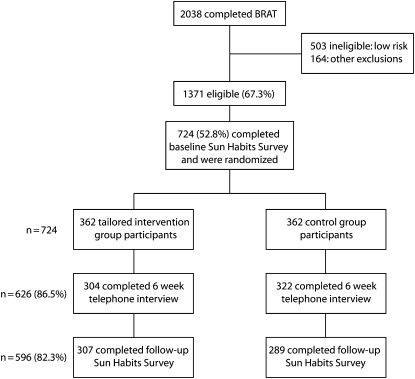
Results: A total of 596 adults completed the trial. The tailored materials had a significant effect on overall sun-protection habits, the use of hats, the use of sunglasses, and the recency of skin self-examination. Some effects were moderated by location and risk level.
Conclusions: Tailored communications including personalized risk feedback can improve sun-protection behaviors and skin self-examination among adults at increased risk for skin cancer. These convenient, low-cost interventions can be implemented in a variety of settings and should be tested further to assess their long-term effectiveness.
Figures
References
-
- Jemal A, Devesa S, Hartge P, Tucker M. Recent trends in cutaneous malignant melanoma incidence among Whites in the United States. J Natl Cancer Inst 2001;93(9):678–683 - PubMed
-
- American Cancer Society Cancer Facts and Figures 2008 Atlanta, GA: American Cancer Society; 2008
-
- Ries LAG, Melbert D, Krapcho M, et al. , Previous version: SEER cancer statistics review, 1975–2005. Surveillance Epidemiology and End Results Web site. Bethesda, MD: National Cancer Institute; 2008. Available at: http://seer.cancer.gov/csr/1975_2005. Accessed September 5, 2006
-
- Housman TS, Feldman SR, Williford PM, et al. Skin cancer is among the most costly of all cancers to treat for the Medicare population. J Am Acad Dermatol 2003;48(3):425–429 - PubMed
-
- Armstrong BK. How sun exposure causes skin cancer: An epidemiological perspective. Hill D, Elwood JM, English DR, Prevention of Skin Cancer Dordrecht, the Netherlands: Kluwer Academic Publishers; 2004:89–116
Publication types
MeSH terms
Substances
Grants and funding
LinkOut - more resources
Full Text Sources
Medical
