


Diagnostic strategies for postmenopausal bleeding
- PMID: 20169169
- PMCID: PMC2821624
- DOI: 10.1155/2010/850812
Diagnostic strategies for postmenopausal bleeding
Abstract
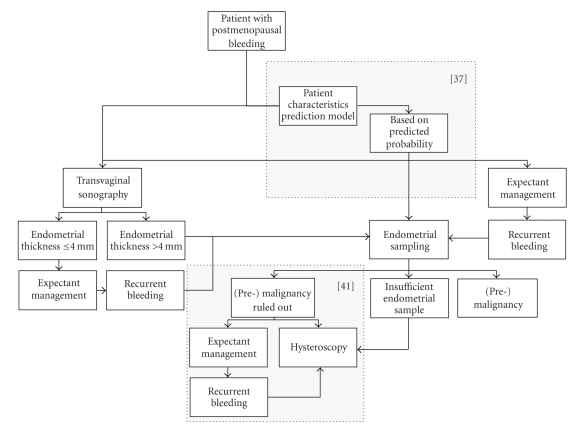
Postmenopausal bleeding (PMB) is a common clinical problem. Patients with PMB have 10%-15% chance of having endometrial carcinoma and therefore the diagnostic workup is aimed at excluding malignancy. Patient characteristics can alter the probability of having endometrial carcinoma in patients with PMB; in certain groups of patients the incidence has been reported to be as high as 29%. Transvaginal sonography (TVS) is used as a first step in the diagnostic workup, but different authors have come to different conclusions assessing the accuracy of TVS for excluding endometrial carcinoma. Diagnostic procedures obtaining material for histological assessment (e.g., dilatation and curettage, hysteroscopy, and endometrial biopsy) can be more accurate but are also more invasive. The best diagnostic strategy for diagnosing endometrial carcinoma in patients with PMB still remains controversial. Future research should be focussed on achieving a higher accuracy of different diagnostic strategies.
Figures
References
-
- Clark TJ, Barton PM, Coomarasamy A, Gupta JK, Khan KS. Investigating postmenopausal bleeding for endometrial cancer: cost-effectiveness of initial diagnostic strategies. BJOG. 2006;113(5):502–510. - PubMed
-
- Dijkhuizen FP. Diagnosis of Uterine Cavity Abnormalities. Studies on Test Performace and Clinical Value. Utrecht, The Netherlands: Utrecht University; 2000.
-
- Astrup K, Olivarius NDF. Frequency of spontaneously occurring postmenopausal bleeding in the general population. Acta Obstetricia et Gynecologica Scandinavica. 2004;83(2):203–207. - PubMed
-
- Escoffery CT, Blake GO, Sargeant LA. Histopathological findings in women with postmenopausal bleeding in Jamaica. West Indian Medical Journal. 2002;51(4):232–235. - PubMed
-
- Gredmark T, Kvint S, Havel G, Mattsson LA. Histopathological findings in women with postmenopausal bleeding. British Journal of Obstetrics and Gynaecology. 1995;102(2):133–136. - PubMed
LinkOut - more resources
Full Text Sources
