. 2010 Jun 1;67(11):1057-66.
doi: 10.1016/j.biopsych.2009.12.033. Epub 2010 Feb 20.

Short- and long-term functional consequences of fluoxetine exposure during adolescence in male rats

Affiliations

Short- and long-term functional consequences of fluoxetine exposure during adolescence in male rats

Sergio D Iñiguez et al. Biol Psychiatry. .

Abstract

Background: Fluoxetine (FLX), a selective serotonin reuptake inhibitor, is prescribed for the treatment of major depressive disorder in young populations. Here, we explore the short- and long-term consequences of adolescent exposure to FLX on behavioral reactivity to emotion-eliciting stimuli.

Methods: Adolescent male rats received FLX (10 mg/kg) twice daily for 15 consecutive days (postnatal days 35-49). The influence of FLX on behavioral reactivity to rewarding and aversive stimuli was assessed 24 hours (short-term) or 3 weeks after FLX treatment (long-term). A separate group of adult rats was also treated with FLX (postnatal days 65-79) and responsiveness to forced swimming was assessed at identical time intervals as with the adolescents.

Results: Fluoxetine exposure during adolescence resulted in long-lasting decreases in behavioral reactivity to forced swimming stress and enhanced sensitivity to sucrose and to anxiety-eliciting situations in adulthood. The FLX-induced anxiety-like behavior was alleviated by re-exposure to FLX in adulthood. Fluoxetine treatment during adolescence also impaired sexual copulatory behaviors in adulthood. Fluoxetine-treated adult rats did not show changes in behavioral reactivity to forced swim stress as observed in those treated during adolescence and tested in adulthood.

Conclusions: Treating adolescent rats with FLX results in long-lived complex outputs regulated by the emotional valence of the stimulus, the environment in which it is experienced, and the brain circuitry likely being engaged by it. Our findings highlight the need for further research to improve our understanding of the alterations that psychotropic exposure may induce on the developing nervous system and the potential enduring effects resulting from such treatments.


Conflict of interest statement

The authors report no biomedical financial interests or potential conflicts of interest.

Figures
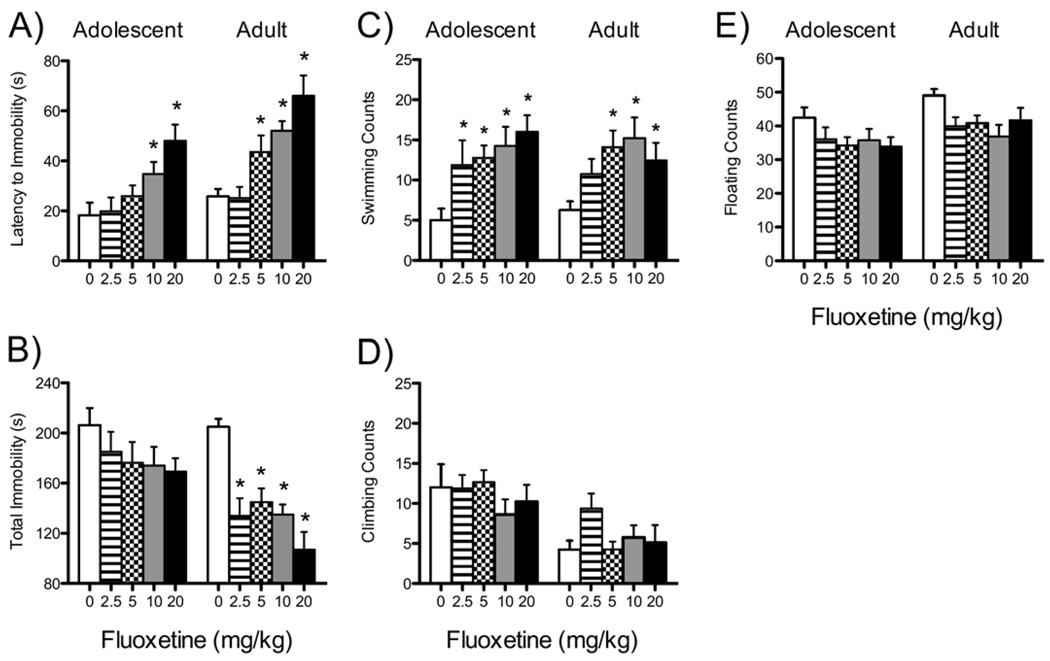
Figure 1
Figure 1
Acute effects of fluoxetine on forced swimming behaviors in adolescent (PD35; n = 8–9/dose) and adult (PD70+; n = 8–10/dose) male rats (A–E). (A) Latency to become immobile, (B) total immobility, (C) swimming counts, (D) climbing counts, and (E) floating counts of rats tested on the forced swim test after three injections (same dose) of fluoxetine (0, 2.5, 5, 10, or 20 mg/kg) 1, 5, and 23 hours between swims. Data were analyzed using individual one-way analyses of variance (p < .05) between the age groups. *Significantly different from vehicle control rats within the same age group. PD, postnatal day.
Figure 2
Figure 2
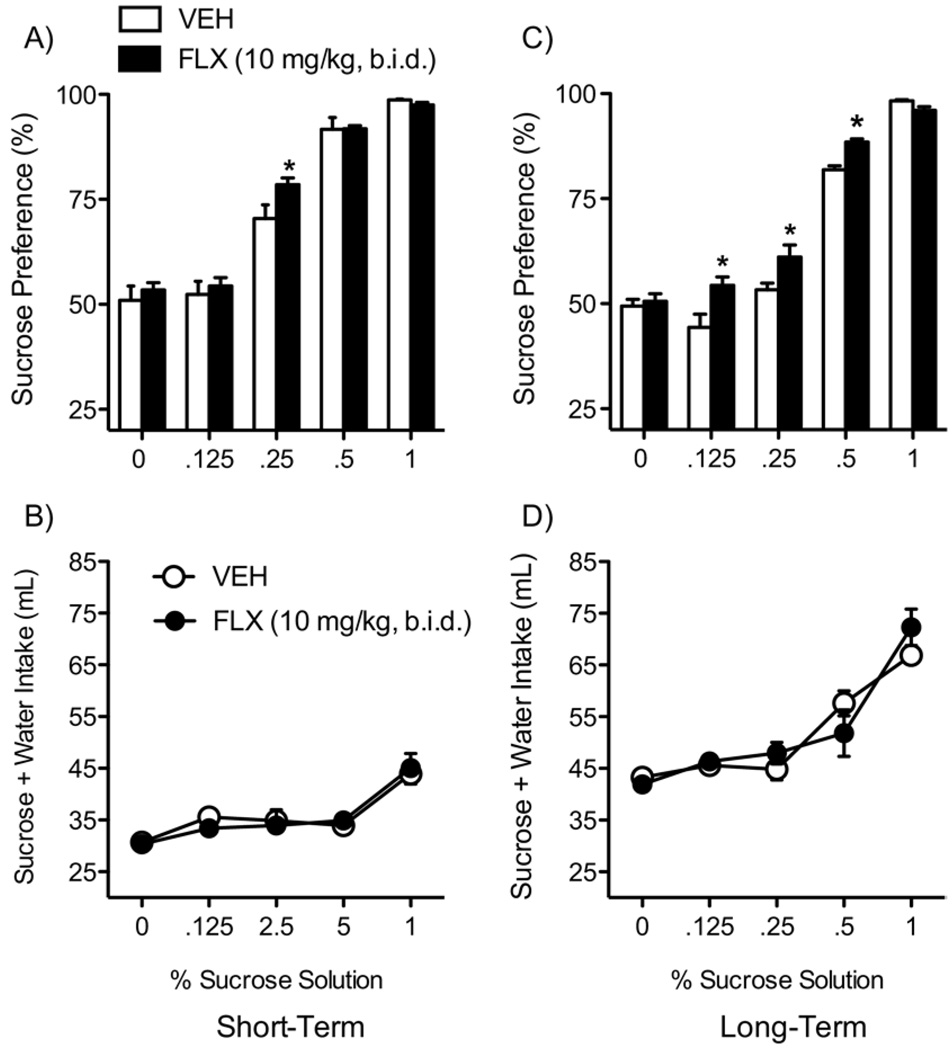
Flouxetine (10 mg/kg, b.i.d.) exposure during adolescence regulates responses to sucrose reward (A–D). (A) Exposure to FLX significantly increased sucrose preference when compared with VEH-treated control rats (at the .25% concentration) 24 hours after treatment (p < .05; n = 13/ group). (C) Rats treated with FLX during adolescence and tested in adulthood (long-term) show a significant increase in sensitivity to the rewarding effects of sucrose (p < .05; n = 15/group). No differences in total fluid intake (sucrose + water) were detected regardless of treatment or time of testing (B and D). *Significantly different than VEH-treated control rats (p < .05). Data are presented as percent preference or total mL consumed between VEH- and FLX-exposed rats (mean ± SEM). b.i.d., twice daily; FLX,fluoxetine; VEH, vehicle.
Figure 3
Figure 3
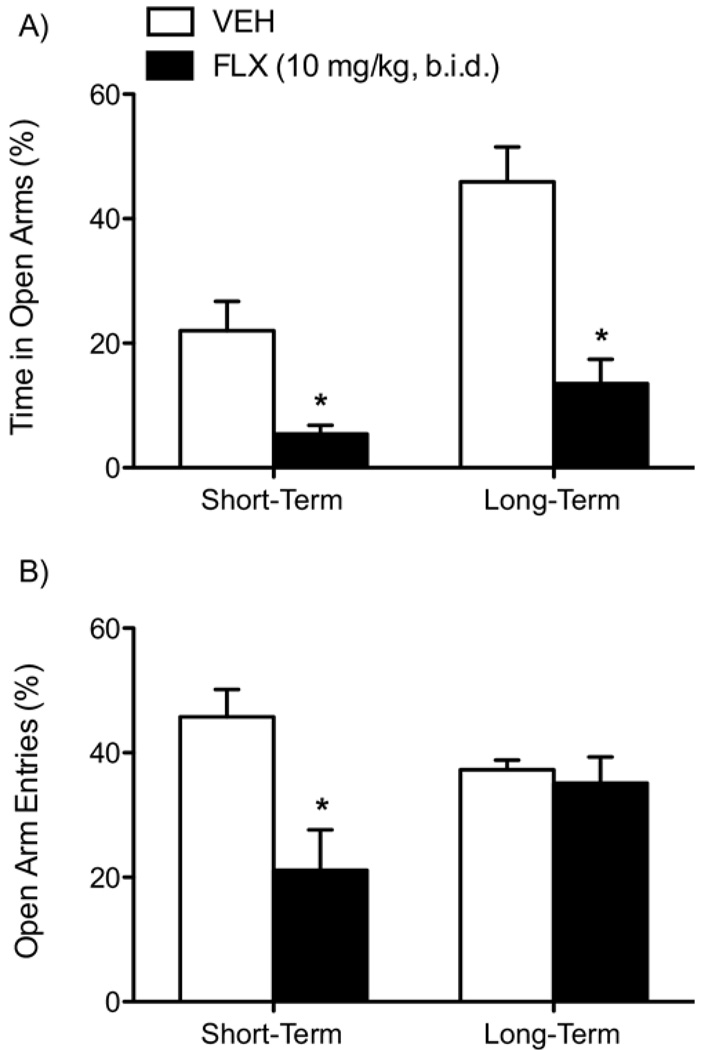
Fluoxetine (10 mg/kg, b.i.d.) exposure during adolescence regulates anxiety-like behavior in the EPM (A and B). Short-term (n = 8/group): FLX significantly reduced time spent (A, left panel) and entries (B, left panel) into the open arms of the EPM 24 hours after the last FLX injection (p < .05). Long-term (n = 8/group): FLX also reduced time spent (A, right panel) in the open arms of the EPM, without influencing entries (B, right panel) compared with VEH-treated control rats. Data are presented as percent time spent and percent entries (mean ± SEM) into the open arms of the EPM. b.i.d., twice daily; EPM, elevated plus-maze; FLX, fluoxetine; VEH, vehicle.
Figure 4
Figure 4
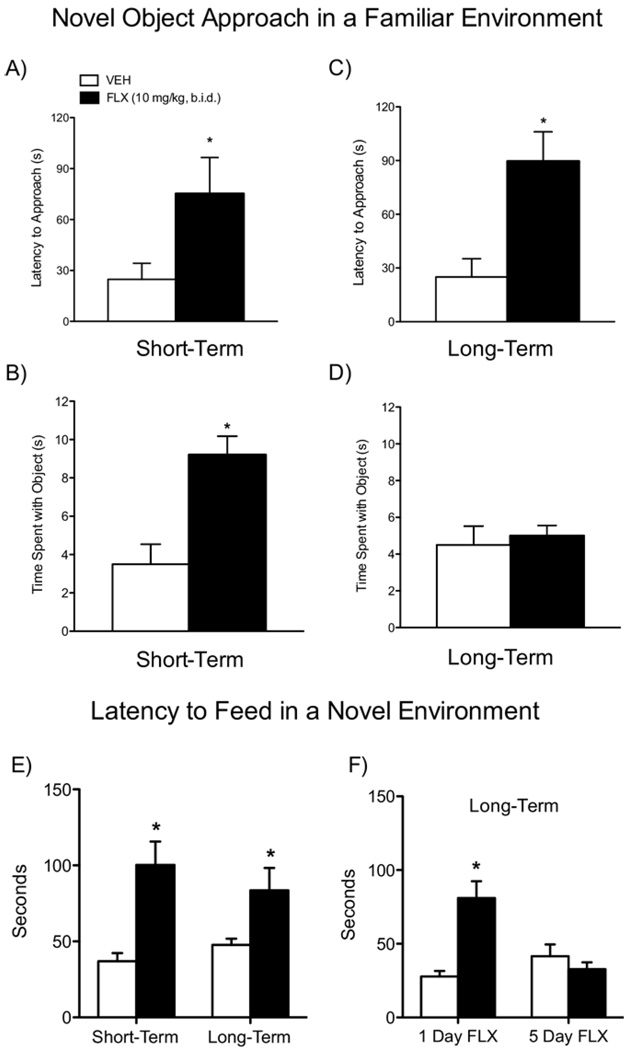
Effects of fluoxetine (10 mg/kg, b.i.d.) exposure during adolescence on the latency to approach a novel object in a familiar environment (AD) and the latency to feed in a novel environment (E and F). Short-term (n = 9–10/group): FLX-treated rats had significantly longer latencies to approach (A) and spent significantly more time exploring (B) the novel object 24 hours after the last FLX injection. Long-term (n = 14–15/group): FLX-treated rats displayed significantly longer latencies to approach (C) but spent similar time exploring (D) the novel object compared with control rats. (E) FLX increased latency to feed in a novel environment at both short-term (n = 9/group) and long-term (n = 6/group) time points of behavioral assessment. (F) Acute exposure to FLX (10 mg/kg) did not decrease latency to feed (F, left panel; n = 6/group), while chronic exposure (5 days) to FLX (10 mg/kg) reversed this effect to control levels (F, right panel; n = 6/group) in a separate group of adult rats pretreated with FLX during adolescence. *Significantly different compared with VEH-treated control rats (p < .05). b.i.d., twice daily; FLX, fluoxetine; VEH, vehicle.
Figure 5
Figure 5
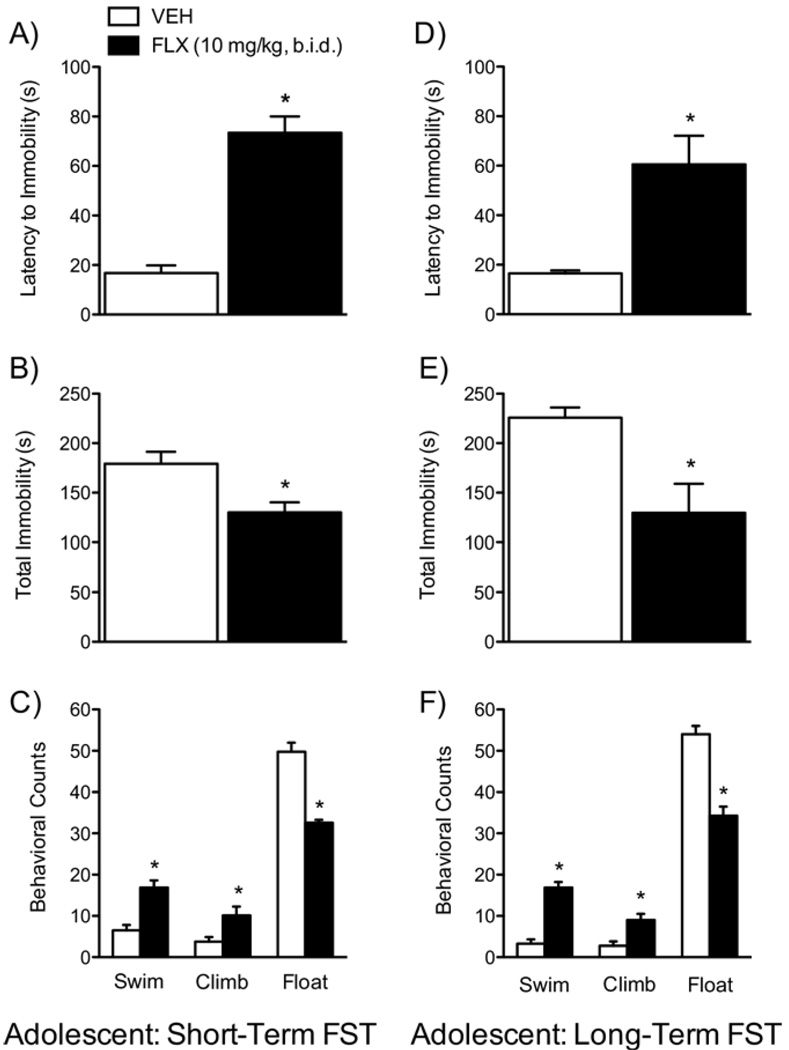
Effects of fluoxetine (10 mg/kg, b.i.d.) on behavioral responsivity to swim stress (A–F). Short-term (n = 5–6/group): FLX-treated rats displayed significantly longer latencies to immobility (A), lower total immobility (B), higher swimming and climbing counts and lower floating counts (C) when compared with VEH-treated control rats. Long-term (n = 15/group): FLX-treated rats displayed similar behavioral profile (D–F) as those tested in the short-term condition when compared with their VEH-treated control rats. *Significantly different from VEH-treated rats (p < .05). Data are presented as latencies to become immobile and total immobility (in seconds) and as cumulative 5-second intervals of swimming, climbing, and floating counts (mean ± SEM). b.i.d., twice daily; FLX, fluoxetine; FST, forced swim test; VEH, vehicle.
Figure 6
Figure 6
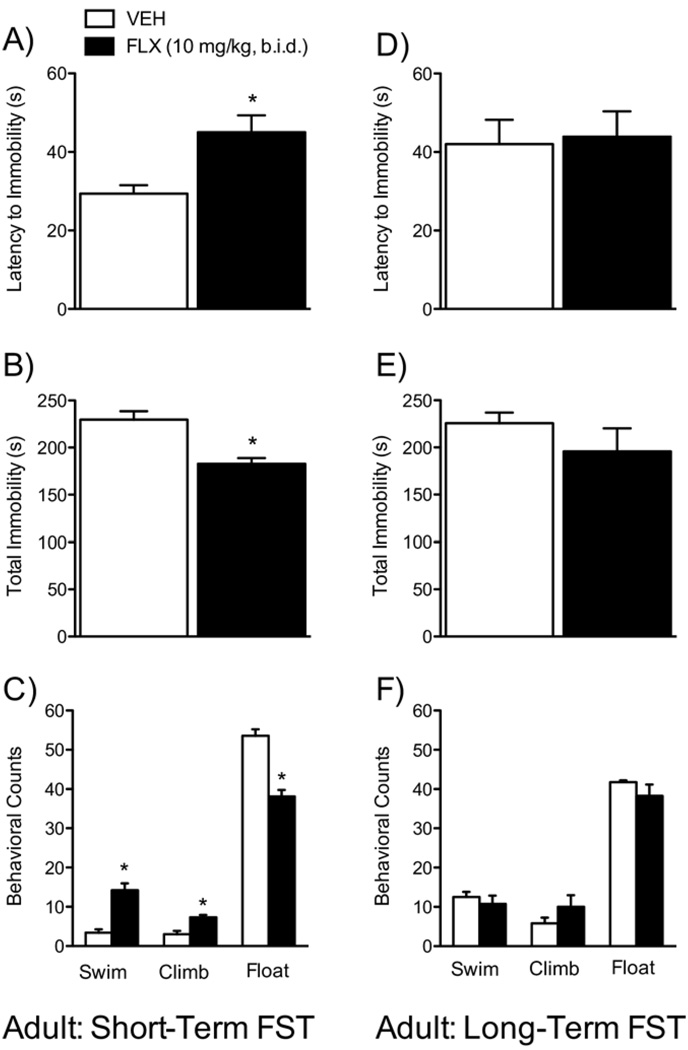
Effects of fluoxetine (10 mg/kg, b.i.d.) treatment in adult rats (matched control group) on behavioral responsivity to forced swim stress (A–F). Short-term (n = 7/group): FLX-treated rats displayed significantly longer latencies to immobility (A), lower total immobility (B), higher swimming and climbing counts and lower floating counts (C) when compared with VEH-treated control rats. Long-term (n = 7/group): no differences were observed in any of the measures assessed between the groups. *Significantly different from VEH-treated rats (p < .05). Data are presented as latencies to become immobile and total immobility (in seconds) and as cumulative 5-second intervals of swimming, climbing, and floating counts (mean ± SEM). b.i.d., twice daily; FLX, fluoxetine; FST, forced swim test; VEH, vehicle.
Figure 7
Figure 7
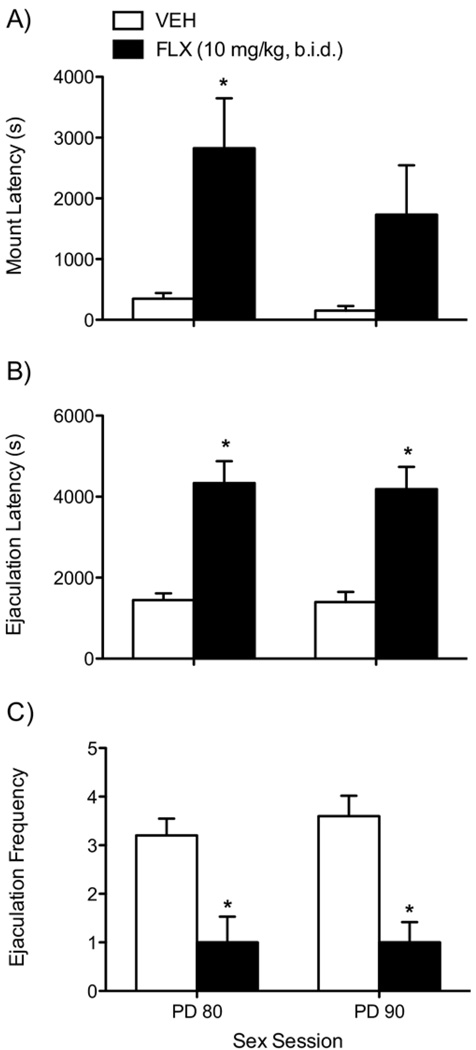
Effects of fluoxetine (10 mg/kg, b.i.d.) exposure during adolescence in adult male rat sexual behavior (A–C; n = 10/group). Rats were given two 90-minute sessions (at postnatal day 80 and 90, respectively) to copulate with a receptive female. FLX treatment during adolescence increased the latency to mount an estrous receptive female (A), latency to reach the first ejaculation (B), and the total number of ejaculations (C) compared with VEH-treated control rats in the first sex session (PD80). During the second sex session (PD90), FLX treatment during adolescence increased latency to ejaculate (B, right panel) and decreased ejaculation frequency (C, right panel) without affecting latency to mount (A, right panel). *Significantly different from VEH-treated rats (p < .05). b.i.d., twice daily; FLX, fluoxetine; PD, postnatal day; VEH, vehicle.

References

    1. Kapornai K, Vetro A. Depression in children. Curr Opin Psychiatry. 2008;21:1–7. - PubMed
    1. Birmaher B, Ryan ND, Williamson DE, Brent DA, Kaufman J, Dahl RE, et al. Childhood and adolescent depression: A review of the past 10 years. Part I. J Am Acad Child Adolesc Psychiatry. 1996;35:1427–1439. - PubMed
    1. Weissman MM, Wolk S, Goldstein RB, Moreau D, Adams P, Greenwald S, et al. Depressed adolescents grown up. JAMA. 1999;281:1707–1713. - PubMed
    1. Pfeffer CR. Diagnosis of childhood and adolescent suicidal behavior: Unmet needs for suicide prevention. Biol Psychiatry. 2001;49:1055–1061. - PubMed
    1. Rihmer Z. Suicide risk in mood disorders. Curr Opin Psychiatry. 2007;20:17–22. - PubMed

Publication types