


Endoplasmic reticulum aminopeptidase associated with antigen processing defines the composition and structure of MHC class I peptide repertoire in normal and virus-infected cells
- PMID: 20173027
- PMCID: PMC3087292
- DOI: 10.4049/jimmunol.0903712
Endoplasmic reticulum aminopeptidase associated with antigen processing defines the composition and structure of MHC class I peptide repertoire in normal and virus-infected cells
Abstract
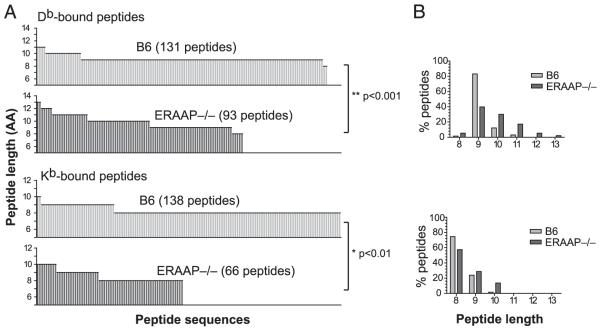
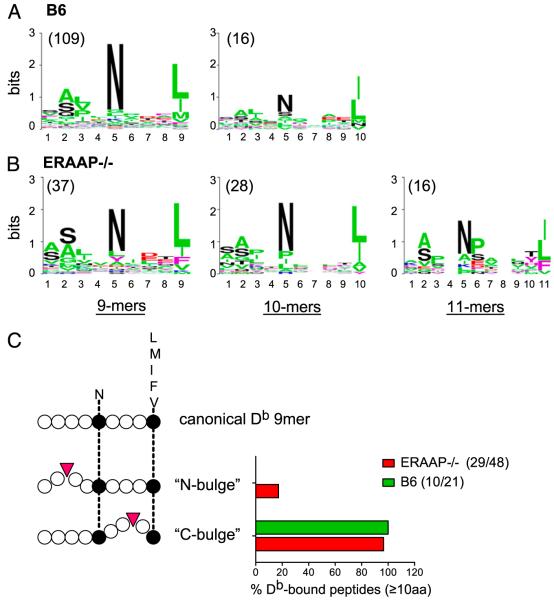
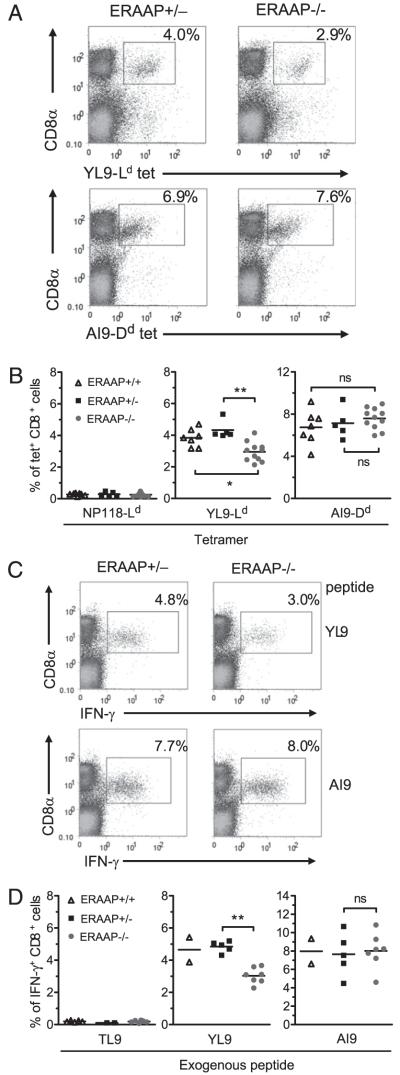
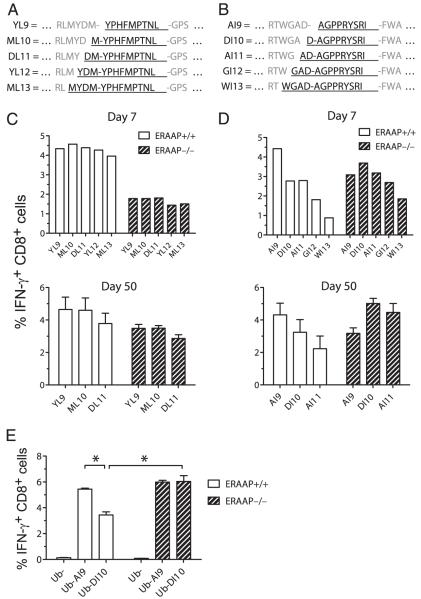
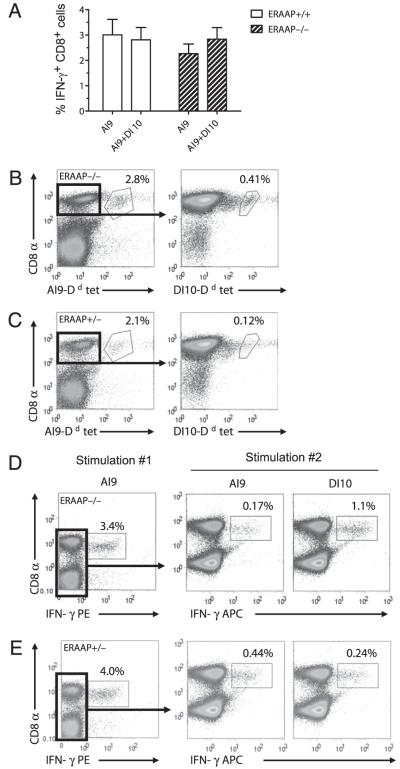
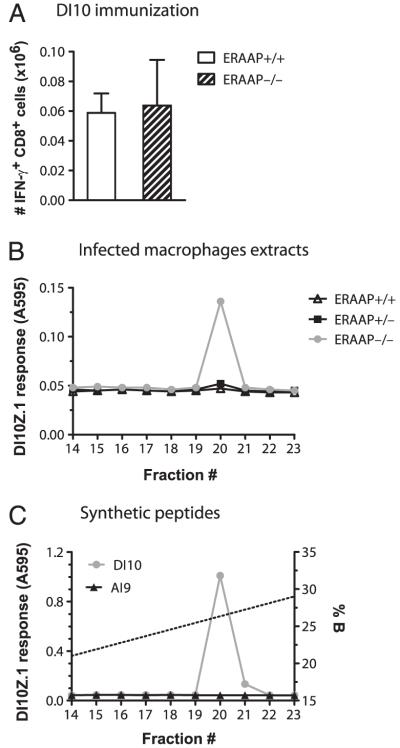
The MHC class I (MHC-I) molecules ferry a cargo of peptides to the cell surface as potential ligands for CD8(+) cytotoxic T cells. For nearly 20 years, the cargo has been described as a collection of short 8-9 mer peptides, whose length and sequences were believed to be primarily determined by the peptide-binding groove of MHC-I molecules. Yet the mechanisms for producing peptides of such optimal length and composition have remained unclear. In this study, using mass spectrometry, we determined the amino acid sequences of a large number of naturally processed peptides in mice lacking the endoplasmic reticulum aminopeptidase associated with Ag processing (ERAAP). We find that ERAAP-deficiency changed the oeuvre and caused a marked increase in the length of peptides normally presented by MHC-I. Furthermore, we observed similar changes in the length of viral peptides recognized by CD8(+) T cells in mouse CMV-infected ERAAP-deficient mice. In these mice, a distinct CD8(+) T cell population was elicited with specificity for an N-terminally extended epitope. Thus, the characteristic length, as well as the composition of MHC-I peptide cargo, is determined not only by the MHC-I peptide-binding groove but also by ERAAP proteolysis in the endoplasmic reticulum.
Figures
References
-
- Shastri N, Cardinaud S, Schwab SR, Serwold T, Kunisawa J. All the peptides that fit: the beginning, the middle, and the end of the MHC class I antigen-processing pathway. Immunol. Rev. 2005;207:31–41. - PubMed
-
- Yewdell JW, Haeryfar SM. Understanding presentation of viral antigens to CD8+ T cells in vivo: the key to rational vaccine design. Annu. Rev. Immunol. 2005;23:651–682. - PubMed
-
- Shastri N, Schwab S, Serwold T. Producing nature’s gene-chips: the generation of peptides for display by MHC class I molecules. Annu. Rev. Immunol. 2002;20:463–493. - PubMed
-
- Rock KL, Gramm C, Rothstein L, Clark K, Stein R, Dick L, Hwang D, Goldberg AL. Inhibitors of the proteasome block the degradation of most cell proteins and the generation of peptides presented on MHC class. Cell. 1994;78:761–771. - PubMed
-
- Kloetzel PM. Generation of major histocompatibility complex class I antigens: functional interplay between proteasomes and TPPII. Nat. Immunol. 2004;5:661–669. - PubMed
Publication types
MeSH terms
Substances
Grants and funding
LinkOut - more resources
Full Text Sources
Other Literature Sources
Molecular Biology Databases
Research Materials
Miscellaneous
