


Body contouring surgery in a massive weight loss patient: An overview
- PMID: 20174535
- PMCID: PMC2825131
Body contouring surgery in a massive weight loss patient: An overview
Abstract
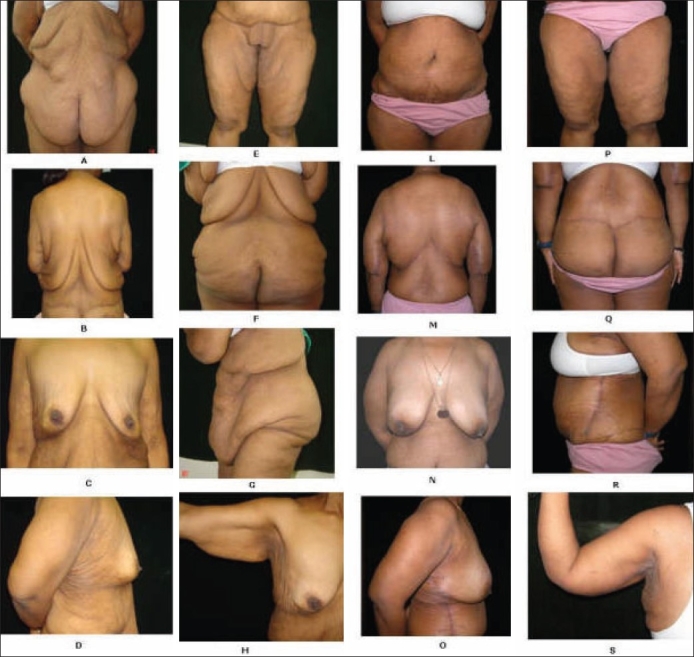
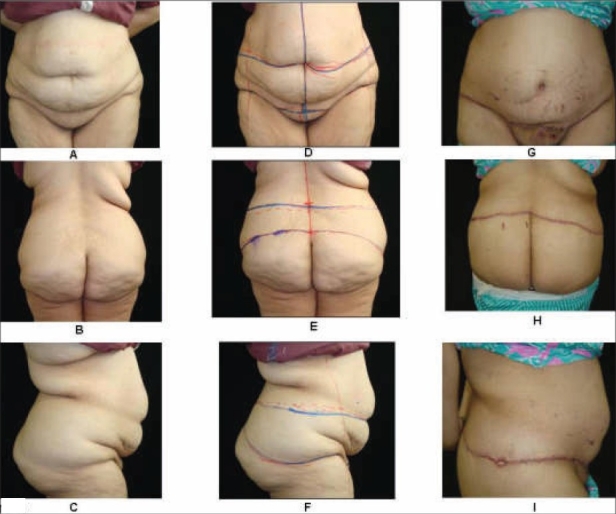
The number of patients with history of extreme overweight and massive weight loss (MWL) has risen significantly. Majority of patients are left with loose, ptotic skin envelopes, and oddly shaped protuberances, subsequent to weight loss. Redundant skin and fat can be seen anywhere on the body following MWL. This group of population presents many unique problems and challenges. Body contouring surgery after MWL is a new and exciting field in plastic surgery that is still evolving. Conventional approaches do not adequately cater to the needs of these patients. Complete history, detailed physical examination, clinical photographs and lab investigations help to plan the most appropriate procedure for the individual patient. Proper counseling and comprehensive informed consent for each procedure are mandatory. The meticulous and precise markings based on the procedure selected are the cornerstones to achieve the successful outcome. Lower body contouring should be performed first followed six months later by breast, lateral chest and arm procedures. Thighplasty is usually undertaken at the end. Body contouring operations are staged at few months' intervals and often result in long scars. Staging is important as each procedure can have positive impact on adjacent areas of the body. Secondary procedures are often required. However, proper planning should lead to fewer complications and improved aesthetic outcome and patient satisfaction.
Keywords: Bariatric surgery; brachioplasty; lower body lift; massive weight loss; morbid obesity; thighplasty; upper body contouring.
Figures
References
-
- World Health Organization. Obesity: Preventing and managing the global epidemic. Geneva (IL): World Health Organization; 1998. - PubMed
-
- National Family Health Survey (NFHS-3): Available from: http://mohfw.nic.in/nfhsfactsheet.html. [last accessed on 2007 Sep 24]
-
- Lakka H, Bouchard C. In: Surgical management of obesity. Buchwald H, Cowan GS Jr, Pories W, editors. Philadelphia: Saunders Elsevier; 2007. pp. 18–28.
-
- Drenick EJ, Johnson D. Weight reduction by fasting and semi-starvation in morbid obesity: Long-term follow-up. Int J Obestet. 1978;2:123–32. - PubMed
-
- Anderson JW, Konz EC, Frederich RC, Wood CL. Long-term weight loss maintenance: A meta-analysis of US studies. Am J Clin Nutr. 2001;74:579–84. - PubMed
LinkOut - more resources
Full Text Sources
Miscellaneous