. 2010 Feb 19;6(2):e1000779.
doi: 10.1371/journal.ppat.1000779.

Highly differentiated, resting gn-specific memory CD8+ T cells persist years after infection by andes hantavirus

Affiliations

Highly differentiated, resting gn-specific memory CD8+ T cells persist years after infection by andes hantavirus

Tobias Manigold et al. PLoS Pathog. .

Abstract

In man, infection with South American Andes virus (ANDV) causes hantavirus cardiopulmonary syndrome (HCPS). HCPS due to ANDV is endemic in Southern Chile and much of Argentina and increasing numbers of cases are reported all over South America. A case-fatality rate of about 36% together with the absence of successful antiviral therapies urge the development of a vaccine. Although T-cell responses were shown to be critically involved in immunity to hantaviruses in mouse models, no data are available on the magnitude, specificity and longevity of ANDV-specific memory T-cell responses in patients. Using sets of overlapping peptides in IFN-gamma ELISPOT assays, we herein show in 78 Chilean convalescent patients that Gn-derived epitopes were immunodominant as compared to those from the N- and Gc-proteins. Furthermore, while the relative contribution of the N-specific response significantly declined over time, Gn-specific responses remained readily detectable ex vivo up to 13 years after the acute infection. Tetramer analysis further showed that up to 16.8% of all circulating CD3(+)CD8(+) T cells were specific for the single HLA-B*3501-restricted epitope Gn(465-473) years after the acute infection. Remarkably, Gn(465-473)-specific cells readily secreted IFN-gamma, granzyme B and TNF-alpha but not IL-2 upon stimulation and showed a 'revertant' CD45RA(+)CD27(-)CD28(-)CCR7(-)CD127(-) effector memory phenotype, thereby resembling a phenotype seen in other latent virus infections. Most intriguingly, titers of neutralizing antibodies increased over time in 10/17 individuals months to years after the acute infection and independently of whether they were residents of endemic areas or not. Thus, our data suggest intrinsic, latent antigenic stimulation of Gn-specific T-cells. However, it remains a major task for future studies to proof this hypothesis by determination of viral antigen in convalescent patients. Furthermore, it remains to be seen whether Gn-specific T cells are critical for viral control and protective immunity. If so, Gn-derived immunodominant epitopes could be of high value for future ANDV vaccines.


Conflict of interest statement

The authors have declared that no competing interests exist.

Figures
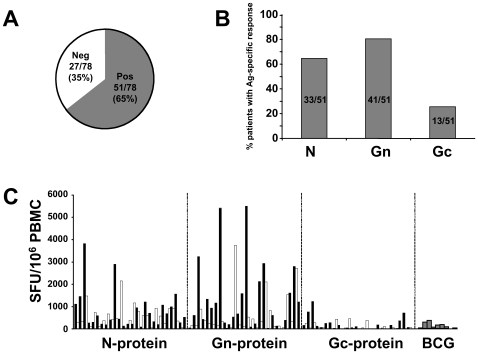
Figure 1
Figure 1. Distribution of ANDV-specific memory T-cell responses.
(A) Summary of the determination of ANDV-specific T cells ex vivo IFN-γ ELISPOT assay in a total of 78 ANDV-convalescent patients. According to the criteria for positivity (see material and methods) only 51/78 (65%) displayed a positive response. Alternating black and white bar graphs (one bar represents one individual) are used for better visibility. (B) Differential recognition of ANDV antigens among the 51 responsive patients, indicating the relative immunodominance of Gn- as compared to N- and Gc-protein. (C) Individual T-cell responses to the different ANDV-antigens and BCG. Triplicates of PBMC of each patient were challenged in a 38-hour IFN-γ ELISPOT by a total of 13 pools of overlapping peptides, spanning the entire N- (aa 1–430), Gn- (aa 1–650) and Gc- (aa 641–1140) protein of Chilean ANDV. Most patients showed significant responses towards the Gn-antigen (aa 1–650). Each bar represents the sum of mean triplicate responses towards the peptides representing a given antigen. Depiction of standard-deviations was avoided to facilitate the visibility of results. The overall mean response to ANDV was 1805 SFU/106 PBMC.
Figure 2
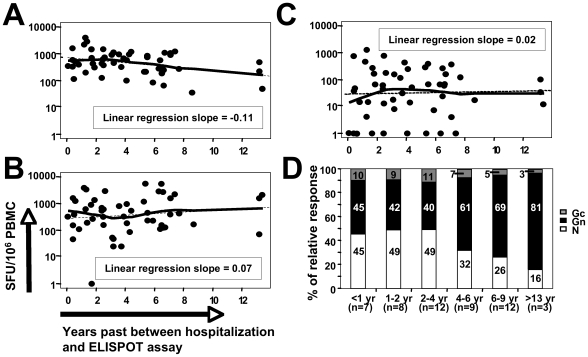
Figure 2. Relative contributions of antigen-specific memory T-cell responses over time.
Association between N- (A), Gn- (B) and Gc-specific (C) memory T-cell responses and the time past between hospitalization and enrollment of a given patient. (D) Mean of antigen-specific contributions to absolute overall T-cell responses (defined as 100%, respectively) among 51 patients with positive T-cell responses and segregated into six groups according to the time past since hospitalization due to ANDV-infection. The numbers within the bar graphs indicate the relative percentages of N-, Gn- and Gc-specific responses, respectively.
Figure 3
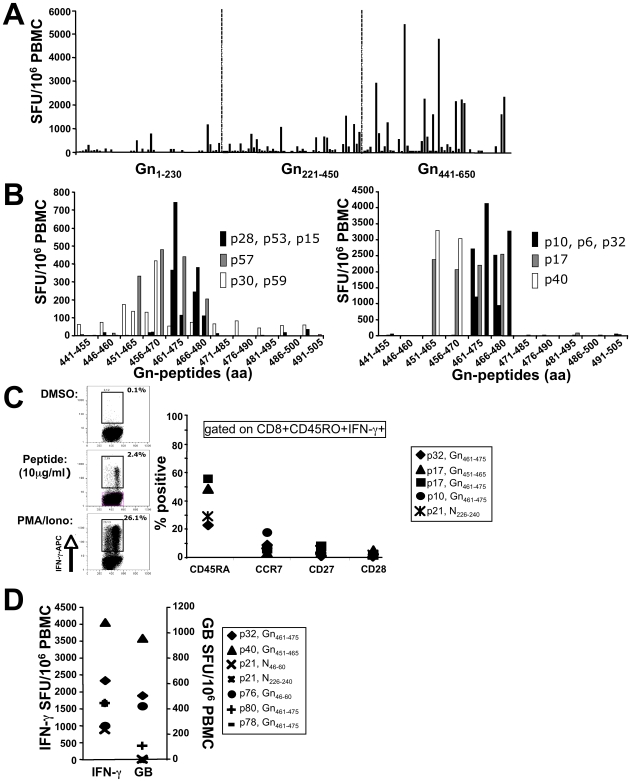
Figure 3. Downmapping of Gn-derived epitopes and characterization of specific T cells.
(A) Gn-specific T-cell responses among the 51 positive patients, according to amino-terminal (aa 1–230), central (aa 221–450) and carboxy-terminal (aa 441–650) region. Each bar represents the sum of mean triplicate responses towards the peptides representing a given region. (B) aa 451–480 of Gn comprises of highly immunogenic epitopes and is recognized by 8/11 patients with strong responses towards the carboxyterminus of Gn. (C) Surface marker staining of PBMC of specific, IFN-γ secreting CD8+CD45+ after stimulation with 10 µg/ml of Gn- and N-derived 15mer peptides, indicating a predominantly end-differentiated phenotype of specific CD8 memory T-cells. DMSO and PMA/Ionomycin were used as control stimuli. (D) A high percentage of IFN-γ secreting Gn-specific CD8 memory T-cells readily secretes granzyme B upon ex-vivo stimulation with their cognate peptide years after acute ANDV-infection (e.g. p32: 13.2 yrs, p40: 5.4 yrs post hospitalization, respectively).
Figure 4
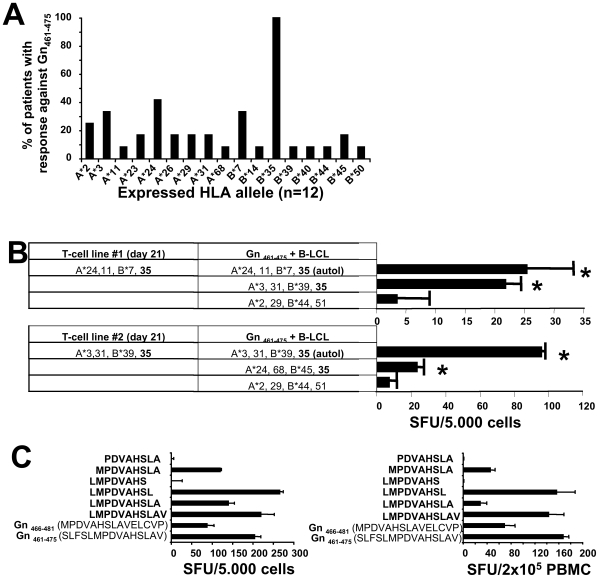
Figure 4. HLA-restriction and minimal optimal epitope of Gn461–475.
(A) Frequency of HLA-A- and B-alleles among individuals with positive response towards Gn461–475, indicating that HLA-B*35 is the only allele in common. (B) HLA-B*35-restriction of Gn461–475. Two Gn461–475–specific T-cell lines were generated over 21 days and then stimulated by Gn461–475 in the presence of autologous or heterologous APCs (B-LCL). * indicates significant responses (p<0.05). (C) downmapping of the minimal epitope of Gn461–475 Gn. Truncated versions of Gn461–475 were used to stimulate a 21-day Gn461–475–specific T-cell line (left panel) derived from a HLA-B*3502-positive donor in an 24 hour IFN-γ ELISPOT assay. Identical results were obtained with cell lines from two HLA-B*3501-positive individuals (data not shown) and in an ex vivo ELISPOT assay using PBMC from a HLA-B*3505-positive individual (right panel).
Figure 5
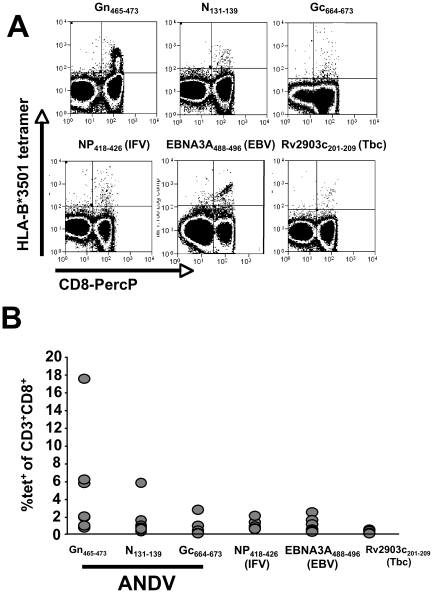
Figure 5. Tetramer analysis of pathogen specific CD8+ memory T cells in seven HLA-B*3501+ individuals.
(A) staining of CD3+ cells using HLA-B*3501:tetramer complexes (see table 2). (B) Frequencies of tetramer+CD3+CD8+ cells found in seven HLA-B*3501-positive ANDV-convalescent individuals.
Figure 6
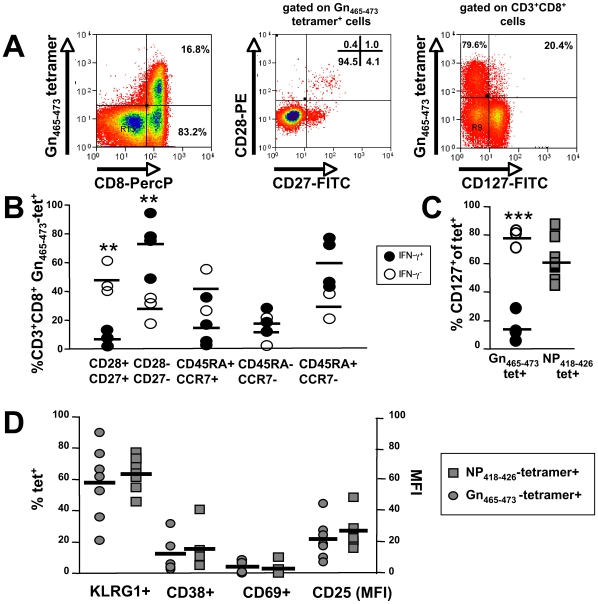
Figure 6. Phenotypic analysis of Gn465–473-specific subsets and comparison with (Influenza) NP418–426-specific CD8+ T cells.
(A) Gn465–473:tetramer+CD3+CD8+ cells predominately express a a CD28CD27CD127 phenotype. (B) Patients with Gn461–475-specific responses in IFN-γ ELISPOT (n = 4) assays show significantly more (p<0.01) highly differentiated CD28CD27 Gn465–473:tetramer+CD3+CD8+ cells than those individuals without IFN-γ responses (n = 3). No significant differences were observed as regards to expression of CD45RA and CCR7. (C) Patients with Gn461–475-specific responses in IFN-γ ELISPOT (n = 4) assays show significantly less (p<0.001) CD127+ Gn465–473:tetramer+CD3+CD8+ cells than those individuals without IFN-γ responses (n = 3). By contrast, no clear differences were observed as regards to Influenza-specific T-cells of the same individuals. (D) No signs of significant activation could be observed in Gn465–473:tetramer+CD3+CD8+-specific cells as when compared to Influenza A NP418–426:tetramer+CD3+CD8+-specific cells.
Figure 7
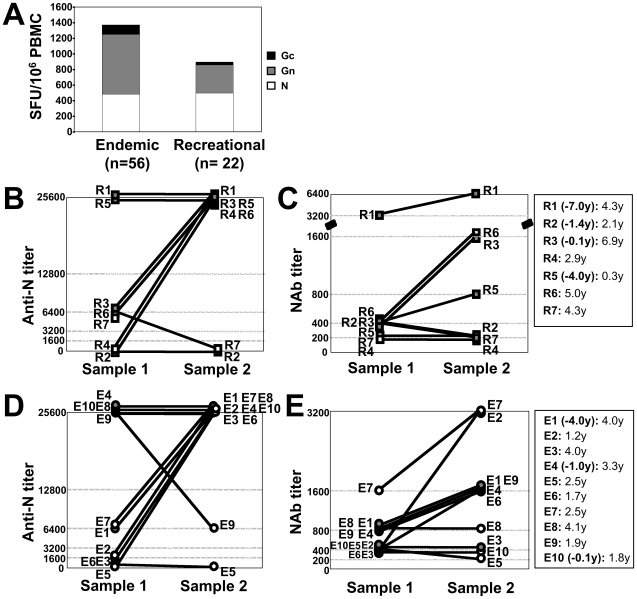
Figure 7. Comparison of immune responses between patients residing in endemic areas (E-patients) and those who got infected during recreation (R-patients).
(A) no significant differences in memory T-cell responses between E- and R-patients. (B-E) prospective anti-N (determined by indirect ELISA) and NAb titers (determined by FRNT) in R-patients (B, C) and E-patients (D, E), respectively. Symbols filled in grey indicate patients in who sample 1 was taken months or years after the acute infection; the time difference between the acute phase and the timepoint of sample 1 is indicated as negative number in parenthesis (legend on the right). The second number indicates the time period between sample 1 and sample 2, respectively.
Figure 8
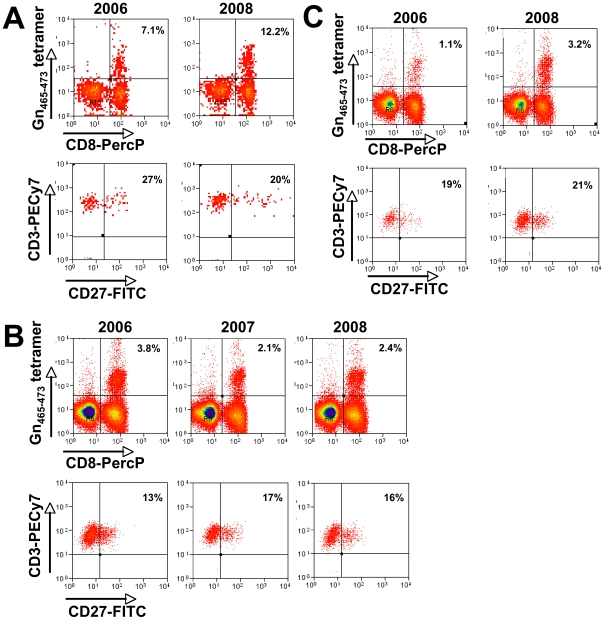
Figure 8. Prospective analysis of Gn465–473–specific T cells in three HLA-B*3501+ individuals.
Cryopreserved PBMC samples of each donor (A–C) and year were thawed and processed in parallel and assayed together in order to guarantee optimal comparability of the samples. Upper panels of each patient are gated on PICD3+ T-cells, lower panels show CD27 expression gated on tetramer+CD3+CD8+ cells, respectively. Note that (A) is showing frequencies of patient E9 and (C) of patient E2 (compare with Figure 7E).

References

    1. Bayard V, Kitsutani PT, Barria EO, Ruedas LA, Tinnin DS, et al. Outbreak of hantavirus pulmonary syndrome, Los Santos, Panama, 1999–2000. Emerg Infect Dis. 2004;10:1635–1642. - PMC - PubMed
    1. Mattar S, Parra M. Serologic evidence of hantavirus infection in humans, Colombia. Emerg Infect Dis. 2004;10:2263–2264. - PMC - PubMed
    1. Toro J, Vega JD, Khan AS, Mills JN, Padula P, et al. An outbreak of hantavirus pulmonary syndrome, Chile, 1997. Emerg Infect Dis. 1998;4:687–694. - PMC - PubMed
    1. Weissenbacher MC, Cura E, Segura EL, Hortal M, Baek LJ, et al. Serological evidence of human Hantavirus infection in Argentina, Bolivia and Uruguay. Medicina (B Aires) 1996;56:17–22. - PubMed
    1. da Silva MV, Vasconcelos MJ, Hidalgo NT, Veiga AP, Canzian M, et al. Hantavirus pulmonary syndrome. Report of the first three cases in Sao Paulo, Brazil. Rev Inst Med Trop Sao Paulo. 1997;39:231–234. - PubMed

Publication types

MeSH terms