


A complete mitochondrial genome sequence from a mesolithic wild aurochs (Bos primigenius)
- PMID: 20174668
- PMCID: PMC2822870
- DOI: 10.1371/journal.pone.0009255
A complete mitochondrial genome sequence from a mesolithic wild aurochs (Bos primigenius)
Abstract
Background: The derivation of domestic cattle from the extinct wild aurochs (Bos primigenius) has been well-documented by archaeological and genetic studies. Genetic studies point towards the Neolithic Near East as the centre of origin for Bos taurus, with some lines of evidence suggesting possible, albeit rare, genetic contributions from locally domesticated wild aurochsen across Eurasia. Inferences from these investigations have been based largely on the analysis of partial mitochondrial DNA sequences generated from modern animals, with limited sequence data from ancient aurochsen samples. Recent developments in DNA sequencing technologies, however, are affording new opportunities for the examination of genetic material retrieved from extinct species, providing new insight into their evolutionary history. Here we present DNA sequence analysis of the first complete mitochondrial genome (16,338 base pairs) from an archaeologically-verified and exceptionally-well preserved aurochs bone sample.
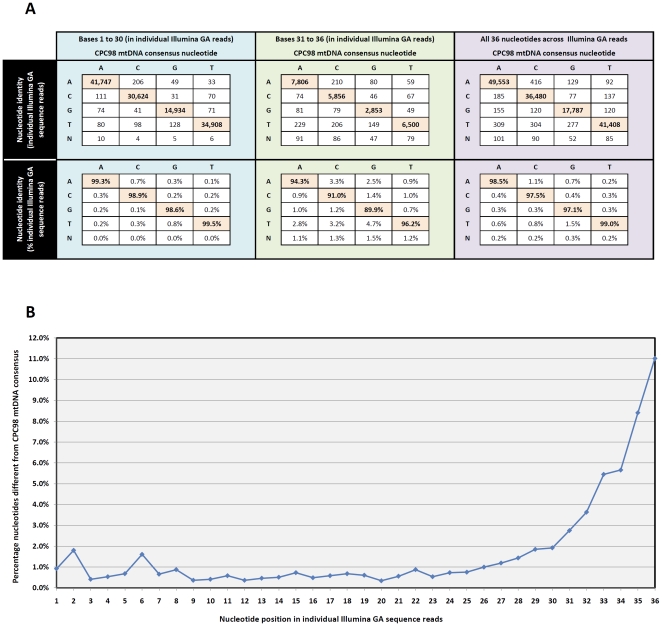
Methodology: DNA extracts were generated from an aurochs humerus bone sample recovered from a cave site located in Derbyshire, England and radiocarbon-dated to 6,738+/-68 calibrated years before present. These extracts were prepared for both Sanger and next generation DNA sequencing technologies (Illumina Genome Analyzer). In total, 289.9 megabases (22.48%) of the post-filtered DNA sequences generated using the Illumina Genome Analyzer from this sample mapped with confidence to the bovine genome. A consensus B. primigenius mitochondrial genome sequence was constructed and was analysed alongside all available complete bovine mitochondrial genome sequences.
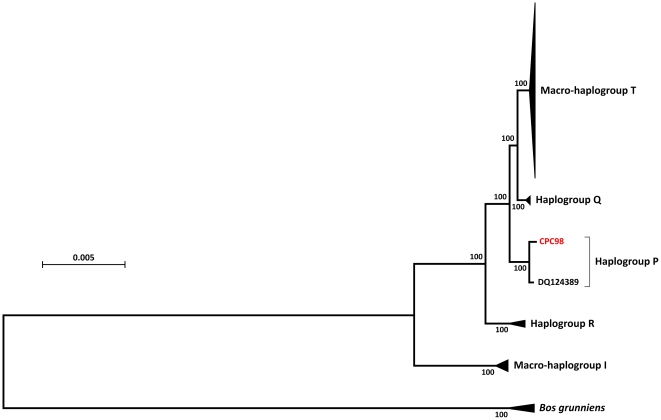
Conclusions: For all nucleotide positions where both Sanger and Illumina Genome Analyzer sequencing methods gave high-confidence calls, no discrepancies were observed. Sequence analysis reveals evidence of heteroplasmy in this sample and places this mitochondrial genome sequence securely within a previously identified aurochsen haplogroup (haplogroup P), thus providing novel insights into pre-domestic patterns of variation. The high proportion of authentic, endogenous aurochs DNA preserved in this sample bodes well for future efforts to determine the complete genome sequence of a wild ancestor of domestic cattle.
Conflict of interest statement
Figures


References
-
- Clutton-Brock J. xxii. London: Unwin Hyman; 1989. The walking larder: patterns of domestication, pastoralism, and predation.368
-
- Mason IL. xii. London: Longman; 1984. Evolution of domesticated animals.452
-
- Bradley DG, Magee DA. Genetics and the origins of domestic cattle. In: Zeder MA, Bradley DG, Emshwiller E, Smith BD, editors. Documenting domestication: new genetic and archaeological paradigms. London: University of California Press; 2006. pp. 317–328.
-
- Helmer D, Gourichon L, Monchot H, Peters J, Sana Segui M. Identifying early domestic cattle from Pre-Pottery Neolithic sites on the Midddle Euphrates using sexual dimorphism. In: Vigne J-D, Peters J, Helmer D, editors. The first steps of animal domestication: new archaeozoological approaches. Oxford: Oxbow; 2005. pp. 86–95.
-
- Bruford MW, Bradley DG, Luikart G. DNA markers reveal the complexity of livestock domestication. Nat Rev Genet. 2003;4:900–910. - PubMed
