


Review
doi: 10.1053/j.gastro.2010.02.036.
Epub 2010 Feb 19.
Diagnosis and treatment of pelvic floor disorders: what's new and what to do
Affiliations
- PMID: 20176023
- PMCID: PMC3924316
- DOI: 10.1053/j.gastro.2010.02.036
Item in Clipboard
Review
Diagnosis and treatment of pelvic floor disorders: what's new and what to do
Gastroenterology.
2010 Apr.
No abstract available
Conflict of interest statement
Conflicts of interest
Dr Adil Bharucha is a consultant for American Medical Systems.
Figures
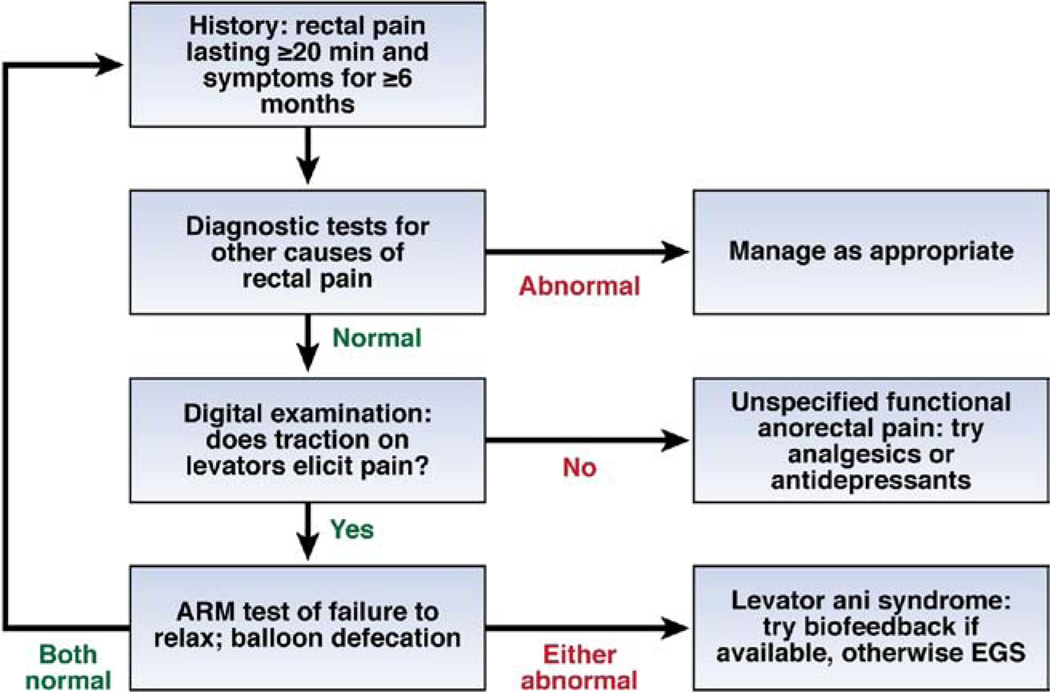
Algorithm for the diagnosis and management of chronic proctalgia. Abbreviations: ARM, anorectal manometry; EGS, electrogalvanic stimulation.
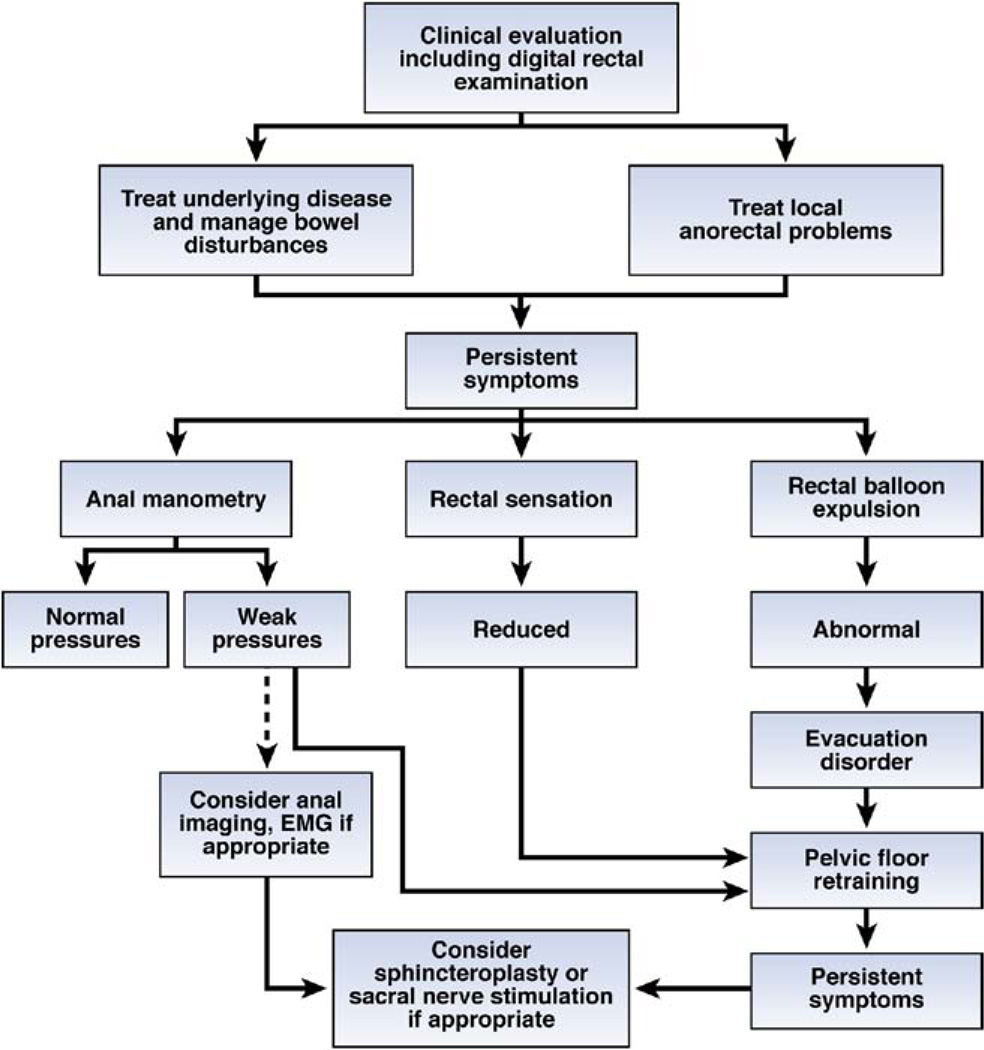
Algorithm for the diagnosis and management of fecal incontinence.
References
-
- Wald A, Bharucha AE, Enck P, et al. Functional anorectal disorders. In: Drossman DA, Corazziari E, Delvaux M, et al., editors. Rome III: The Functional Gastrointestinal Disorders. 3rd ed. McLean, Virginia: Degnon Associates; 2006. pp. 639–685.
-
- Whitehead WE, Di Lorenzo C, Leroi AM, et al. Conservative and behavioral management of constipation. Neurogastroenterol Motil. 2009;21(Suppl 2):55–61. - PubMed
-
- Gladman MA, Lunniss PJ, Scott SM, et al. Rectal hyposensitivity. Am J Gastroenterol. 2006;101:1140–1151. - PubMed
-
- Bharucha AE, Fletcher JG, Seide B, et al. Phenotypic variation in functional disorders of defecation. Gastroenterology. 2005;128:1199–1210. - PubMed
References (Online Only)
-
- Chiarioni G, Salandini L, Whitehead WE. Biofeedback benefits only patients with outlet dysfunction, not patients with isolated slow transit constipation. Gastroenterology. 2005;129:86–97. - PubMed
-
- Longstreth GF, Thompson WG, Chey WD, et al. Functional bowel disorders. In: Drossman DA, Corazziari E, Delvaux M, et al., editors. Rome III: The Functional Gastrointestinal Disorders. 3rd ed. McLean, VA: Degnon Associates; 2006. pp. 487–555.
-
- Bleijenberg G, Kuijpers HC. Treatment of the spastic pelvic floor syndrome with biofeedback. Dis Colon Rectum. 1987;30:108–111. - PubMed
-
- Duthie GS, Bartolo DC. Anismus: the cause of constipation? Results of investigation and treatment. World J Surg. 1992;16:831–835. - PubMed
Publication types
MeSH terms
Grants and funding
LinkOut - more resources
Full Text Sources
Medical
