. 2010 Jun;138(7):2388-98, 2398.e1-2.
doi: 10.1053/j.gastro.2010.02.010. Epub 2010 Feb 20.

Mutations in TTC37 cause trichohepatoenteric syndrome (phenotypic diarrhea of infancy)

Affiliations

Mutations in TTC37 cause trichohepatoenteric syndrome (phenotypic diarrhea of infancy)

Jane Louise Hartley et al. Gastroenterology. 2010 Jun.

Abstract

Background & aims: Trichohepatoenteric syndrome (THES) is an autosomal-recessive disorder characterized by life-threatening diarrhea in infancy, immunodeficiency, liver disease, trichorrhexis nodosa, facial dysmorphism, hypopigmentation, and cardiac defects. We attempted to characterize the phenotype and elucidate the molecular basis of THES.

Methods: Twelve patients with classic THES from 11 families had detailed phenotyping. Autozygosity mapping was undertaken in 8 patients from consanguineous families using 250,000 single nucleotide polymorphism arrays and linked regions evaluated using microsatellite markers. Linkage was confirmed to one region from which candidate genes were analyzed. The effect of mutations on protein production and/or localization in hepatocytes and intestinal epithelial cells from affected patients was characterized by immunohistochemistry.

Results: Previously unrecognized platelet abnormalities (reduced platelet alpha-granules, unusual stimulated alpha granule content release, abnormal lipid inclusions, abnormal platelet canalicular system, and reduced number of microtubules) were identified. The THES locus was mapped to 5q14.3-5q21.2. Sequencing of candidate genes showed mutations in TTC37, which encodes the uncharacterized tetratricopeptide repeat protein, thespin. Bioinformatic analysis suggested thespin to be involved in protein-protein interactions or chaperone. Preliminary studies of enterocyte brush-border ion transporter proteins (sodium hydrogen exchanger 2, sodium hydrogen exchanger 3, aquaporin 7, sodium iodide symporter, and hydrogen potassium adenosine triphosphatase [ATPase]) showed reduced expression or mislocalization in all THES patients with different profiles for each. In contrast the basolateral localization of Na/K ATPase was not altered.

Conclusions: THES is caused by mutations in TTC37. TTC37 mutations have a multisystem effect, which may be owing to abnormal stability and/or intracellular localization of TTC37 target proteins.


Conflict of interest statement

Disclosures

No author has any financial, professional or personal conflicts of interest.

Figures
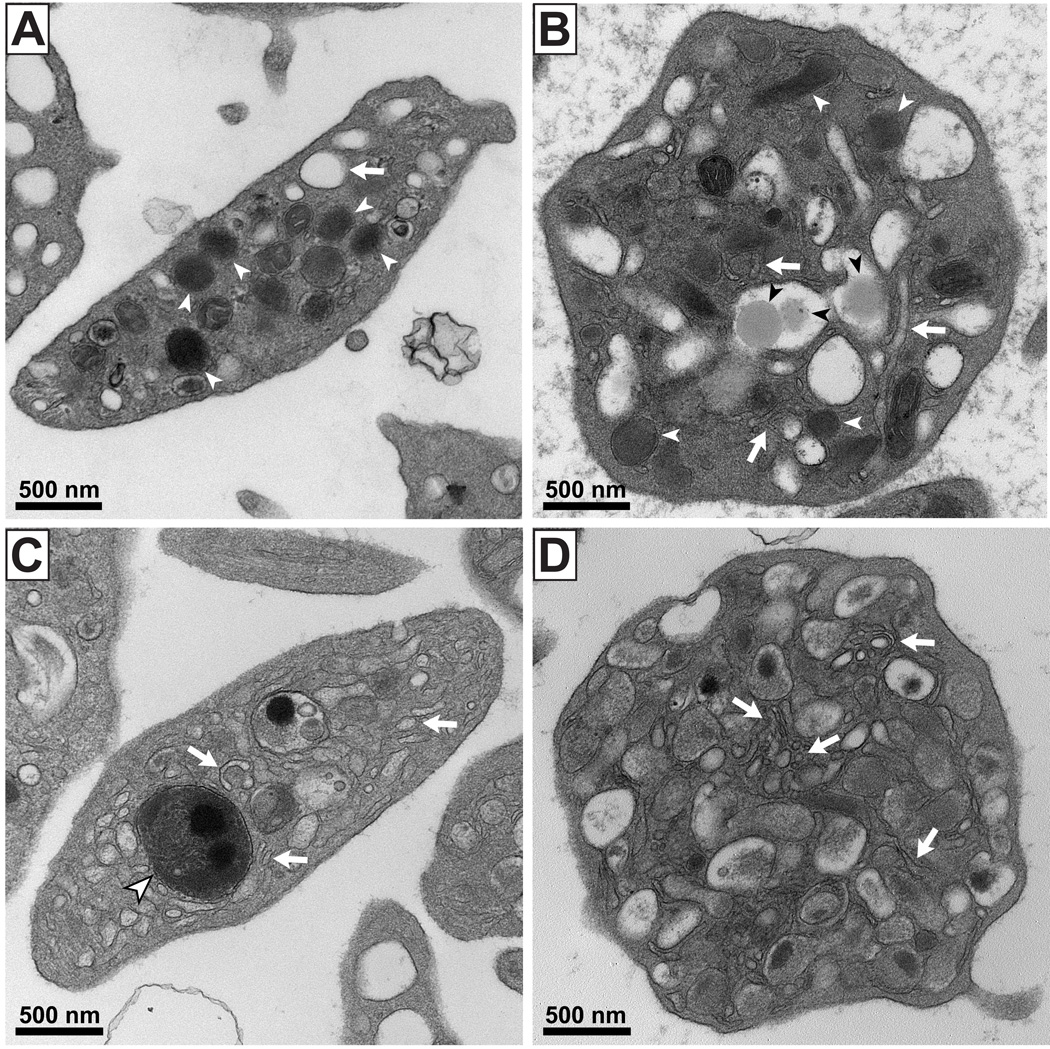
Figure 1
Figure 1
Shows the platelet abnormalities in patients with trichohepatoenteric syndrome (THES). Thin section electron microscopy of a representative normal (A) and three different THES patients (B–D). The black bar represents 500 nm. Normal α-granules are observed in control platelets (A, white arrowheads) and occasionally in some THES platelets (B) but are frequently absent in others (C, D). Whereas the membranous surface-connected canalicular system appears normal in control platelets (A, white arrow), it was disrupted with prominent tubules and smaller membranous vesicles in THES patient platelets (B–D, white arrows). Lipid inclusions were frequently observed in THES platelets (B, black arrows). Electron dense lysosomal bodies fused with an α-granule were often seen (C, large white arrowhead).
Figure 2
Figure 2
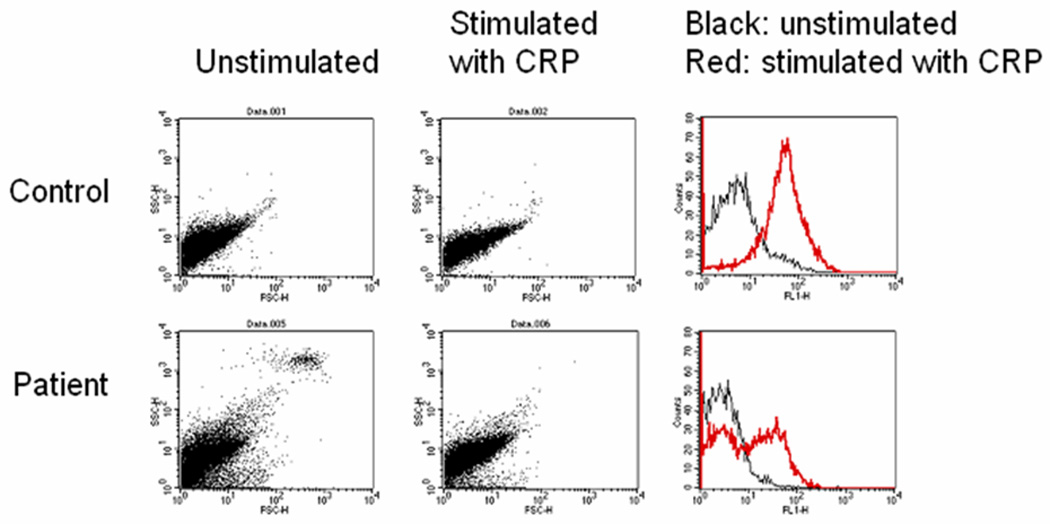
The fluorescence-activate cell sorting (FACS) analysis of the platelets shows that in a control, stimulation by collagen related peptide (CRP) for 90 seconds induces a single, sharp peak in release of α-granule content from the platelet. In THES patients (n=2) there are two peaks due to the absence of secretion in a subpopulation of platelets.
Figure 3
Figure 3
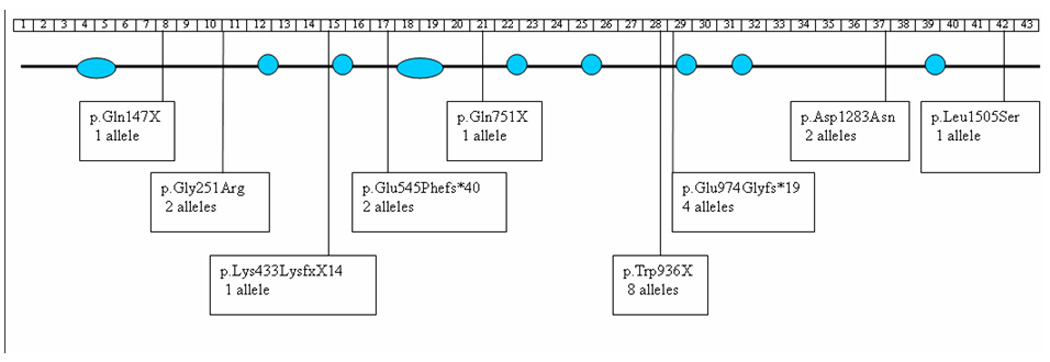
TTC37 is comprised of 43 exons. The position of each of the mutations is shown on this schematic drawing. The TPR domains in relation to the exons and mutations are shown in blue.
Figure 4
Figure 4
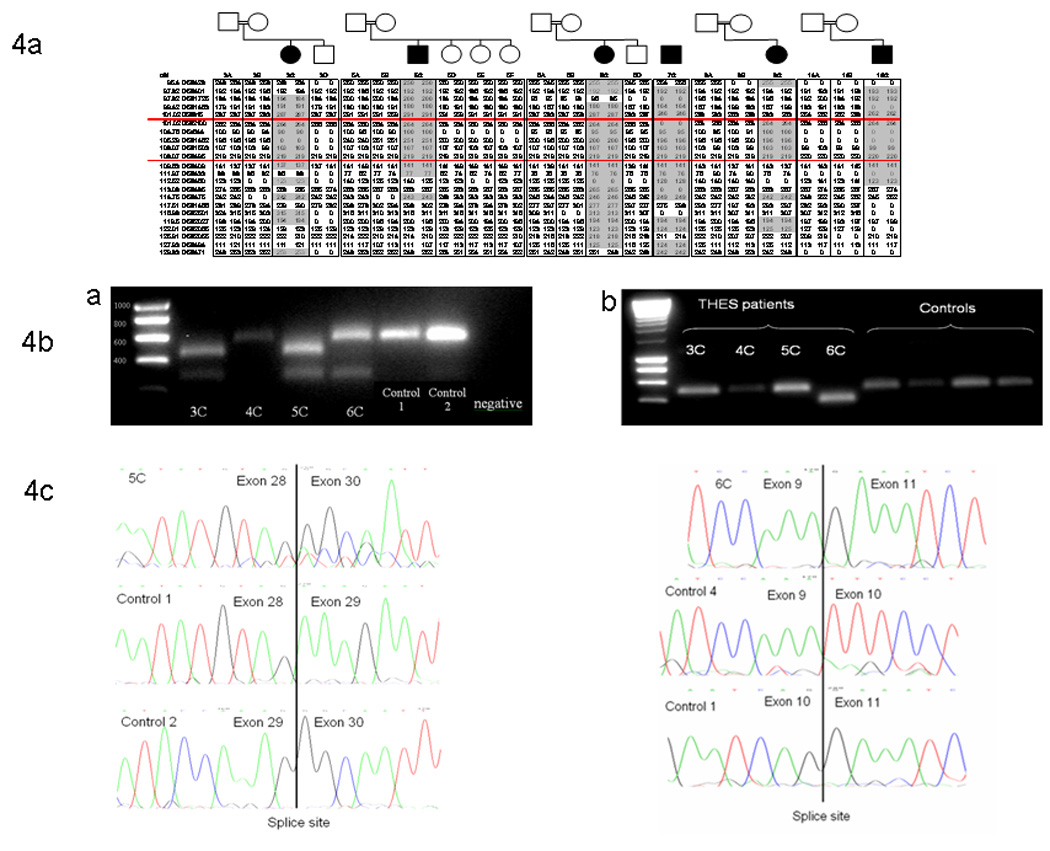
Microsatellite markers haplotype from the probands of Pakistani origin are shown in 4a. The regions of homozygosity are highlighted in grey. At D5s2100 all the probands have identical haplotype. 5b shows a gel electrophoresis of the reverse transcriptase PCR products. 4b.a. shows small PCR products in patients 3C and 5C as compared to the other affected children 4C, 6C and the control samples. 3C and 5C have c.2779-2G>A sequence change in intron 27. 5b.b shows that 6C who has a c.751G>A mutations has a smaller PCR product as compared to other affected children and controls. Figure 4c shows the sequence of the reverse transcriptase PCR’s. Exon 29 is skipped in patients 3C and 5C which corroborates the gel electrophoresis. Exon 10 is skipped in patient 6C and corresponds to the smaller PCR product seen on gel electrophoresis.
Figure 5
Figure 5
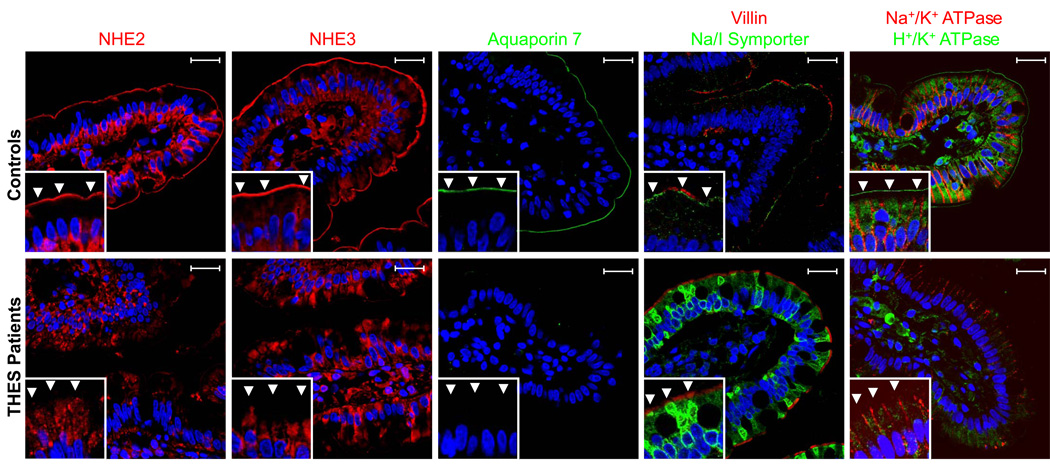
Expression and localization of apical and basolateral transport proteins in THES patients and age-matched controls. Paraffin-embedded jejunal samples were fixed and stained with antibodies against brush-border transport proteins, NHE2, NHE3, Aquaporin 7, Na/I Symporter, and the H/K ATPase as well as the basolateral Na/K ATPase. Villin was used as a marker of the enterocyte brush-border. Localization of NHE2, NHE3, NIS and the H/K ATPase was altered in THES patient samples compared to age-matched controls. Alternatively, expression of Aquaporin 7 appeared to be significantly reduced in THES patients versus controls. In contrast, expression and localization of the Na/K ATPase (basolateral) and villin (brush-border) were not altered in any control or THES patient samples analyzed. Inserts demonstrate 6X zoom magnification of original images obtained with 63X water immersion objective. Arrowheads indicate localization of the BB. Scale bar = 20µm.

References

    1. Boschi-Pinto C, Velebit L, Shibuya K. Estimating child mortality due to diarrhoea in developing countries. Bull of the World Health Org. 2008;86:710–717. - PMC - PubMed
    1. Muller T, Hess MW, Schiefermeier N, et al. MYO5B mutations cause microvillus inclusion disease and disrupt epithelial cell polarity. Nat Genet. 2008;40:1163–1165. - PubMed
    1. Sivagnanam M, Mueller JL, Lee H, et al. Identification of EpCAM as the gene for congenital tufting enteropathy. Gastroenterology. 2008;135:429–437. - PMC - PubMed
    1. Hoglund P, Haila S, Socha J, et al. Mutations of the Down-regulated in adenoma (DRA) gene cause congenital chloride diarrhoea. Nat Genet. 1996;14:316–319. - PubMed
    1. Heinz-Erian P, Muller T, Krabichler B, et al. Mutations in SPINT2 causes a syndromic form of congenital sodium diarrhea. Am J Hum Genet. 2009;84:188–196. - PMC - PubMed

Publication types