


Synergy with rifampin and kanamycin enhances potency, kill kinetics, and selectivity of de novo-designed antimicrobial peptides
- PMID: 20176897
- PMCID: PMC2863663
- DOI: 10.1128/AAC.01231-09
Synergy with rifampin and kanamycin enhances potency, kill kinetics, and selectivity of de novo-designed antimicrobial peptides
Abstract
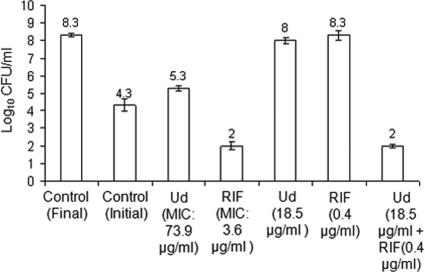
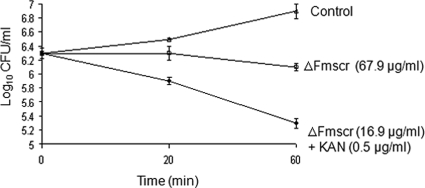
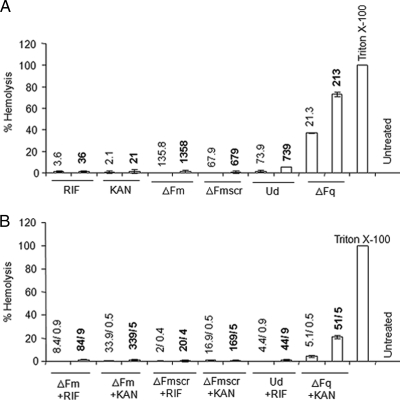
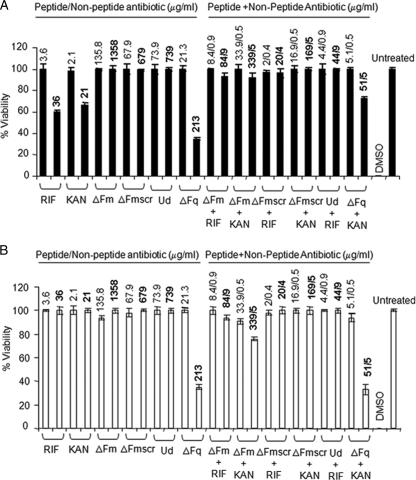
By choosing membranes as targets of action, antibacterial peptides offer the promise of providing antibiotics to which bacteria would not become resistant. However, there is a need to increase their potency against bacteria along with achieving a reduction in toxicity to host cells. Here, we report that three de novo-designed antibacterial peptides (DeltaFm, DeltaFmscr, and Ud) with poor to moderate antibacterial potencies and kill kinetics improved significantly in all of these aspects when synergized with rifampin and kanamycin against Escherichia coli. (DeltaFm and DeltaFmscr [a scrambled-sequence version of DeltaFm] are isomeric, monomeric decapeptides containing the nonproteinogenic amino acid alpha,beta-didehydrophenylalanine [DeltaF] in their sequences. Ud is a lysine-branched dimeric peptide containing the helicogenic amino acid alpha-aminoisobutyric acid [Aib].) In synergy with rifampin, the MIC of DeltaFmscr showed a 34-fold decrease (67.9 microg/ml alone, compared to 2 microg/ml in combination). A 20-fold improvement in the minimum bactericidal concentration of Ud was observed when the peptide was used in combination with rifampin (369.9 microg/ml alone, compared to 18.5 microg/ml in combination). Synergy with kanamycin resulted in an enhancement in kill kinetics for DeltaFmscr (no killing until 60 min for DeltaFmscr alone, versus 50% and 90% killing within 20 min and 60 min, respectively, in combination with kanamycin). Combination of the dendrimeric peptide DeltaFq (a K-K2 dendrimer for which the sequence of DeltaFm constitutes each of the four branches) (MIC, 21.3 microg/ml) with kanamycin (MIC, 2.1 microg/ml) not only lowered the MIC of each by 4-fold but also improved the therapeutic potential of this highly hemolytic (37% hemolysis alone, compared to 4% hemolysis in combination) and cytotoxic (70% toxicity at 10x MIC alone, versus 30% toxicity in combination) peptide. Thus, synergy between peptide and nonpeptide antibiotics has the potential to enhance the potency and target selectivity of antibacterial peptides, providing regimens which are more potent, faster acting, and safer for clinical use.
Figures
References
-
- Ahmad, A., S. P. Yadav, N. Asthana, K. Mitra, S. P. Srivastava, and J. K. Ghosh. 2006. Utilization of an amphipathic leucine zipper sequence to design antibacterial peptides with simultaneous modulation of toxic activity against human red blood cells. J. Biol. Chem. 281:22029-22038. - PubMed
-
- Asthana, N., S. P. Yadav, and J. K. Ghosh. 2004. Dissection of antibacterial and toxic activity of melittin. J. Biol. Chem. 279:55042-55050. - PubMed
-
- Barriere, S. L. 1992. Bacterial resistance to beta-lactams and its prevention with combination antimicrobial therapy. Pharmacotherapy 12:397-402. - PubMed
-
- Brogden, K. A. 2005. Antimicrobial peptides: pore formers or metabolic inhibitors in bacteria? Nat. Rev. Microbiol. 3:238-250. - PubMed
-
- Bulet, P., R. Stocklin, and L. Menin. 2004. Anti-microbial peptides: from invertebrates to vertebrates. Immunol. Rev. 198:169-184. - PubMed
Publication types
MeSH terms
Substances
LinkOut - more resources
Full Text Sources
Medical
