


Overexpression of Chromatin Assembly Factor-1/p60 helps to predict the prognosis of melanoma patients
- PMID: 20178651
- PMCID: PMC2843674
- DOI: 10.1186/1471-2407-10-63
Overexpression of Chromatin Assembly Factor-1/p60 helps to predict the prognosis of melanoma patients
Abstract
Background: Cutaneous melanoma (CM) is the most lethal form of skin malignancy, which registers a constant increase in incidence worldwide. The identification of molecular alteration(s) involved in its biological aggressiveness represents a major challenge for researchers, considering that existing therapies are ineffective to treat metastasizing cases. The epigenetic control of chromatin dynamics during DNA synthesis, replication, and repair is fundamental for the orderly progression of cell proliferation. The Chromatin Assembly Factor 1 (CAF-1) complex acts as a major regulator of this process; its intermediate (p60) subunit has been recently proposed as a novel proliferation and prognostic marker for several tumors. We aimed to establish if the evaluation of the expression of CAF-1/p60 in primary CM may help define the prevision of outcome of patients.
Methods: Immunohistochemistry with anti-CAF-1/p60 was performed on paraffin-embedded tissue sections of 130 cases of primary CM retrieved from the archive files of the Department of Biomorphological and Functional Sciences, Section of Pathology, University "Federico II" of Naples, Italy. Results were compared with histopathological and follow-up data of patients.
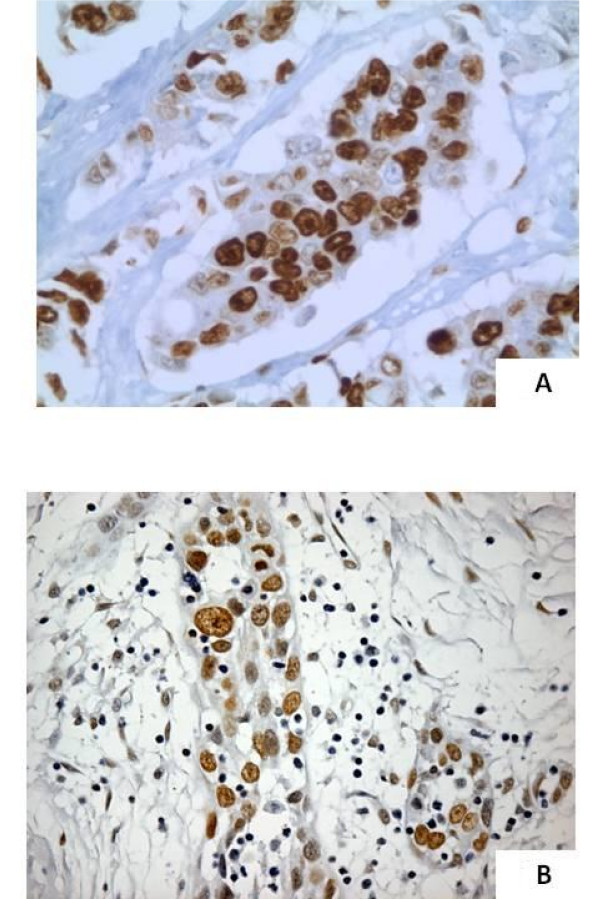
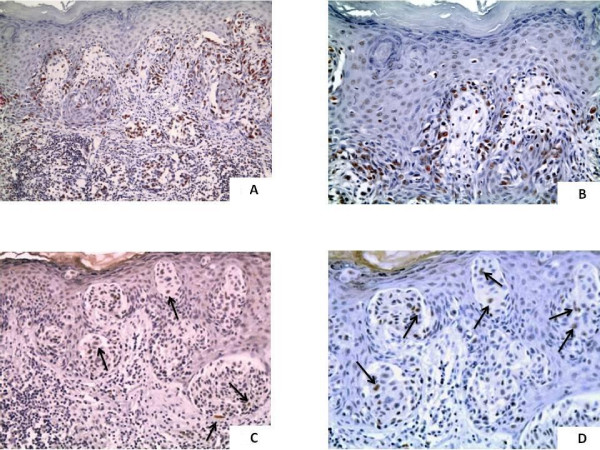
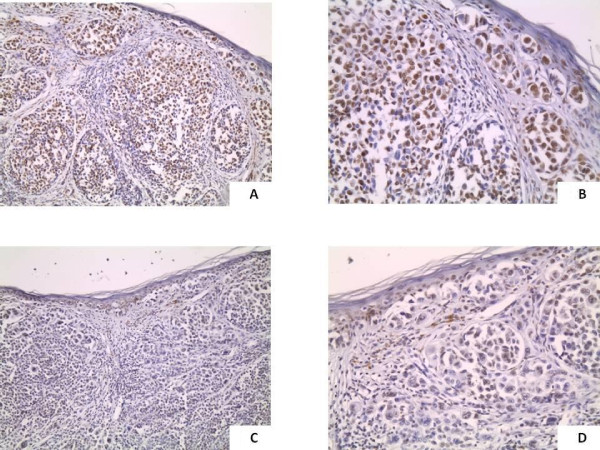
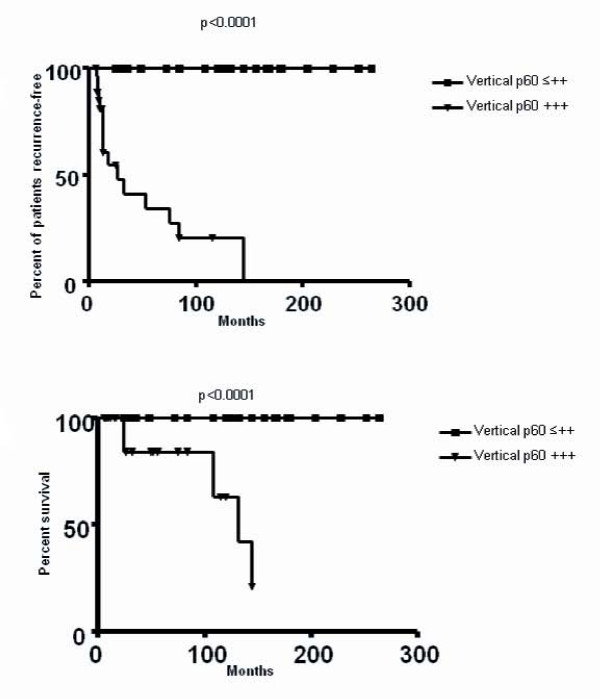
Results: CAF-1/p60 was expressed in all CM. A significant statistical association between the overexpression of the protein and the occurrence of skin, node and/or distant metastases (P < 0.05) emerged, independently from histopathological prognostic factors.
Conclusions: CAF-1/p60 looks promising as a new prognostic marker for CM and sheds new light on the molecular events associated with photocancerogenesis and melanoma biology.The screening for CAF-1/p60 might contribute to the molecular sub-classification of CM, with improved translational outcomes.
Figures
References
-
- Markovic SN, Erickson LA, Rao RD, Weenig RH, Pockaj BA, Bardia A, Vachon CM, Schild SE, McWilliams RR, Hand JL, Laman SD, Kottschade LA, Maples WJ, Pittelkow MR, Pulido JS, Cameron JD, Creagan ET. Melanoma Study Group of the Mayo Clinic Cancer Center. Malignant melanoma in the 21st century, part 1: epidemiology, risk factors, screening, prevention, and diagnosis. Mayo Clin Proc. 2007;82:364–80. doi: 10.4065/82.3.364. - DOI - PubMed
MeSH terms
Substances
LinkOut - more resources
Full Text Sources
Medical
