Cytotoxic effects induced by docetaxel, gefitinib, and cyclopamine on side population and nonside population cell fractions from human invasive prostate cancer cells
- PMID: 20179163
- PMCID: PMC3228252
- DOI: 10.1158/1535-7163.MCT-09-1013
Cytotoxic effects induced by docetaxel, gefitinib, and cyclopamine on side population and nonside population cell fractions from human invasive prostate cancer cells
Abstract
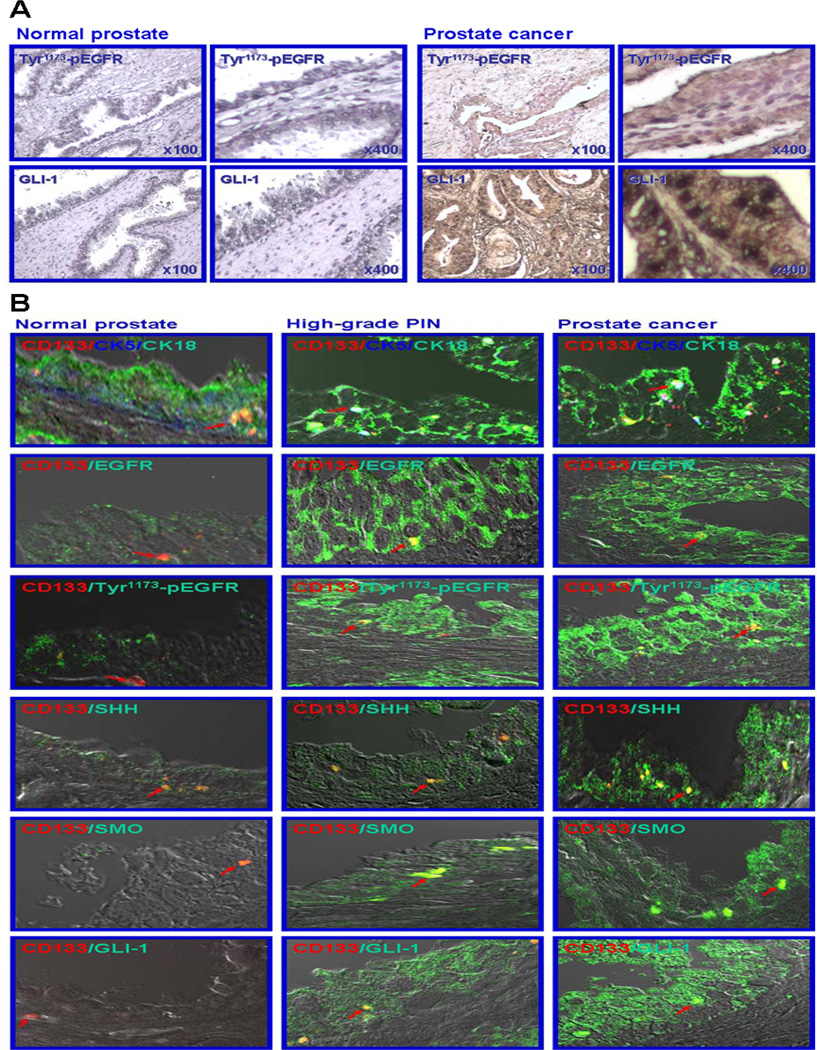
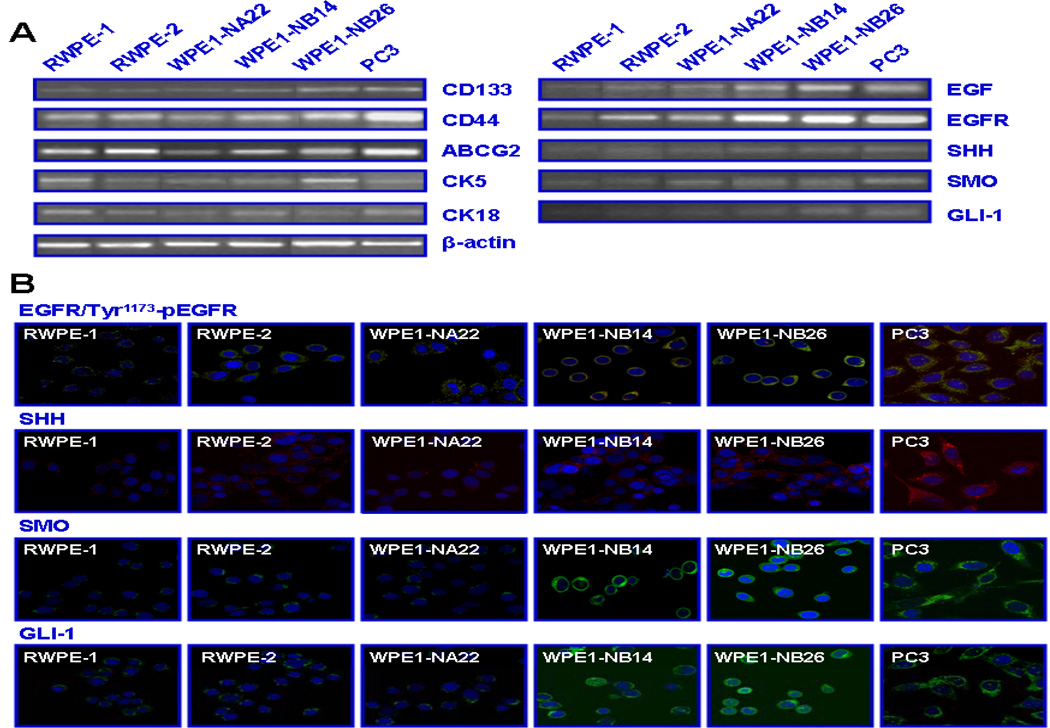
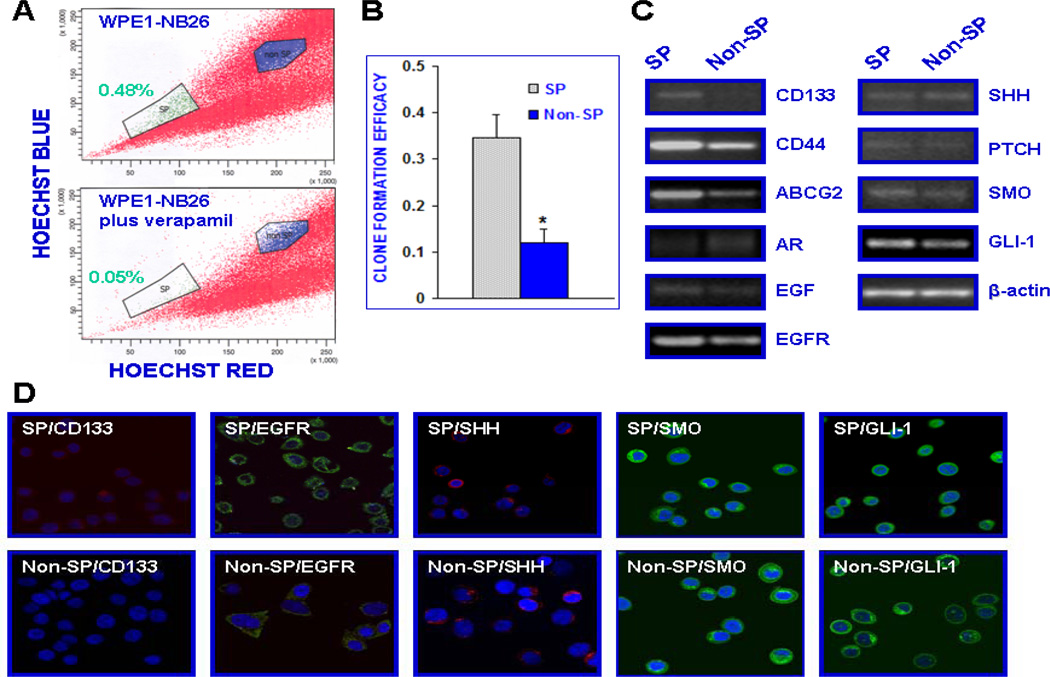
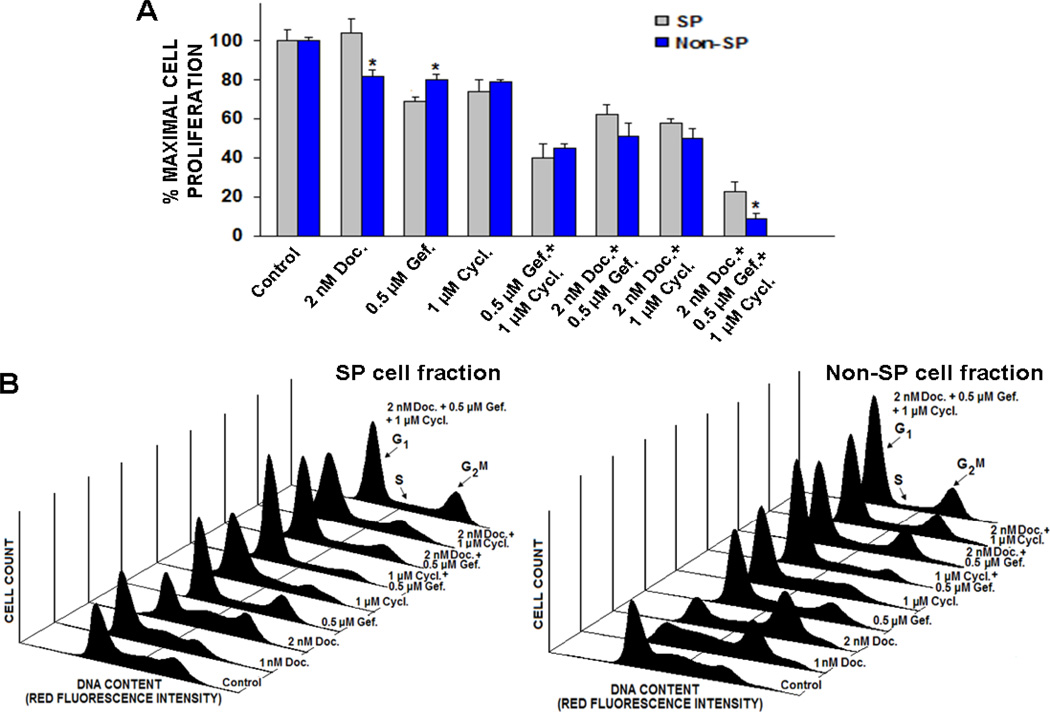
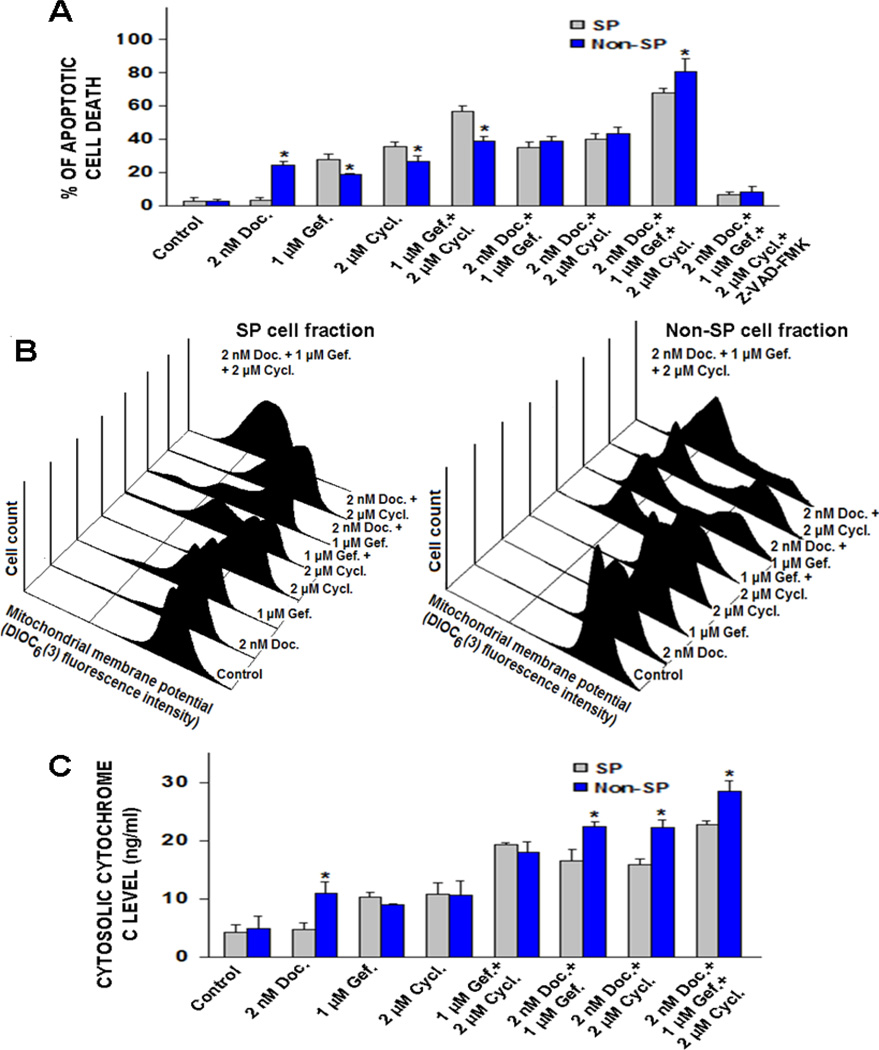
The present study has been undertaken to establish the therapeutic benefit of cotargeting epidermal growth factor receptor (EGFR) and sonic hedgehog pathways by using gefitinib and cyclopamine, respectively, for improving the efficacy of the current chemotherapeutic drug docetaxel to counteract the prostate cancer progression from locally invasive to metastatic and recurrent disease stages. The data from immuofluorescence analyses revealed that EGFR/Tyr(1173)-pEGFR, sonic hedgehog ligand, smoothened coreceptor, and GLI-1 were colocalized with the CD133(+) stem cell-like marker in a small subpopulation of prostate cancer cells. These signaling molecules were also present in the bulk tumor mass of CD133(-) prostate cancer cells with a luminal phenotype detected in patient's adenocarcinoma tissues. Importantly, the results revealed that the CD133(+)/CD44(high)/AR(-/low) side population (SP) cell fraction endowed with a high self-renewal potential isolated from tumorigenic and invasive WPE1-NB26 cells by the Hoechst dye technique was insensitive to the current chemotherapeutic drug, docetaxel. In contrast, the docetaxel treatment induced significant antiproliferative and apoptotic effects on the CD133(-)/CD44(low)/AR(+) non-SP cell fraction isolated from the WPE1-NB26 cell line. Of therapeutic interest, the results have also indicated that combined docetaxel, gefitinib, and cyclopamine induced greater antiproliferative and apoptotic effects on SP and non-SP cell fractions isolated from WPE1-NB26 cells than individual drugs or two-drug combinations. Altogether, these observations suggest that EGFR and sonic hedgehog cascades may represent the potential therapeutic targets of great clinical interest to eradicate the total prostate cancer cell mass and improve the current docetaxel-based therapies against locally advanced and invasive prostate cancers, and thereby prevent metastases and disease relapse.
Figures
References
-
- Mimeault M, Batra SK. Recent advances on multiple tumorigenic cascades involved in prostatic cancer progression and targeting therapies. Carcinogenesis. 2006;27:1–22. - PubMed
-
- Litwin MS, Gore JL, Kwan L, et al. Quality of life after surgery, external beam irradiation, or brachytherapy for early-stage prostate cancer. Cancer. 2007;109:2239–2247. - PubMed
-
- Gignac GA, Morris MJ, Hussain M. Castration resistant, taxane naive metastatic prostate cancer: Current clinical approaches and future directions. J Urol. 2007;178:S30–S35. - PubMed
-
- Tannock IF, de Wit R, Berry WR, et al. Docetaxel plus prednisone or mitoxantrone plus prednisone for advanced prostate cancer. N Engl J Med. 2004;351:1502–1512. - PubMed
-
- Petrylak DP, Tangen CM, Hussain MH, et al. Docetaxel and estramustine compared with mitoxantrone and prednisone for advanced refractory prostate cancer. N Engl J Med. 2004;351:1513–1520. - PubMed
Publication types
MeSH terms
Substances
Grants and funding
LinkOut - more resources
Full Text Sources
Other Literature Sources
Medical
Research Materials
Miscellaneous