


Selection of a novel and highly specific tumor necrosis factor alpha (TNFalpha) antagonist: insight from the crystal structure of the antagonist-TNFalpha complex
- PMID: 20179326
- PMCID: PMC2852948
- DOI: 10.1074/jbc.M109.063305
Selection of a novel and highly specific tumor necrosis factor alpha (TNFalpha) antagonist: insight from the crystal structure of the antagonist-TNFalpha complex
Abstract
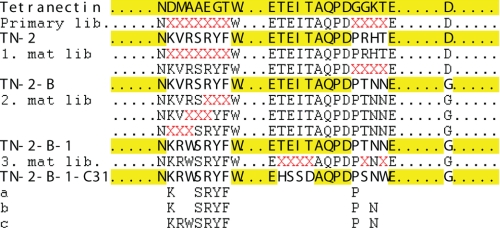
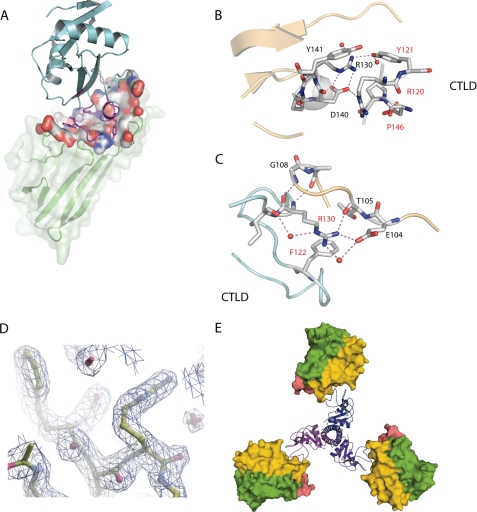
Inhibition of tumor necrosis factor alpha (TNFalpha) is a favorable way of treating several important diseases such as rheumatoid arthritis, Crohn disease, and psoriasis. Therefore, an extensive range of TNFalpha inhibitory proteins, most of them based upon an antibody scaffold, has been developed and used with variable success as therapeutics. We have developed a novel technology platform using C-type lectins as a vehicle for the creation of novel trimeric therapeutic proteins with increased avidity and unique properties as compared with current protein therapeutics. We chose human TNFalpha as a test target to validate this new technology because of the extensive experience available with protein-based TNFalpha antagonists. Here, we present a novel and highly specific TNFalpha antagonist developed using this technology. Furthermore, we have solved the three-dimensional structure of the antagonist-TNFalpha complex by x-ray crystallography, and this structure is presented here. The structure has given us a unique insight into how the selection procedure works at a molecular level. Surprisingly little change is observed in the C-type lectin-like domain structure outside of the randomized regions, whereas a substantial change is observed within the randomized loops. Thus, the overall integrity of the C-type lectin-like domain is maintained, whereas specificity and binding affinity are changed by the introduction of a number of specific contacts with TNFalpha.
Figures
References
-
- Zelensky A. N., Gready J. E. (2005) FEBS J. 272, 6179–6217 - PubMed
-
- Caterer N. R., Graversen J. H., Jacobsen C., Moestrup S. K., Sigurskjold B. W., Etzerodt M., Thøgersen H. C. (2002) Biol. Chem. 383, 1743–1750 - PubMed
-
- Graversen J. H., Lorentsen R. H., Jacobsen C., Moestrup S. K., Sigurskjold B. W., Thøgersen H. C., Etzerodt M. (1998) J. Biol. Chem. 273, 29241–29246 - PubMed
-
- Nielsen B. B., Kastrup J. S., Rasmussen H., Holtet T. L., Graversen J. H., Etzerodt M., Thøgersen H. C., Larsen I. K. (1997) FEBS Lett. 412, 388–396 - PubMed
Publication types
MeSH terms
Substances
LinkOut - more resources
Full Text Sources
Other Literature Sources
