


Employing complier average causal effect analytic methods to examine effects of randomized encouragement trials
- PMID: 20180678
- PMCID: PMC2845534
- DOI: 10.1080/00952990903005882
Employing complier average causal effect analytic methods to examine effects of randomized encouragement trials
Abstract
Aims: This article details the application of Complier Average Causal Effect (CACE) analysis to the examination of youth outcomes from adaptive substance use prevention trials.
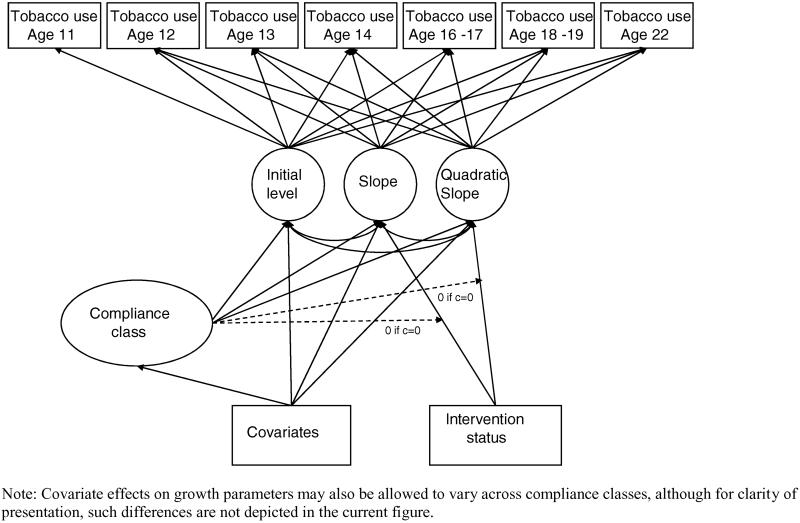
Methods: CACE analysis is illustrated using youth-reports of tobacco-use from ages 11 to 22, from the Adolescent Transitions Program, a family-focused randomized encouragement trial designed for delivery in the school setting.
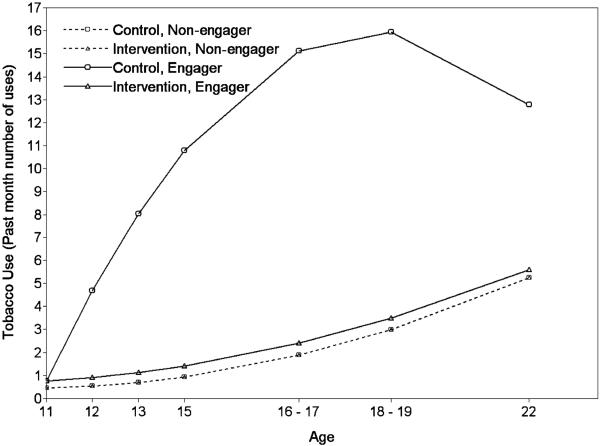
Results: Female gender and early peer deviance predicted family engagement with active intervention components. Further, long-term reductions in youth tobacco use from age 11 to age 22 were found for families that engaged with treatment.
Conclusions: CACE modeling techniques enable researchers to examine factors that predict engagement with core intervention components and to examine intervention effects specifically for youth who engaged with those components.
Figures
References
-
- Connell A, Dishion T, Deater-Deckard K. Variable and person-centered approaches to the analysis of early adolescent substance use: Linking peer, family, and intervention effects with developmental trajectories. Merrill-Palmer Quarterly. 2006;52:421–448.
-
- Chassin L, Presson C, Seo D, Sherman S, Macy J, Wirth R, et al. Multiple trajectories of cigarette smoking and the intergenerational transmission of smoking. Health Psychology. 2008;27:819–826. - PubMed
MeSH terms
Grants and funding
LinkOut - more resources
Full Text Sources
