


Integration of HIV/AIDS services into African primary health care: lessons learned for health system strengthening in Mozambique - a case study
- PMID: 20180975
- PMCID: PMC2828398
- DOI: 10.1186/1758-2652-13-3
Integration of HIV/AIDS services into African primary health care: lessons learned for health system strengthening in Mozambique - a case study
Abstract
Introduction: In 2004, Mozambique, supported by large increases in international disease-specific funding, initiated a national rapid scale-up of antiretroviral treatment (ART) and HIV care through a vertical "Day Hospital" approach. Though this model showed substantial increases in people receiving treatment, it diverted scarce resources away from the primary health care (PHC) system. In 2005, the Ministry of Health (MOH) began an effort to use HIV/AIDS treatment and care resources as a means to strengthen their PHC system. The MOH worked closely with a number of NGOs to integrate HIV programs more effectively into existing public-sector PHC services.
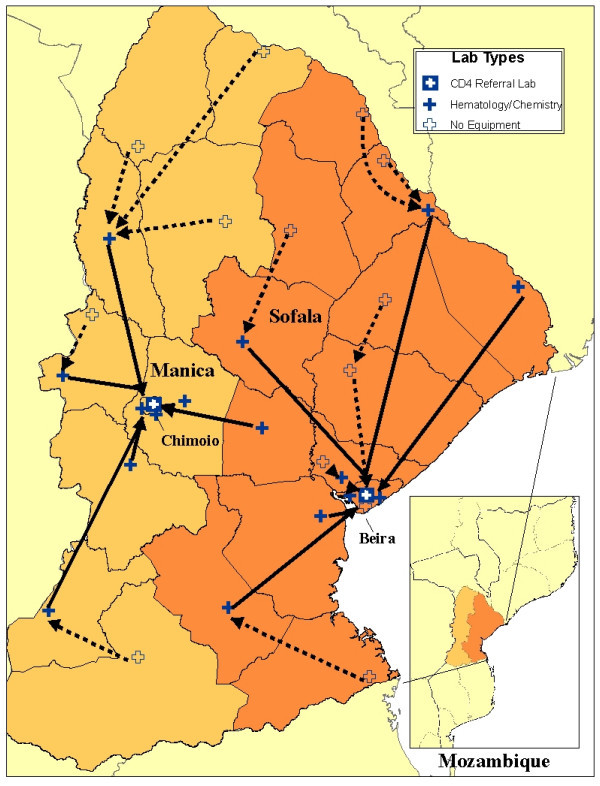
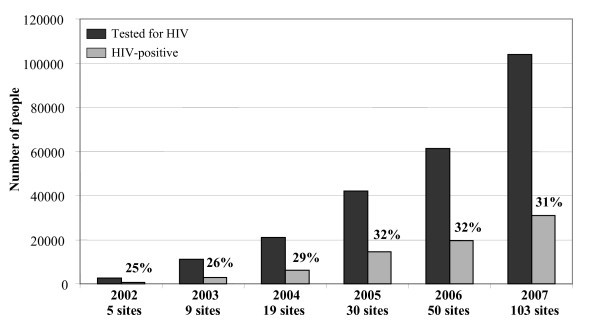
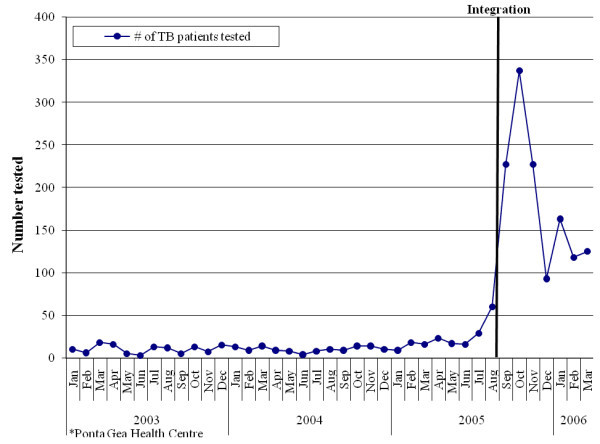
Case description: In 2005, the Ministry of Health and Health Alliance International initiated an effort in two provinces to integrate ART into the existing primary health care system through health units distributed across 23 districts. Integration included: a) placing ART services in existing units; b) retraining existing workers; c) strengthening laboratories, testing, and referral linkages; e) expanding testing in TB wards; f) integrating HIV and antenatal services; and g) improving district-level management.
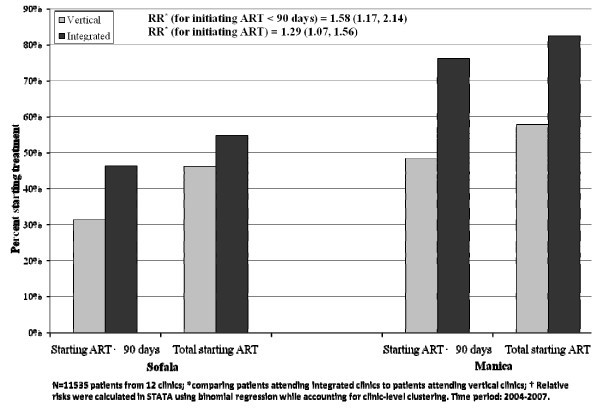
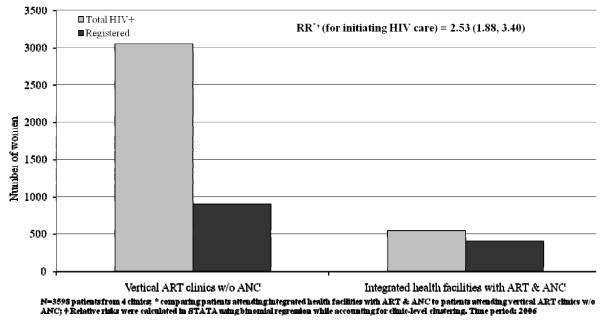
Discussion: By 2008, treatment was available in nearly 67 health facilities in 23 districts. Nearly 30,000 adults were on ART. Over 80,000 enrolled in the HIV/AIDS program. Loss to follow-up from antenatal and TB testing to ART services has declined from 70% to less than 10% in many integrated sites. Average time from HIV testing to ART initiation is significantly faster and adherence to ART is better in smaller peripheral clinics than in vertical day hospitals. Integration has also improved other non-HIV aspects of primary health care.
Conclusion: The integration approach enables the public sector PHC system to test more patients for HIV, place more patients on ART more quickly and efficiently, reduce loss-to-follow-up, and achieve greater geographic HIV care coverage compared to the vertical model. Through the integration process, HIV resources have been used to rehabilitate PHC infrastructure (including laboratories and pharmacies), strengthen supervision, fill workforce gaps, and improve patient flow between services and facilities in ways that can benefit all programs. Using aid resources to integrate and better link HIV care with existing services can strengthen wider PHC systems.
Figures
References
-
- England R. The dangers of disease specific programmes for developing countries. BMJ. 2007;13:565. doi: 10.1136/bmj.39335.520463.94. - DOI
-
- Garrett L. The challenge of global health. Foreign Aff. 2007;13:14.
Publication types
MeSH terms
Substances
Grants and funding
LinkOut - more resources
Full Text Sources
Medical
