


Growth differentiation factor 15 in erythroid health and disease
- PMID: 20182355
- PMCID: PMC2884377
- DOI: 10.1097/MOH.0b013e328337b52f
Growth differentiation factor 15 in erythroid health and disease
Abstract
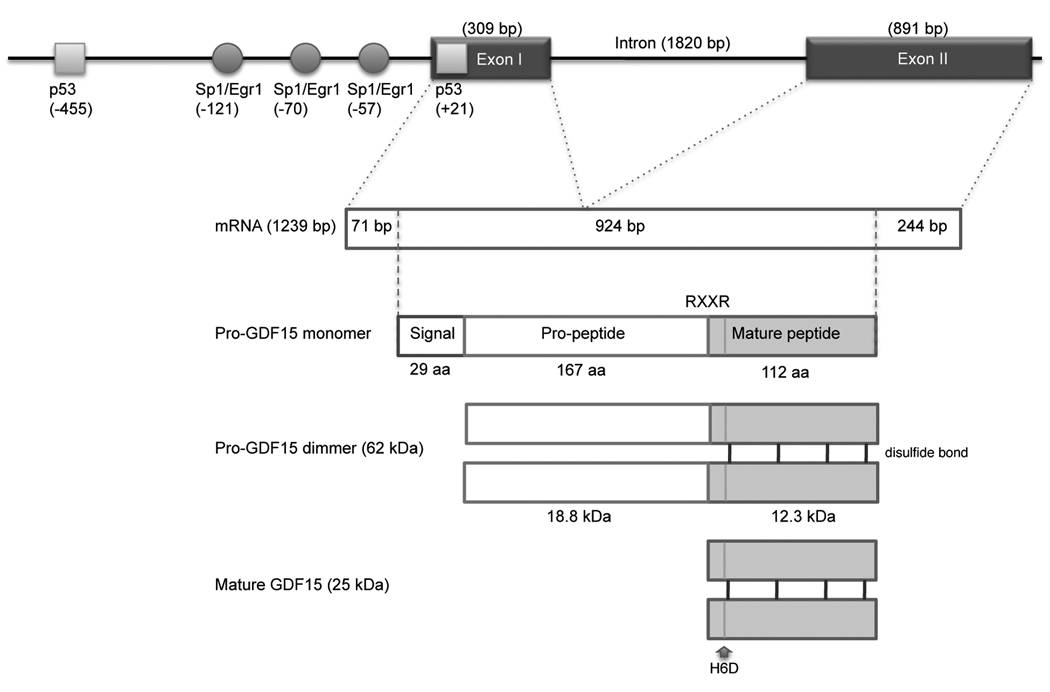
Purpose of review: Growth differentiation factor 15 (GDF15) was identified as a hepcidin-suppression factor that is expressed at high levels in patients with ineffective erythropoiesis. This review addresses the regulation, expression and potential functions of GDF15 in the context of erythroid biology.
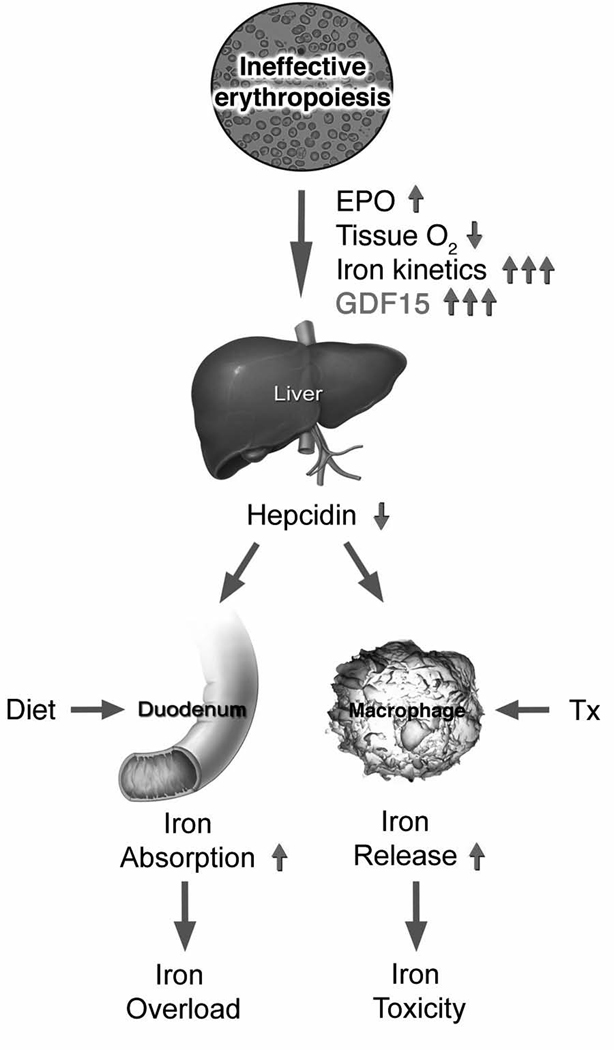
Recent findings: GDF15 expression during late erythroid differentiation was discovered as part of an erythroblast transcriptome project. As GDF15 expression is associated with cellular stress or apoptosis, further investigation of the cytokine was focused upon its involvement in ineffective erythropoiesis. Remarkably high serum levels were detected in patients with thalassemia syndromes, congenital dyserythropoiesis and some acquired sideroblastic anemias. High-level GDF15 expression is not a feature of normal erythropoiesis, or erythroid recovery after bone-marrow transplantation. As GDF15 is a transforming growth factor-beta superfamily member, it was investigated as an effector of ineffective erythropoiesis that suppresses hepcidin expression despite iron overloading.
Summary: In contrast to the low levels of GDF15 expressed during normal erythropoiesis, ineffective erythropoiesis causes high-level expression of GDF15. In patients with thalassemia and related anemias, GDF15 expression may contribute to iron overloading or other features of the disease phenotype.
Figures


References
-
- Lawton LN, Bonaldo MF, Jelenc PC, et al. Identification of a novel member of the TGF-beta superfamily highly expressed in human placenta. Gene. 1997;203:17–26. - PubMed
-
- Li PX, Wong J, Ayed A, et al. Placental transforming growth factor-beta is a downstream mediator of the growth arrest and apoptotic response of tumor cells to DNA damage and p53 overexpression. J Biol Chem. 2000;275:20127–20135. - PubMed
-
- Lim JH, Park JW, Min DS, et al. NAG-1 up-regulation mediated by EGR-1 and p53 is critical for quercetin-induced apoptosis in HCT116 colon carcinoma cells. Apoptosis. 2007;12:411–421. - PubMed
-
- Bauskin AR, Brown DA, Kuffner T, et al. Role of macrophage inhibitory cytokine-1 in tumorigenesis and diagnosis of cancer. Cancer Res. 2006;66:4983–4986. - PubMed
Publication types
MeSH terms
Substances
Grants and funding
LinkOut - more resources
Full Text Sources
Other Literature Sources
Medical
Research Materials
