


Longitudinal study of carbon monoxide intoxication by diffusion tensor imaging with neuropsychiatric correlation
- PMID: 20184809
- PMCID: PMC2834793
- DOI: 10.1503/jpn.090057
Longitudinal study of carbon monoxide intoxication by diffusion tensor imaging with neuropsychiatric correlation
Abstract
Background: White matter damage is common after carbon monoxide (CO) intoxication, but in vivo follow-up studies about the mechanism of white matter damage are not possible in pathology series. Diffusion tensor imaging (DTI) and voxel-based morphometry (VBM) can quantify diffusion parameters and volumetric changes in white matter that can be correlated with neuropsychological performances in longitudinal studies.
Methods: We examined 9 patients with CO intoxication using DTI, VBM and neuropsychologic tests at an average of 3 and 10 months after CO exposure. We used data from 18 age- and sex-matched controls for comparison.
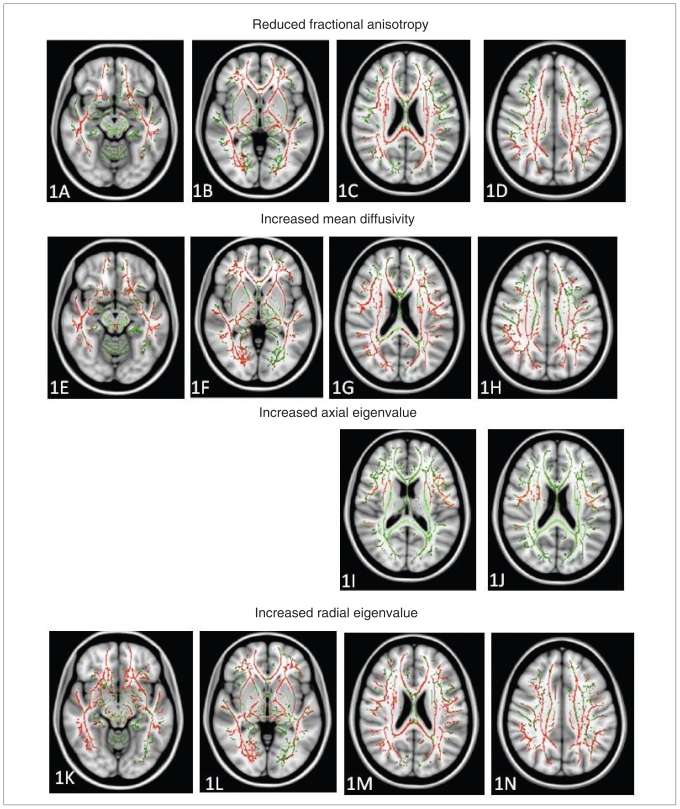
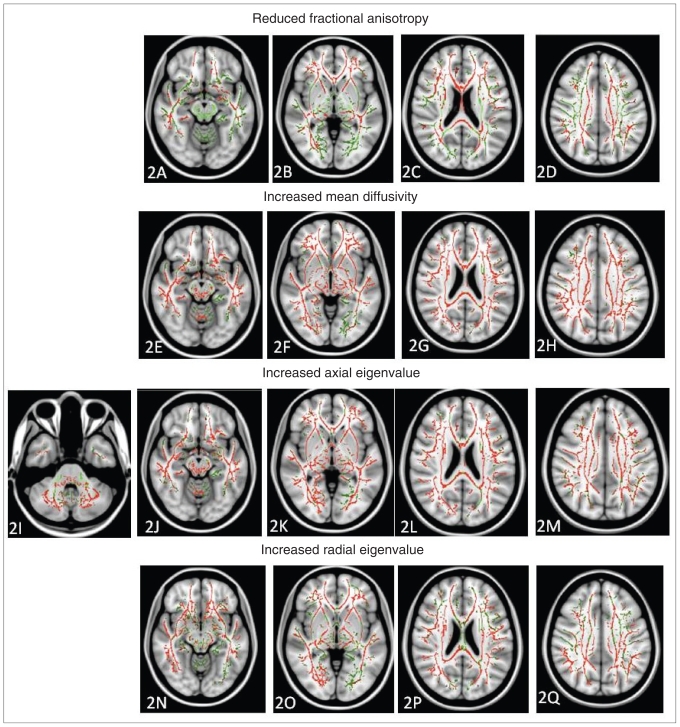
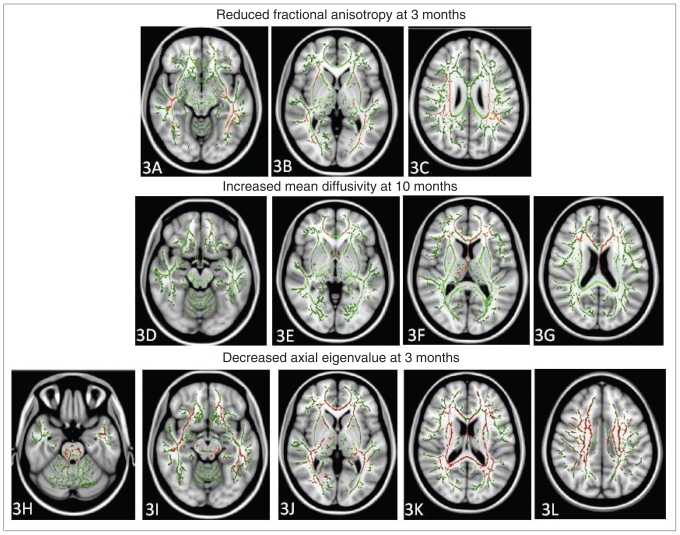
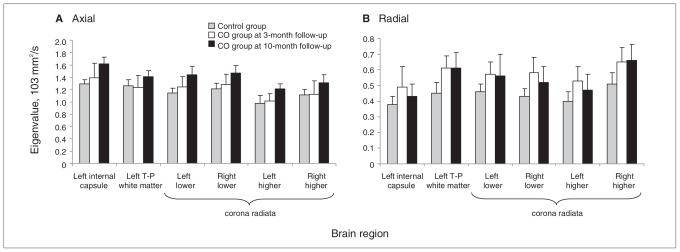
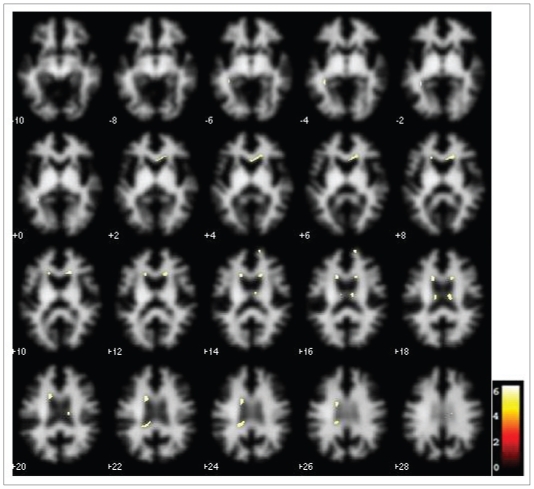
Results: We found that cognitive recovery at 10 months after CO intoxication was not significant, although it was after 3 months. The neuropsychologic tests correlated better for the fibre tract of the semicentrum ovale and not the periventricular fibres. Diffusion measures suggest increases in fractional anisotropy, mean diffusivity and axial eigenvalues over time, while increases in radial eigenvalue were evident at 3 months compared with controls. Periventricular white matter atrophy was observed 10 months after CO intoxication.
Limitations: Our study included few cases, and the interpretation of the putative changes on neuroimaging findings cannot be confirmed by histology.
Conclusion: Our study showed that the evolution of white matter injury in CO encephalopathy occurred over time. Cognitive recovery was not evident in the follow-up period because of white matter injuries.
Figures
References
-
- Kuo CJ, Conwell Y, Yu Q, et al. Suicide by charcoal burning in Taiwan: implications for means substitution by a case-linkage study. Soc Psychiatry Psychiatr Epidemiol. 2008;43:286–90. - PubMed
-
- Young LJ, Caughey WS. Pathobiochemistry of CO poisoning. FEBS Lett. 1990;272:1–6. - PubMed
-
- Weaver LK. Clinical practice. Carbon monoxide poisoning. N Engl J Med. 2009;360:1217–25. - PubMed
-
- Hopkins RO, Fearing MA, Weaver LK, et al. Basal ganglia lesions following carbon monoxide poisoning. Brain Inj. 2006;20:273–81. - PubMed
Publication types
MeSH terms
LinkOut - more resources
Full Text Sources
Medical