


Body mass index and risk of stroke among Chinese men and women
- PMID: 20186847
- PMCID: PMC4371851
- DOI: 10.1002/ana.21950
Body mass index and risk of stroke among Chinese men and women
Abstract
Objective: The relationship between body mass index (BMI) and stroke incidence and mortality remains controversial, particularly in Asian populations.
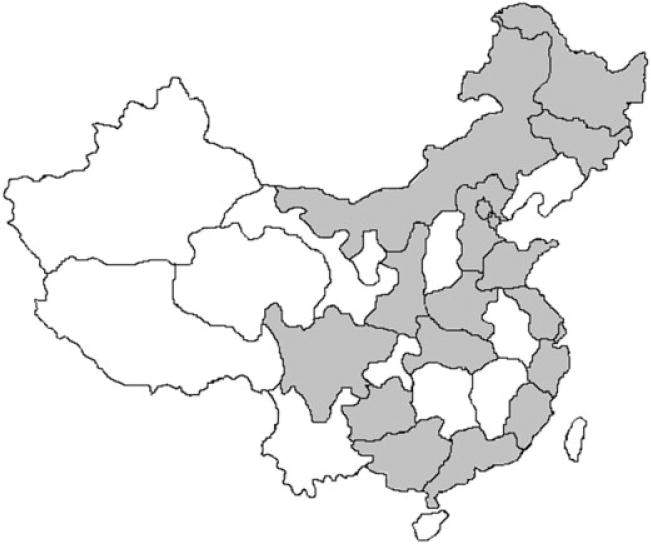
Methods: We conducted a prospective cohort study in a nationally representative sample of 169,871 Chinese men and women age 40 years or older. Data on body weight was obtained at baseline examination in 1991 using a standard protocol. Follow-up evaluation was conducted in 1999 to 2000, with a response rate of 93.4%.
Results: After excluding those participants with missing body weight or height values, 154,736 adults were included in the analysis. During a mean follow-up of 8.3 years, 7,489 strokes occurred (3,924 fatal). After adjustment for age, gender, physical inactivity, urbanization, geographic variation, cigarette smoking, diabetes, and education, compared with participants of normal weight (BMI 18.5-24.9), relative hazard (95% confidence interval) of incident stroke was 0.86 (0.80-0.93) for participants who were underweight (BMI < 18.5), 1.43 (1.36-1.52) for those who were overweight (BMI 25-29.9), and 1.72 (1.55-1.91) for those who were obese (BMI > or = 30). The corresponding relative hazards were 0.76 (0.66-0.86), 1.60 (1.48-1.72), and 1.89 (1.66-2.16) for ischemic stroke and 1.00 (0.89-1.13), 1.18 (1.06-1.31), and 1.54 (1.27-1.87) for hemorrhagic stroke. For stroke mortality, the corresponding relative hazards were 0.94 (0.86-1.03), 1.15 (1.05-1.25), and 1.47 (1.26-1.72). Linear trends were significant for all outcomes (p < 0.0001).
Interpretation: These results suggest that elevated BMI increases the risk of both ischemic and hemorrhagic stroke incidence, and stroke mortality in Chinese adults.
Figures


Comment in
-
Awakening of the sleeping giant: obesity and stroke in China.Ann Neurol. 2010 Jan;67(1):1-2. doi: 10.1002/ana.21973. Ann Neurol. 2010. PMID: 20186849 No abstract available.
-
Does body mass index increase risk of hemorrhagic stroke?Ann Neurol. 2010 Jul;68(1):115-6; author reply 116. doi: 10.1002/ana.22042. Ann Neurol. 2010. PMID: 20582992 No abstract available.
References
-
- World Health Organization. Global burden of disease 2002: deaths by age, sex and cause for the year 2002. Geneva, Switzerland: WHO; 2003.
-
- He J, Gu D, Wu X, et al. Major causes of death among men and women in China. N Engl J Med. 2005;353:1124–1134. - PubMed
-
- Hubert HB, Feinleib M, McNamara PM, Castelli WP. Obesity as an independent risk factor for cardiovascular disease: a 26-year follow-up of participants in the Framingham Heart Study. Circulation. 1983;67:968–977. - PubMed
-
- Abbott RD, Behrens GR, Sharp DS, et al. Body mass index and thromboembolic stroke in nonsmoking men in older middle age. The Honolulu Heart Program. Stroke. 1994;25:2370–2376. - PubMed
Publication types
MeSH terms
Grants and funding
LinkOut - more resources
Full Text Sources
Medical
