


MicroRNAs and cancer therapy: the next wave or here to stay?
- PMID: 20190563
- PMCID: PMC3623617
- DOI: 10.4161/cbt.9.7.11402
MicroRNAs and cancer therapy: the next wave or here to stay?
Abstract
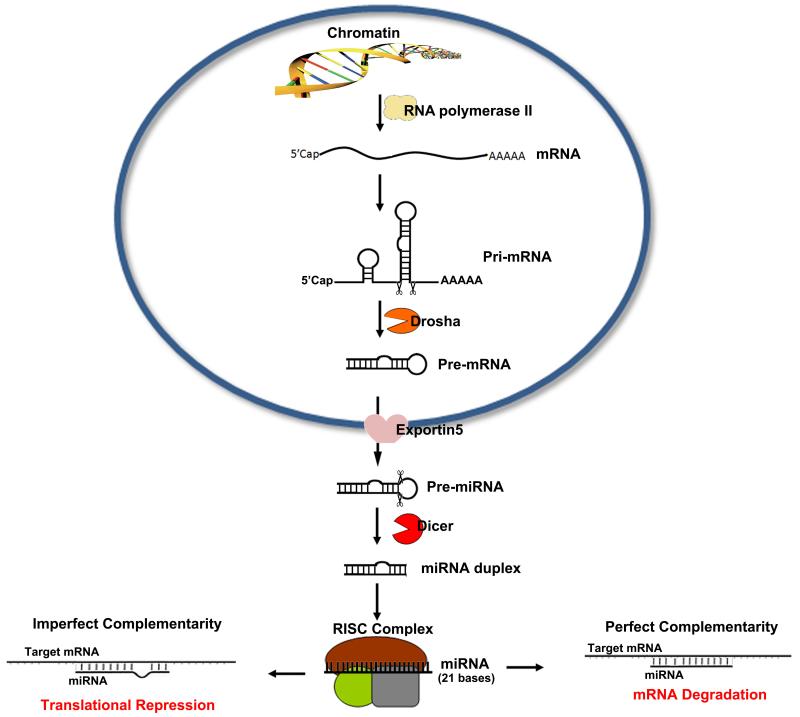
MicroRNAs are small, non-coding RNAs that regulate gene expression by degrading and/or suppressing the translation of target mRNA by Watson-Crick base pairing in the 3-'UTR of mRNA. The recent explosion of information about the biochemistry and action of microRNAs has implicated these regulatory molecules in many unexpected biologic processes, ranging from development and homeostasis to diseases such as cancer. In general, microRNAs are down regulated or deleted in cancer while a few are upregulated. However, some microRNAs suppress oncogenesis or metastasis, while others are involved in promoting tumorigenesis. All these developments make microRNAs attractive diagnostic markers as well as therapeutic targets. Here we will briefly review the opportunities and potential limitations of using microRNAs in cancer therapeutics.
Figures
References
-
- Woods K, Thomson JM, Hammond SM. Direct regulation of an oncogenic micro-RNA cluster by E2F transcription factors. J Biol Chem. 2007;282:2130–2134. - PubMed
-
- Bartel DP. MicroRNAs: Genomics, biogenesis, mechanism, and function. Cell. 2004;116:281–297. - PubMed
-
- Tsai NP, Lin YL, Wei LN. MicroRNA mir-346 targets the 5′-untranslated region of receptor-interacting protein 140 (RIP140) mRNA and up-regulates its protein expression. Biochem J. 2009;424:411–418. - PubMed
Publication types
MeSH terms
Substances
Grants and funding
LinkOut - more resources
Full Text Sources
Medical
