


Single amino-acid changes that confer constitutive activation of mTOR are discovered in human cancer
- PMID: 20190810
- PMCID: PMC2953941
- DOI: 10.1038/onc.2010.28
Single amino-acid changes that confer constitutive activation of mTOR are discovered in human cancer
Abstract
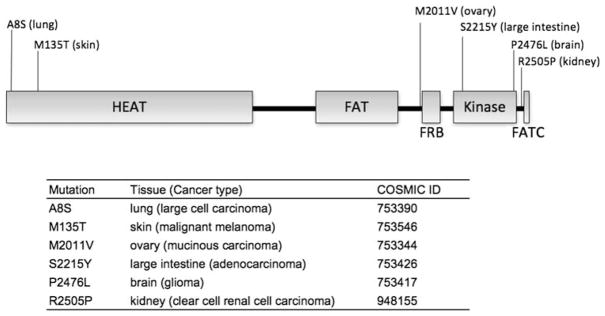
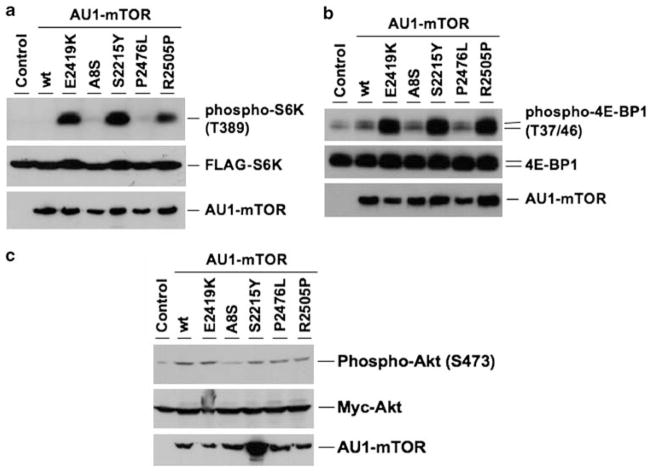
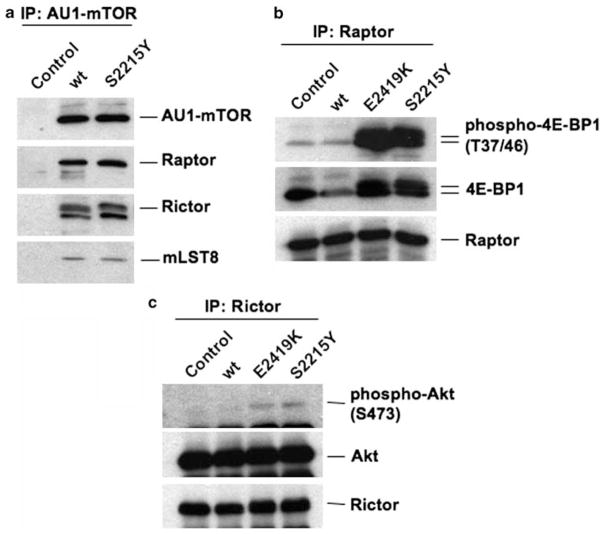
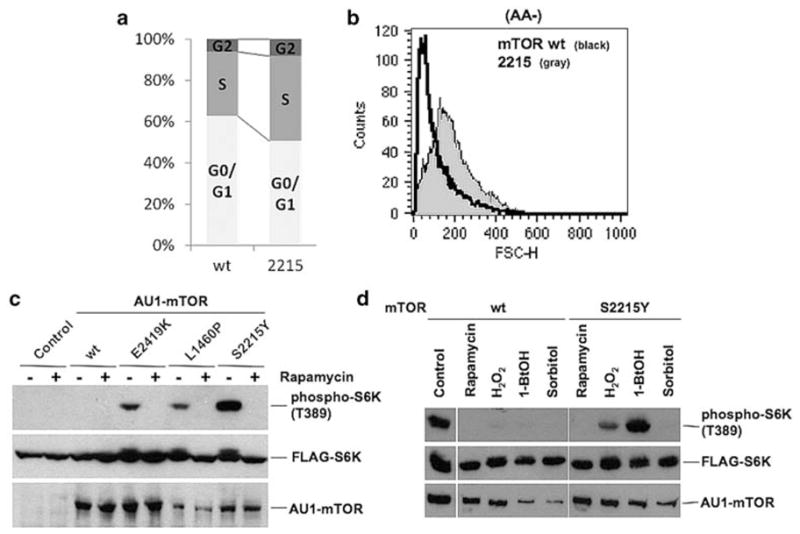
Mammalian target of rapamycin (mTOR) is a serine/threonine kinase that regulates a variety of cellular functions such as growth, proliferation and autophagy. In a variety of cancer cells, overactivation of mTOR has been reported. In addition, mTOR inhibitors, such as rapamycin and its derivatives, are being evaluated in clinical trials as anticancer drugs. However, no active mutants of mTOR have been identified in human cancer. Here, we report that two different point mutations, S2215Y and R2505P, identified in human cancer genome database confer constitutive activation of mTOR signaling even under nutrient starvation conditions. S2215Y was identified in large intestine adenocarcinoma whereas R2505P was identified in renal cell carcinoma. mTOR complex 1 prepared from cells expressing the mutant mTOR after nutrient starvation still retains the activity to phosphorylate 4E-BP1 in vitro. The cells expressing the mTOR mutant show increased percentage of S-phase cells and exhibit resistance to cell size decrease by amino-acid starvation. The activated mutants are still sensitive to rapamycin. However, they show increased resistance to 1-butanol. Our study points to the idea that mTOR activating mutations can be identified in a wide range of human cancer.
Conflict of interest statement
The authors declare no conflict of interest.
Figures
References
-
- Aressy B, Ducommun B. Cell cycle control by the CDC25 phosphatases. Anticancer Agents Med Chem. 2008;8:818–824. - PubMed
-
- Chiang GG, Abraham RT. Targeting the mTOR signaling network in cancer. Trends Mol Med. 2007;13:433–442. - PubMed
-
- Edinger AL, Thompson CB. An activated mTOR mutant supports growth factor-independent, nutrient-dependent cell survival. Oncogene. 2004;23:5654–5663. - PubMed
-
- English D, Cui Y, Siddiqui RA. Messenger functions of phosphatidic acid. Chem Phys Lipids. 1996;80:117–132. - PubMed
-
- Fang Y, Vilella-Bach M, Bachmann R, Flanigan A, Chen J. Phosphatidic acid-mediated mitogenic activation of mTOR signaling. Science. 2001;294:1942–1945. - PubMed
Publication types
MeSH terms
Substances
Grants and funding
LinkOut - more resources
Full Text Sources
Other Literature Sources
Research Materials
Miscellaneous
