


A comparison of strength training, self-management, and the combination for early osteoarthritis of the knee
- PMID: 20191490
- PMCID: PMC2831227
- DOI: 10.1002/acr.20013
A comparison of strength training, self-management, and the combination for early osteoarthritis of the knee
Abstract
Objective: To assess the relative effectiveness of combining self-management and strength training for improving functional outcomes in patients with early knee osteoarthritis.
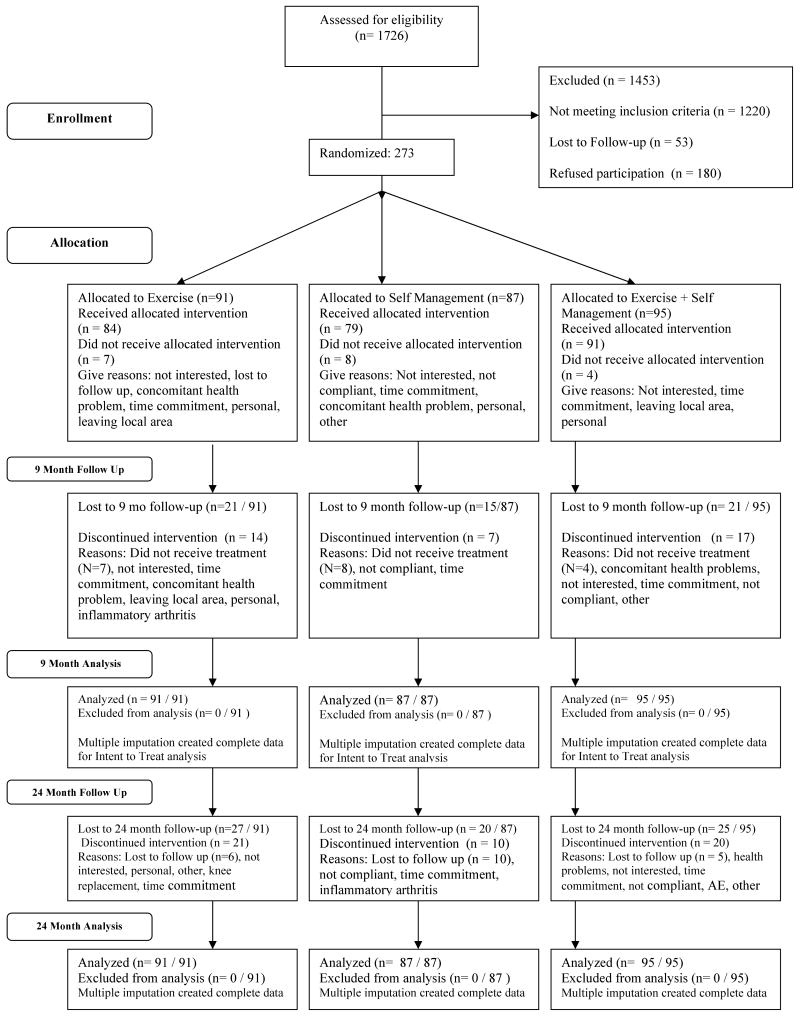
Methods: We conducted a randomized intervention trial lasting 24 months at an academic medical center. Community-dwelling middle-aged adults (n = 273) ages 35-64 years with knee osteoarthritis, pain, and self-reported physical disability completed a strength training program, a self-management program, or a combined program. Outcomes included 5 physical function tests (leg press, range of motion, work capacity, balance, and stair climbing) and 2 self-reported measures of pain and disability.
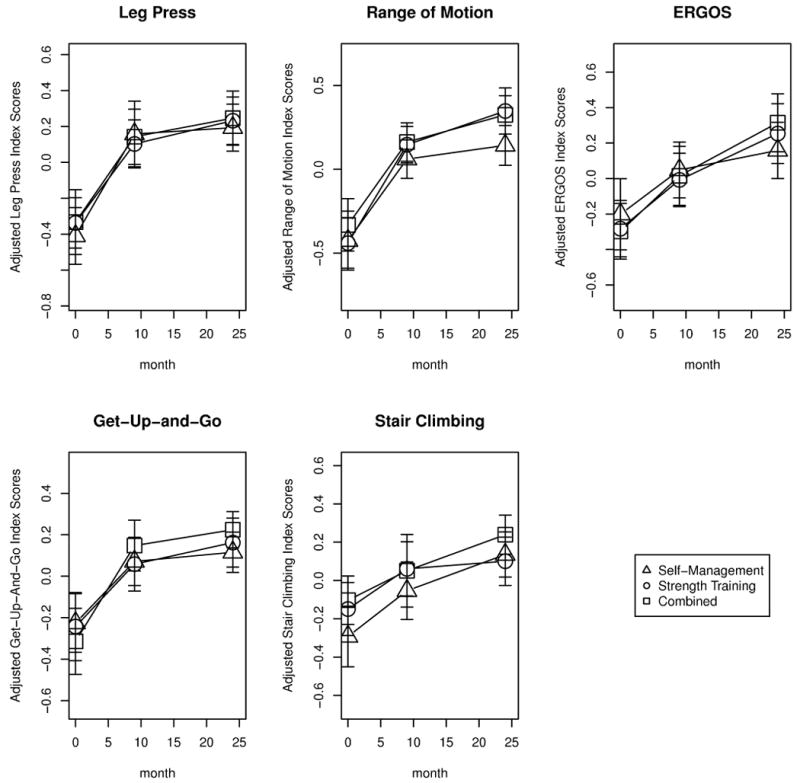
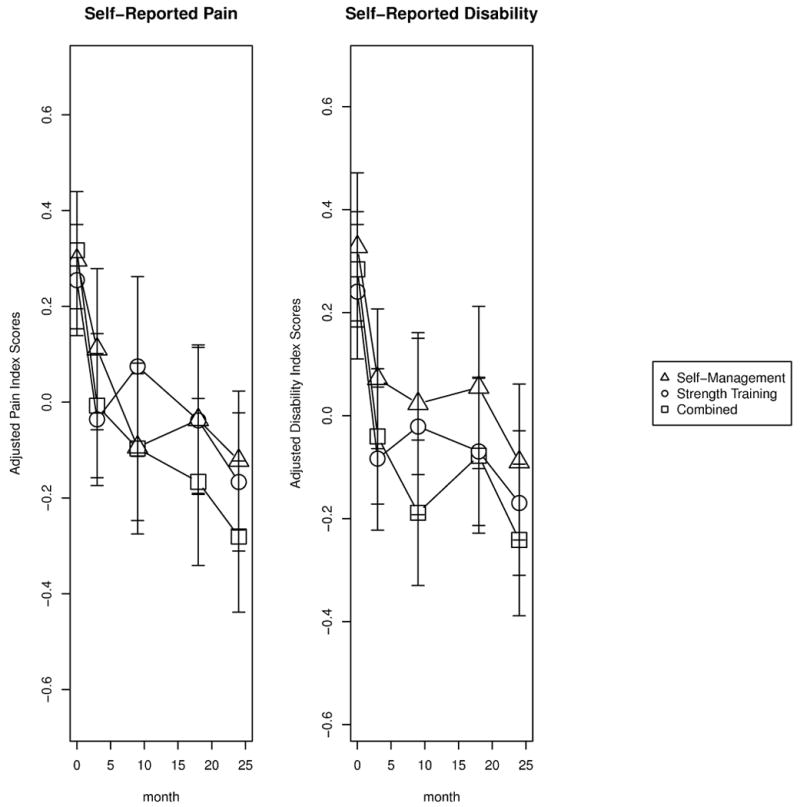
Results: A total of 201 participants (73.6%) completed the 2-year trial. Overall, compliance was modest for the strength training (55.8%), self-management (69.1%), and combined (59.6%) programs. The 3 groups showed a significant and large increase from pre- to posttreatment in all of the physical functioning measures, including leg press (d = 0.85), range of motion (d = 1.00), work capacity (d = 0.60), balance (d = 0.59), and stair climbing (d = 0.59). Additionally, all 3 groups showed decreased self-reported pain (d = -0.51) and disability (d = -0.55). There were no significant differences among the groups.
Conclusion: Middle-aged, sedentary persons with mild early knee osteoarthritis benefited from strength training, self-management, and the combination program. These results suggest that both strength training and self-management are suitable treatments for the early onset of knee osteoarthritis in middle-aged adults. Self-management alone may offer the least burdensome treatment for early osteoarthritis.
Trial registration: ClinicalTrials.gov NCT00586300.
Figures
References
-
- Fife RS. Osteoarthritis: Epidemiology, pathology and pathogenesis. In: Klippel JH, Weyand CM, Wortmann RL, editors. Primer on the Rheumatic Diseases. 11. Atlanta: Arthritis Foundation; 1997. pp. 216–217.
-
- Wilson MG, Michet CJ, Ilstrup DM, Melton LJ. Idiopathic symptomatic osteoarthritis of the hip and knee: a population-based incidence study. Mayo Clin Proc. 1990;65:1214–1221. - PubMed
-
- Theis KA, Helmick CG, Hootman JM. Arthritis burden and impact are greater among U.S. women than men: intervention opportunities. J Womens Health (Larchmt) 2007;16:441–453. - PubMed
-
- Ettinger WH, Burns R, Messier SP, et al. A randomized trial comparing aerobic exercise and resistance exercise with a health education program in older adults with knee osteoarthritis. The Fitness Arthritis and Seniors Trial (FAST) JAMA. 1997;277:25–31. - PubMed
-
- Lorig K, Lubeck D, Kraines RG, Seleznick M, Holman HR. Outcomes of self-help education for patients with arthritis. Arthritis Rheum. 1985;28:680–685. - PubMed
Publication types
MeSH terms
Associated data
Grants and funding
LinkOut - more resources
Full Text Sources
Other Literature Sources
Medical
Molecular Biology Databases
