


The 10-year course of psychosocial functioning among patients with borderline personality disorder and axis II comparison subjects
- PMID: 20199493
- PMCID: PMC3876887
- DOI: 10.1111/j.1600-0447.2010.01543.x
The 10-year course of psychosocial functioning among patients with borderline personality disorder and axis II comparison subjects
Abstract
Objective: The purpose of this study was to determine the 10-year course of the psychosocial functioning of patients with borderline personality disorder (BPD).
Method: The social and vocational functioning of 290 inpatients meeting both the Revised Diagnostic Interview for Borderlines (DIB-R) and DSM-III-R criteria for BPD and 72 axis II comparison subjects were carefully assessed during their index admission. Psychosocial functioning was reassessed using similar methods at five contiguous 2-year time periods.
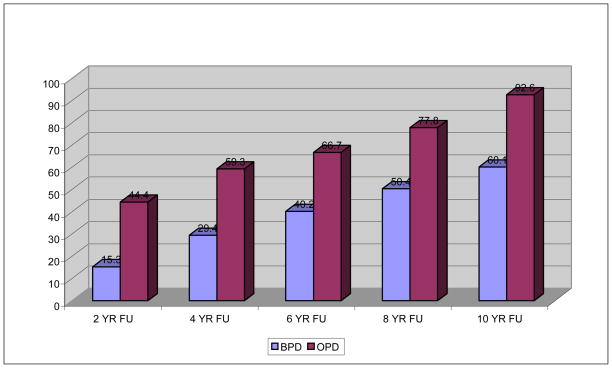
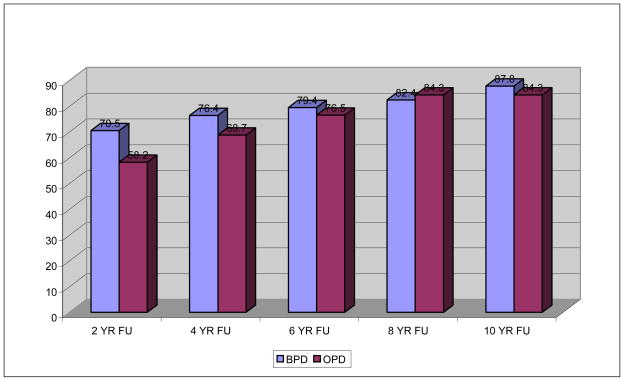
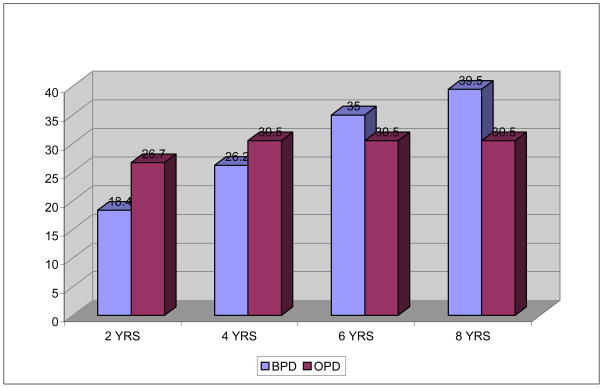
Results: Borderline patients without good psychosocial functioning at baseline reported difficulty attaining it for the first time. Those who had such functioning at baseline reported difficulty retaining and then regaining it. In addition, over 90% of their poor psychosocial functioning was due to poor vocational but not social performance.
Conclusion: Good psychosocial functioning that involves both social and vocational competence is difficult for borderline patients to achieve and maintain over time. In addition, their vocational functioning is substantially more compromised than their social functioning.
Figures
References
-
- McGlashan TH. The Chestnut Lodge follow-up study. III. Long-term outcome of borderline personalities. Arch Gen Psychiatry. 1986;43:20–30. - PubMed
-
- Paris J, Brown R, Nowlis D. Long-term follow-up of borderline patients in a general hospital. Compr Psychiatry. 1987;28:530–536. - PubMed
-
- Plakun EM, Burkhardt PE, Muller JP. 14-year follow-up of borderline and schizotypal personality disorders. Compr Psychiatry. 1985;26:448–455. - PubMed
-
- Stone MH. The Fate of Borderline Patients. New York: Guilford Press; 1990.
-
- Zanarini MC, Frankenburg FR, Reich DB, Hennen J, Silk KR. Psychosocial functioning of borderline patients and axis II comparison subjects followed prospectively for six years. J Personal Disord. 2005;19:19–29. - PubMed
Publication types
MeSH terms
Grants and funding
LinkOut - more resources
Full Text Sources
Other Literature Sources
Medical
