


Progress and prospects: nuclear import of nonviral vectors
- PMID: 20200566
- PMCID: PMC4084667
- DOI: 10.1038/gt.2010.31
Progress and prospects: nuclear import of nonviral vectors
Abstract
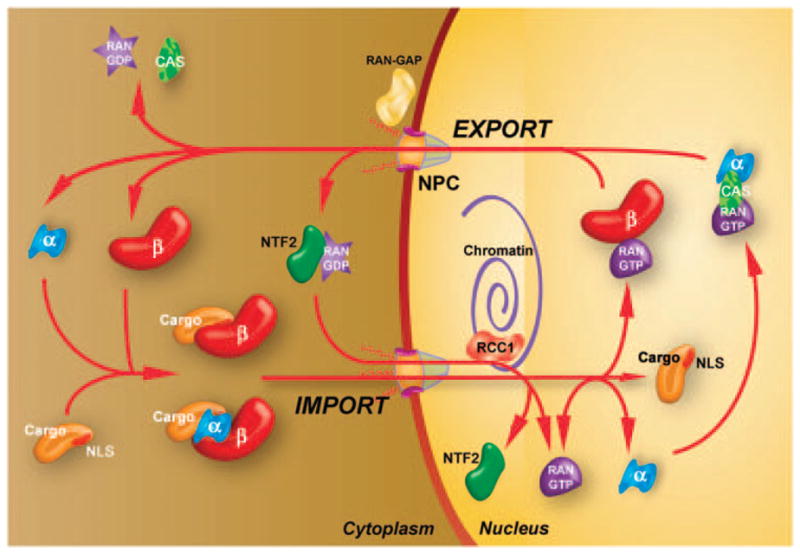
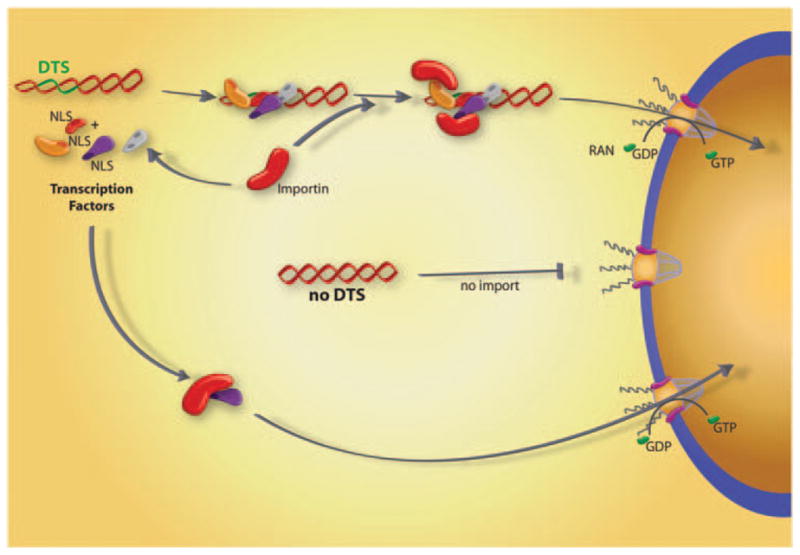
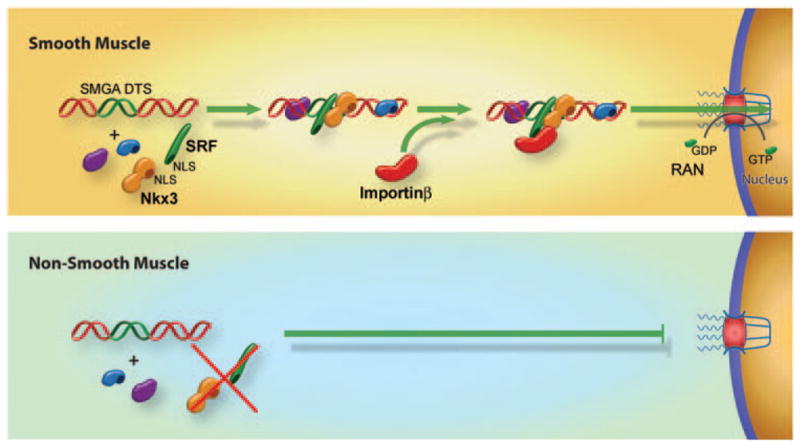
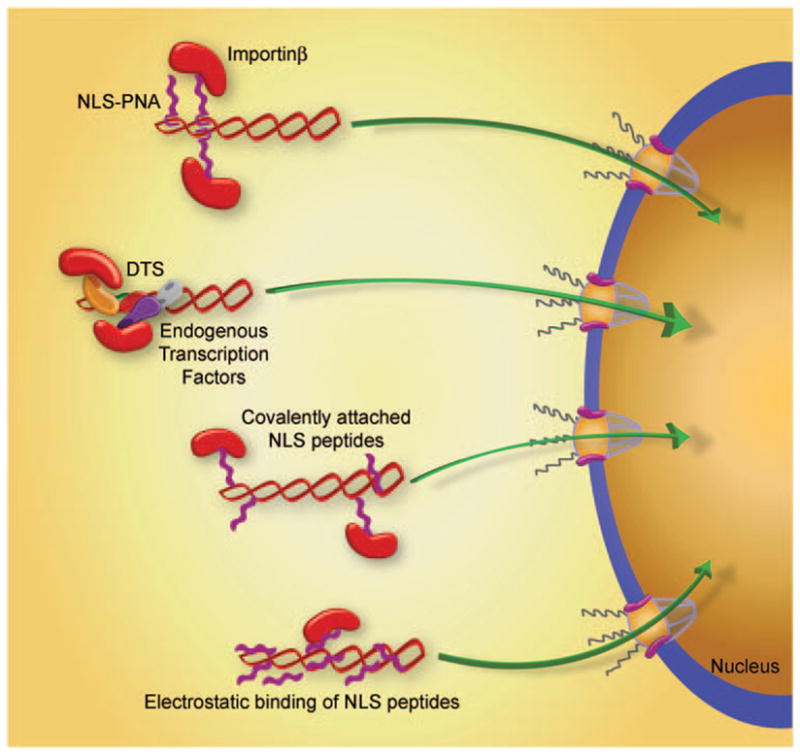
The nuclear envelope represents a key barrier to successful nonviral transfection and gene therapy both in vitro and in vivo. Although the main purpose of the nuclear envelope is to partition the cell to maintain cytoplasmic components in the cytoplasm and nuclear components, most notably genomic DNA, in the nucleus, this function poses a problem for transfections in which exogenous DNA is delivered into the cytoplasm. After delivery to the cytoplasm, nucleic acids rapidly become complexed with cellular proteins that mediate interactions with the cellular machinery for trafficking. Thus, it is these proteins that, in essence, control the nuclear import of DNA, and we must also understand their activities in cells. In this review, we will discuss the principles of nuclear import of proteins and DNA-protein complexes, as well as the various approaches that investigators have used to improve nuclear targeting of plasmids. These approaches include complexation of plasmids with peptides, native and engineered proteins, ligands and polymers, as well as the inclusion of transcription factor-binding sites for general and cell-specific delivery.
Keywords: nonviral gene transfermid R:plasmidmid R:nuclear pore complexmid R:importinmid R:nuclear localization signalmid R:karyopherin.
Conflict of interest statement
The authors declare no conflict of interest.
Figures
References
-
- Miller AM, Dean DA. Tissue-specific and transcription factor-mediated nuclear entry of DNA. Adv Drug Deliv Rev. 2009;61:603–613. - PubMed
-
- Glover DJ, Leyton DL, Moseley GW, Jans DA. The efficiency of nuclear plasmid DNA delivery is a critical determinant of transgene expression at the single cell level. J Gene Med. 2010;12:77–85. - PubMed
-
- McLane LM, Corbett AH. Nuclear localization signals and human disease. IUBMB Life. 2009;61:697–706. - PubMed
Publication types
MeSH terms
Substances
Grants and funding
LinkOut - more resources
Full Text Sources
Other Literature Sources
Medical
