


Pathway-based genome-wide association analysis identified the importance of regulation-of-autophagy pathway for ultradistal radius BMD
- PMID: 20200951
- PMCID: PMC3153999
- DOI: 10.1002/jbmr.36
Pathway-based genome-wide association analysis identified the importance of regulation-of-autophagy pathway for ultradistal radius BMD
Abstract
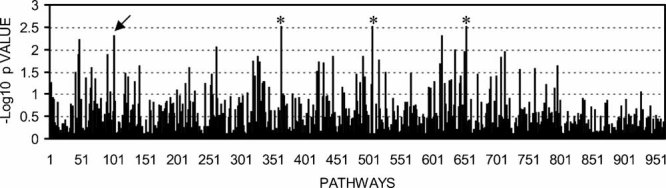
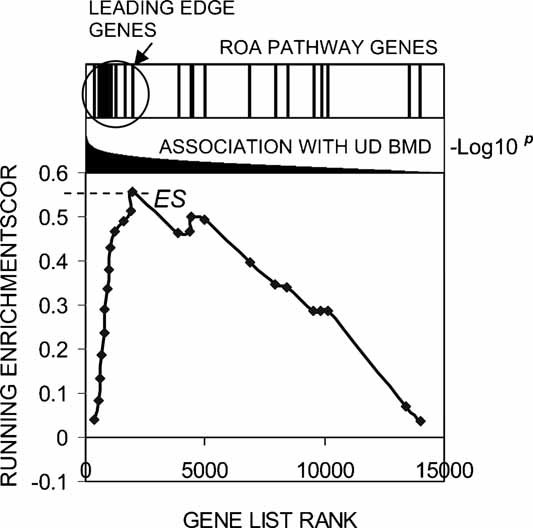
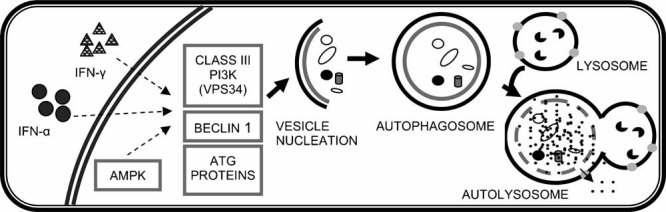
Wrist fracture is not only one of the most common osteoporotic fractures but also a predictor of future fractures at other sites. Wrist bone mineral density (BMD) is an important determinant of wrist fracture risk, with high heritability. Specific genes underlying wrist BMD variation are largely unknown. Most published genome-wide association studies (GWASs) have focused only on a few top-ranking single-nucleotide polymorphisms (SNPs)/genes and considered each of the identified SNPs/genes independently. To identify biologic pathways important to wrist BMD variation, we used a novel pathway-based analysis approach in our GWAS of wrist ultradistal radius (UD) BMD, examining approximately 500,000 SNPs genome-wide from 984 unrelated whites. A total of 963 biologic pathways/gene sets were analyzed. We identified the regulation-of-autophagy (ROA) pathway that achieved the most significant result (p = .005, q(fdr) = 0.043, p(fwer) = 0.016) for association with UD BMD. The ROA pathway also showed significant association with arm BMD in the Framingham Heart Study sample containing 2187 subjects, which further confirmed our findings in the discovery cohort. Earlier studies indicated that during endochondral ossification, autophagy occurs prior to apoptosis of hypertrophic chondrocytes, and it also has been shown that some genes in the ROA pathway (e.g., INFG) may play important roles in osteoblastogenesis or osteoclastogenesis. Our study supports the potential role of the ROA pathway in human wrist BMD variation and osteoporosis. Further functional evaluation of this pathway to determine the mechanism by which it regulates wrist BMD should be pursued to provide new insights into the pathogenesis of wrist osteoporosis.
2010 American Society for Bone and Mineral Research.
Figures
References
-
- Johnell O, Kanis J. Epidemiology of osteoporotic fractures. Osteoporos Int. 2005;16:S3–7. - PubMed
-
- Chao EY, Inoue N, Koo TK, Kim YH. Biomechanical considerations of fracture treatment and bone quality maintenance in elderly patients and patients with osteoporosis. Clin Orthop Relat Res. 2004;425:12–25. - PubMed
-
- Muller ME, Webber CE, Bouxsein ML. Predicting the failure load of the distal radius. Osteoporos Int. 2003;14:345–352. - PubMed
-
- Weichetova M, Stepan JJ, Haas T, Michalska D. The risk of Colles' fracture is associated with the collagen I α1 Sp1 polymorphism and ultrasound transmission velocity in the calcaneus only in heavier postmenopausal women. Calcif Tissue Int. 2005;76:98–106. - PubMed
-
- Tse KY, Macias BR, Meyer RS, Hargens AR. Heritability of bone density: regional and gender differences in monozygotic twins. J Orthop Res. 2009;27:150–154. - PubMed
Publication types
MeSH terms
Grants and funding
LinkOut - more resources
Full Text Sources
Other Literature Sources
Medical
