


Substance P antagonist CP-96345 blocks lung vascular leakage and inflammation more effectively than its stereoisomer CP-96344 in a mouse model of smoke inhalation and burn injury
- PMID: 20201741
- PMCID: PMC2859096
- DOI: 10.3109/15376511003674657
Substance P antagonist CP-96345 blocks lung vascular leakage and inflammation more effectively than its stereoisomer CP-96344 in a mouse model of smoke inhalation and burn injury
Abstract
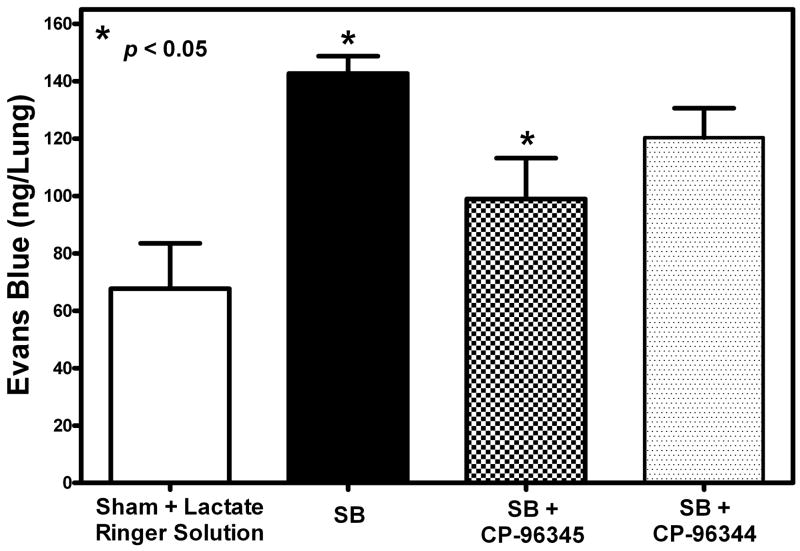
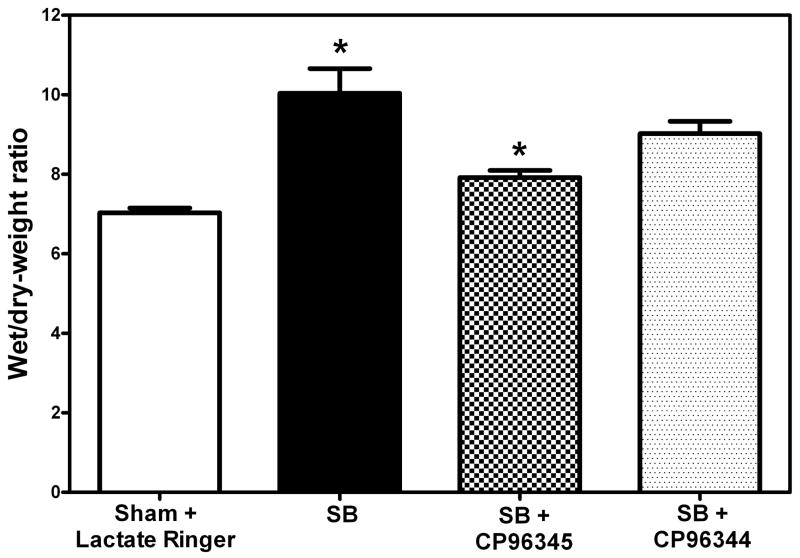
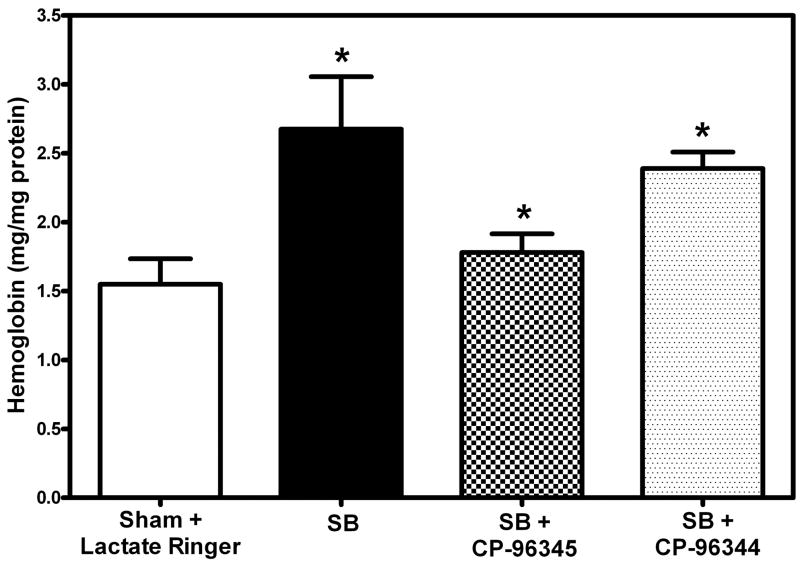
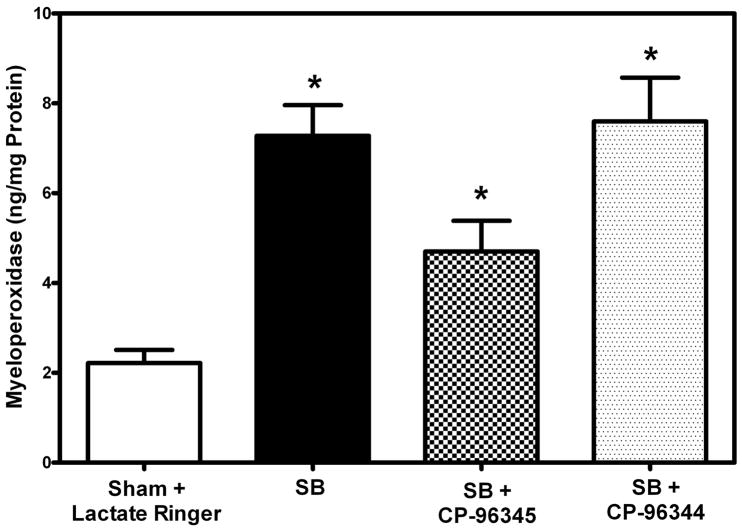
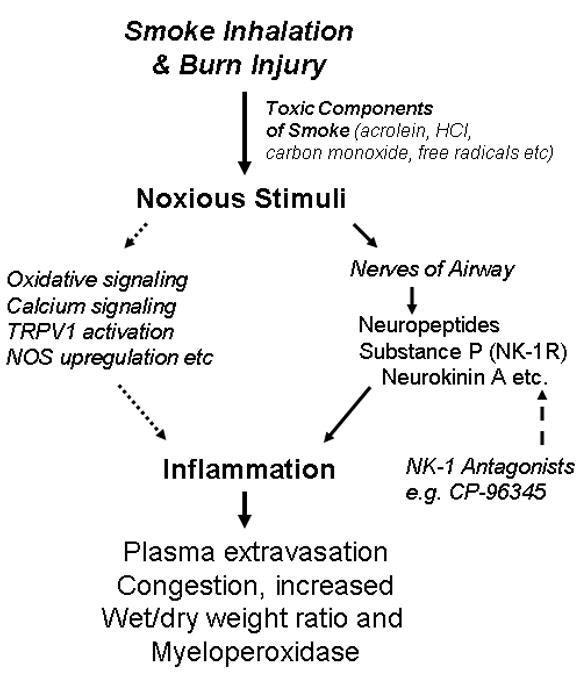
The recently developed murine model of smoke inhalation and burn (SB) injury was used to study the effect of the substance-P antagonist CP96345. C57BL/6 mice were pre-treated with an i.v. dose of a specific NK-1 receptor antagonist, CP9635, or its inactive enantiomer, CP96344, (10 mg/Kg) 1 h prior to SB injury per protocol (n = 5). Mice were anesthetized and exposed to cooled cotton smoke, 2X 30 s, followed by a 40% total body surface area flame burn per protocol. At 48 h after SB injury Evans Blue (EB) dye and myeloperoxidase (MPO) were measured in lung after vascular perfusion. Lungs were also analyzed for hemoglobin (Hb) and wet/dry weight ratio. In the current study, CP96345 pre-treatment caused a significant decrease in wet/dry weight ratio (23%, p = 0.048), EB (31%, p = 0.047), Hb (46%, p = 0.002), and MPO (54%, p = 0.037) levels following SB injury compared to animals with SB injury alone. CP-96344 pre-treatment caused an insignificant decrease in wet/dry weight ratio (14%, p = 0.18), EB (16%, p = 0.134), Hb (9%, p = 0.39), and an insignificant increase in MPO (4%, p = 0.79) as compared to mice that received SB injury alone. As expected, levels of EB, Hb, MPO, and wet/dry weight ratios were all significantly (p < 0.05) increased 48 h following SB injury alone compared to respective sham animals. In conclusion, the current study indicates that pre-treatment with a specific NK-1R antagonist CP-96345 attenuates the lung injury and inflammation induced by SB injury in mice.
Figures
References
-
- Alarie Y, Stock MF, Matijak-Schaper M, Birky MM. Toxicity of smoke during chair smoldering tests and small scale tests using the same materials. Fundam Appl Toxicol. 1983;3(6):619–26. - PubMed
-
- Alarie Y. The toxicity of smoke from polymeric materials during thermal Decomposition. Annu Rev Pharmacol Toxicol. 1985;25:325–47. - PubMed
-
- Barnes PJ. Role of neural mechanisms in airway defense. In: Chretien J, Dusser D, editors. Environmental Impact in the Airways. Marcel Dekker; New York: 1996. pp. 93–121.
-
- Barrow RE, Morris SE, Basadre JO, Herndon DN. Selective permeability changes in the lungs and airways of sheep after toxic smoke inhalation. J Appl Physiol. 1990;68:2165–2170. - PubMed
-
- Bidani A, Hawkins HK, Wang CZ, Heming TA. Dose dependence and time course of smoke inhalation injury in a rabbit model. Lung. 1999;177:111–122. - PubMed
Publication types
MeSH terms
Substances
Grants and funding
LinkOut - more resources
Full Text Sources
Research Materials
Miscellaneous
