


Comparison of closure of gastric perforation ulcers with biodegradable lactide-glycolide-caprolactone or omental patches
- PMID: 20202396
- PMCID: PMC3030790
- DOI: 10.4293/108680809X12589998404362
Comparison of closure of gastric perforation ulcers with biodegradable lactide-glycolide-caprolactone or omental patches
Abstract
Background: The current treatment of perforated peptic ulcers is primary closure, supported by the application of an omental patch. It is difficult and time consuming to perform this procedure by laparoscopic surgery, largely because of the required suturing. It was our aim to develop and test a new method of closure for gastric perforation that is similar in efficacy and safety to a traditional repair. This technique could have utility in laparoscopic repair, as it does not require sutures or mobilization of the omentum.
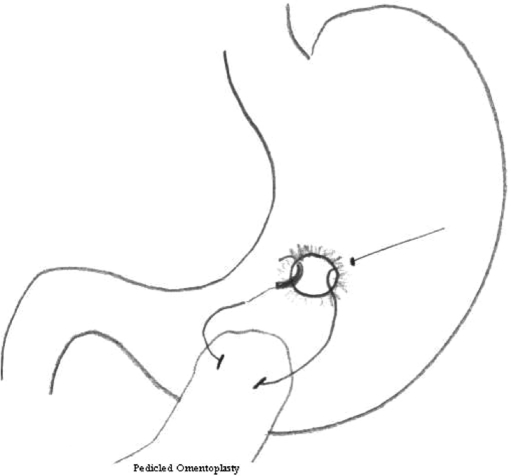
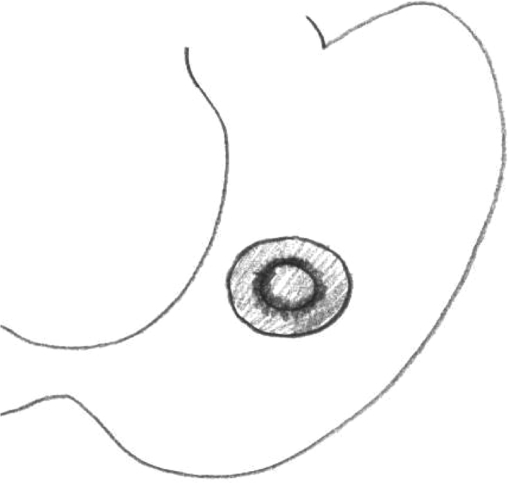
Method: The new method, called the "stamp" method consists of closure of the perforation by gluing a biodegradable patch made of lactide-glycolide-caprolacton (LGC, Polyganics, B.V. Groningen, The Netherlands) on the outside of the stomach. It was compared with the omental patch procedure. Perforations were made in the stomach of 20 rats and closed by either method (10 rats in each group). The rats were followed for 10 weeks.
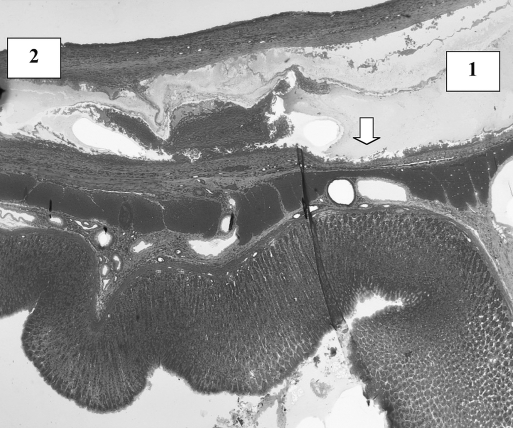
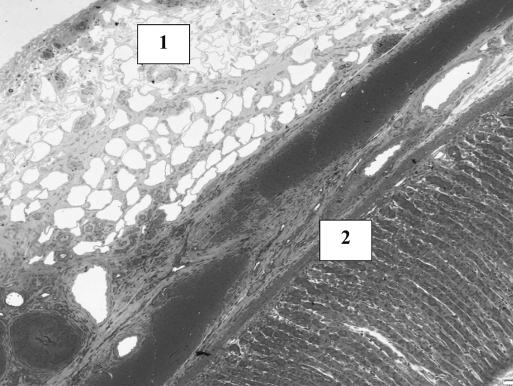
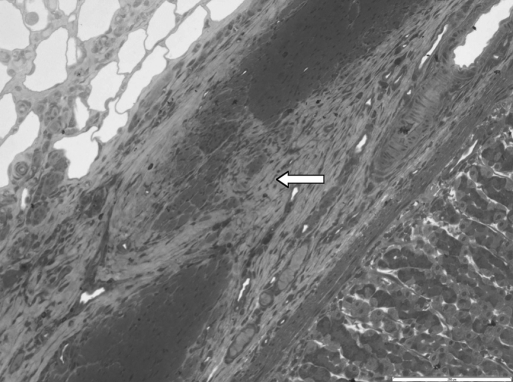
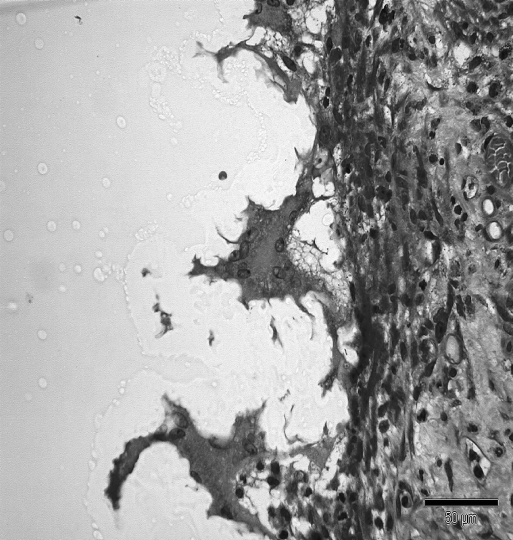
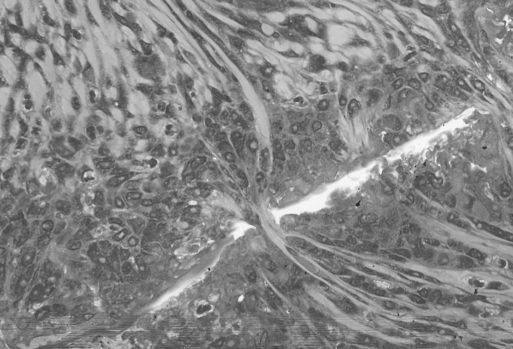
Results: No complications were seen in any of the rats. In both groups, histological degradation of the patch by giant cells started at week 2. No signs of inflammation existed in either group. Signs of closure of the mucosa were seen after 2 weeks, and the muscular layer started to regenerate after 8 weeks in both groups.
Conclusion: Results of both methods were similar, which means that treatment of a gastric perforation through the application of a biodegradable patch to the outside of the stomach is a feasible option and might even be an interesting technique for closure of other perforations in the digestive tract.
Figures
References
-
- Böhm B, Ablassmaier B, Müller JM. Laparoskopische chirurgie am oberen gastrointestinaltrakt. Chirurg. 2001( 72): 349–361 - PubMed
-
- Graham RR. The treatment of perforated duodenal ulcers. Surg Gynecol Obstet. 1937( 64): 235–238
-
- Baker RJ. Chapter 81: Operation for acute perforated duodenal ulcer. Mastery of Surgery. 3th ed. Little, Brown and Company; 1997
-
- Matoba Y, Katayama H, Ohami H. Evaluation of omental implantation for perforated gastric ulcer therapy: findings in a rat model. J Gastroenterol. 1996;31(6): 777–784 - PubMed
Publication types
MeSH terms
Substances
LinkOut - more resources
Full Text Sources
Other Literature Sources